
Advertisement


Sections
NASA New Horizons zooms in on distant rock after switch to encounter mode
Communicating with a spacecraft that is so far away takes six hours and eight minutes each way.

NASA's unmanned New Horizons spacecraft is closing in on its historic New Year's flyby target, the most distant world ever studied, a frozen relic of the solar system some four billion miles (6.4 billion kilometers) away.The cosmic object – Ultima Thule – is about the size of the US capital, Washington, and orbits in the dark and frigid Kuiper Belt about a billion miles beyond the dwarf planet, Pluto.The spacecraft's closest approach to this primitive space rock comes 1 January at 12.33 am ET (11.33 am IST).Until then, what it looks like, and what it is made of, remain a mystery."This is a time capsule that is going to take us back four and a half billion years to the birth of the solar system," said Alan Stern, the principal investigator on the project at the Southwest Research Institute, during a press briefing Friday.A camera on board the New Horizons spacecraft is currently zooming in on Ultima Thule, so scientists can get a better sense of its shape and configuration – whether it is one object or several."We've never been to a type of object like this before," said Kelsi Singer, New Horizons co-investigator at the Southwest Research Institute.About a day prior, "we will start to see what the actual shape of the object is," she said.[caption id="attachment_4500593" align="alignnone" width="1280"]![The New Horizons probe will do a fly-by study of Ultima Thule – an odd rock beyond Pluto & the farthest object ever studied in our solar system – on New Years Day. Image: NASA]() The New Horizons probe will do a fly-by study of Ultima Thule – an odd rock beyond Pluto & the farthest object ever studied in our solar system – on New Years Day. Image: NASA[/caption]The spacecraft entered "encounter mode" on 26 December, and is "very healthy," added Stern.Communicating with a spacecraft that is so far away takes six hours and eight minutes each way – or about 12 hours and 15 minutes round trip.New Horizons' eagerly awaited "phone home" command, indicating if it survived the close pass – at a distance of just 3,500 kilometers – is expected 1 January at 1529 GMT (8.59 pm IST).[caption id="attachment_5787341" align="alignnone" width="1280"]
The New Horizons probe will do a fly-by study of Ultima Thule – an odd rock beyond Pluto & the farthest object ever studied in our solar system – on New Years Day. Image: NASA[/caption]The spacecraft entered "encounter mode" on 26 December, and is "very healthy," added Stern.Communicating with a spacecraft that is so far away takes six hours and eight minutes each way – or about 12 hours and 15 minutes round trip.New Horizons' eagerly awaited "phone home" command, indicating if it survived the close pass – at a distance of just 3,500 kilometers – is expected 1 January at 1529 GMT (8.59 pm IST).[caption id="attachment_5787341" align="alignnone" width="1280"]![Artist's concept of the close encounter between New Horizons and the oddly-shaped Ultima Thule. Image: NASA]() Artist's concept of the close encounter between New Horizons and the oddly-shaped Ultima Thule. Image: NASA[/caption]Until then, the New Horizons spacecraft continues speeding through space at 32,000 miles (51,500 kilometers) per hour, traveling almost a million miles per day.And NASA scientists are eagerly awaiting the first images."Because this is a flyby mission, we only have one chance to get it right," said Alice Bowman, missions operations manager for New Horizons.The spacecraft, which launched in 2006, captured stunning images of Pluto when it flew by the dwarf planet in 2015. 2018 has been an eventful year and here's our comprehensive list of year ender stories.
Artist's concept of the close encounter between New Horizons and the oddly-shaped Ultima Thule. Image: NASA[/caption]Until then, the New Horizons spacecraft continues speeding through space at 32,000 miles (51,500 kilometers) per hour, traveling almost a million miles per day.And NASA scientists are eagerly awaiting the first images."Because this is a flyby mission, we only have one chance to get it right," said Alice Bowman, missions operations manager for New Horizons.The spacecraft, which launched in 2006, captured stunning images of Pluto when it flew by the dwarf planet in 2015. 2018 has been an eventful year and here's our comprehensive list of year ender stories.
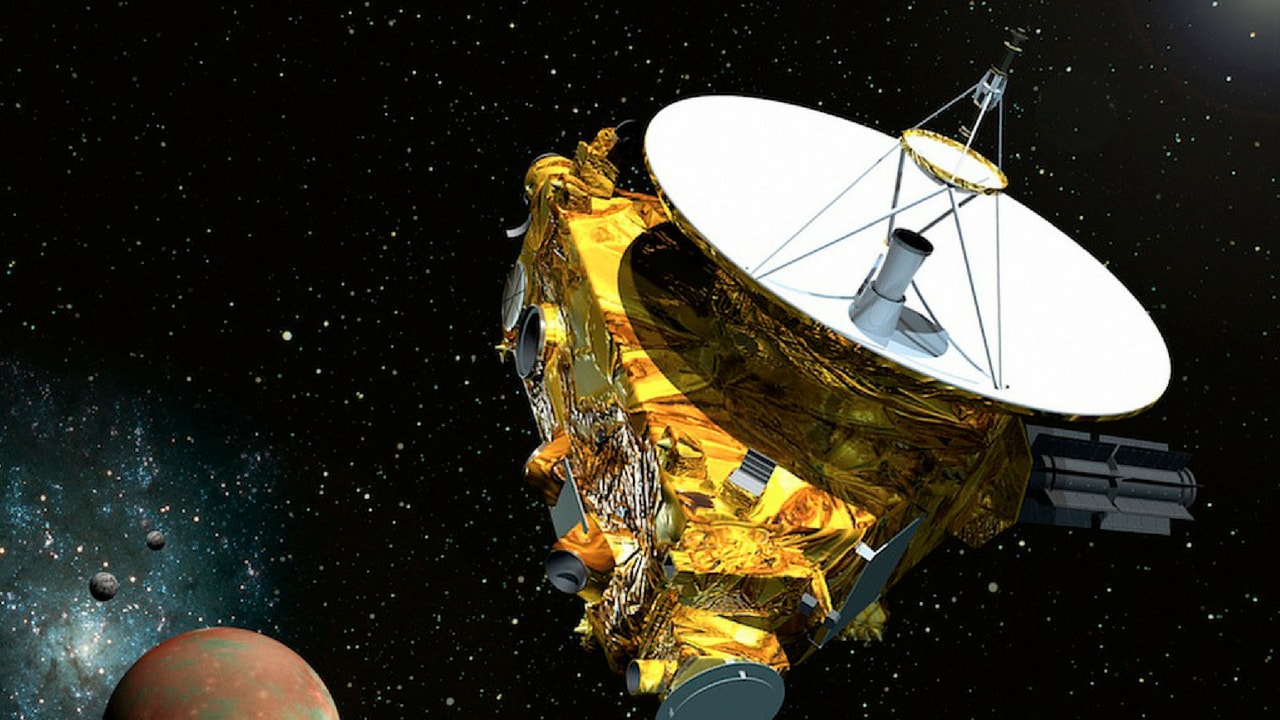 The New Horizons probe will do a fly-by study of Ultima Thule – an odd rock beyond Pluto & the farthest object ever studied in our solar system – on New Years Day. Image: NASA[/caption]The spacecraft entered "encounter mode" on 26 December, and is "very healthy," added Stern.Communicating with a spacecraft that is so far away takes six hours and eight minutes each way – or about 12 hours and 15 minutes round trip.New Horizons' eagerly awaited "phone home" command, indicating if it survived the close pass – at a distance of just 3,500 kilometers – is expected 1 January at 1529 GMT (8.59 pm IST).[caption id="attachment_5787341" align="alignnone" width="1280"]
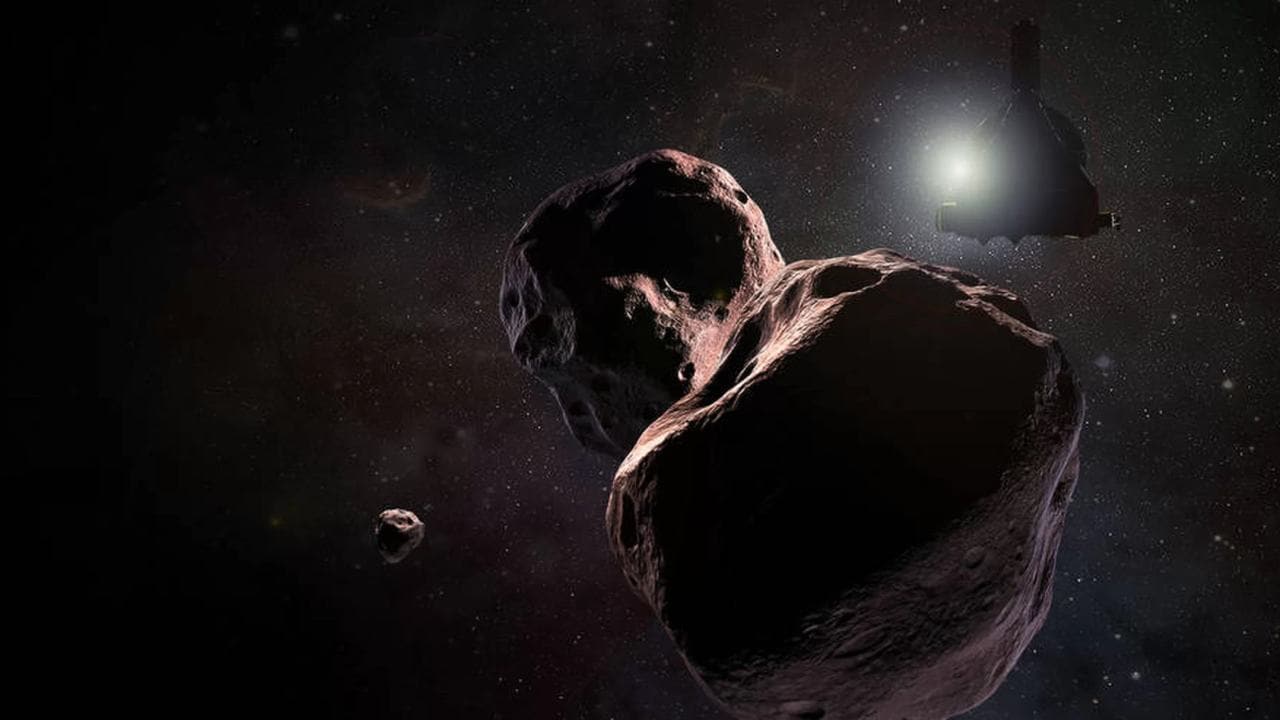 Artist's concept of the close encounter between New Horizons and the oddly-shaped Ultima Thule. Image: NASA[/caption]Until then, the New Horizons spacecraft continues speeding through space at 32,000 miles (51,500 kilometers) per hour, traveling almost a million miles per day.And NASA scientists are eagerly awaiting the first images."Because this is a flyby mission, we only have one chance to get it right," said Alice Bowman, missions operations manager for New Horizons.The spacecraft, which launched in 2006, captured stunning images of Pluto when it flew by the dwarf planet in 2015. 2018 has been an eventful year and here's our comprehensive list of year ender stories.
First Published:Dec 29, 2018, 13:59:46 IST
Advertisement
Advertisement

Careless Whispers: Scientists discover that plants can 'talk' to each other using smells
Japanese scientists have recorded a video that shows plants, in certain conditions, communicate with each other using mists that carry smells. The discovery, reveals that plants release a fine mist of airborne compounds, to warn nearby plants of potential dangers
Life on Mars? European Space Agency’s Orbiter discovers ice water deposits at equator
European Space Agency's Mars Express Orbiter has identified massive ice and ice water deposits beneath the surface of Mars. The Mars Express orbiter was also the first to confirmed the presence of ice on Mars in 2004
Microsoft briefly overtakes Apple as the most valuable company, Apple back on top again
At its peak during the session, Microsoft's value reached $2.903 trillion, with a 2% surge. As of writing this article, Apple closed at $2.89 trillion, whereas Microsoft closed at $2.86 trillion
Even NASA is facing a tough time, starts layoffs following major budget cuts
NASA is facing some massive budget cuts, because of which, it has been forced to postpone some upcoming missions. NASA's Jet Propulsion Laboratory has been hit hard by recent federal budget cuts, resulting in the layoff of 100 contractors last week
ISRO, NASA's NISAR satellite to get ready by Jan-end, will monitor Earth's snow-covered regions
The NISAR satellite which has been developed jointly ISRO and NASA, should be ready for launch by the end of January 2024. The collaboration between NASA and ISRO on NISAR is the first time the two agencies have cooperated on hardware development for an Earth-observing mission
Advertisement
Advertisement