


NASA is planning to study the surface of Venus, explore its geologic history through VERITAS mission
Venus Emissivity, Radio Science, InSAR, Topography & Spectroscopy is one of NASA’s four proposed missions to study secrets of the solar system.

Scientists have always been trying to find out more about various planets in our solar system. They have been successful to an extent in the case of Mars. Now, NASA is planning to bring out details about Venus’ geology through its proposed new mission, called VERITAS.
"VERITAS’s objectives are to reveal Venus' geologic history, determine how active it is, and search for the fingerprints of past and present water. The overarching question is 'How Earthlike is Venus?'," said NASA’s Jet Propulsion Laboratory (JPL) in a statement.[caption id="attachment_8595121" align="alignnone" width="1280"]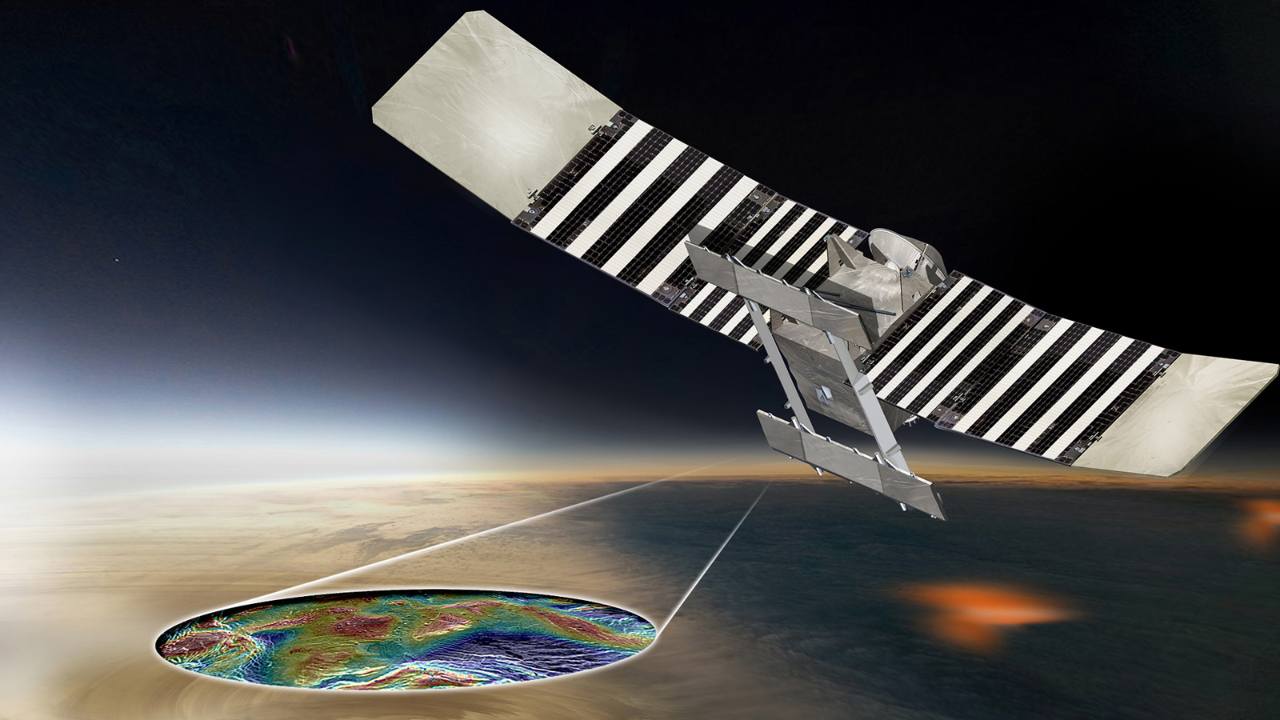
VERITAS: Exploring the Deep Truths of Venus
This artist's concept shows the proposed VERITAS spacecraft using its radar to produce high-resolution maps of Venus' topographic and geologic features. Image Credit: NASA/JPL-Caltech[/caption]Venus Emissivity, Radio Science, InSAR, Topography & Spectroscopy (VERITAS) is one of NASA’s four proposed missions to study secrets of the solar system.
According to EarthSky, the surface of Venus is covered by a thick and dense atmosphere of carbon dioxide. The temperature at the planet’s surface never goes down below 500 degrees Celsius.
The pressure on the surface of Venus is similar to that deep in the oceans on Earth. Its clouds contain sulfuric acid. However, the temperature and pressure become much milder higher up in the atmosphere.
 More from Science
The US space agency is expected to launch the mission in 2026, reported Forbes. VERITAS would orbit the planet and peer through the obscuring clouds with a powerful radar system to create 3-D global maps of Venus. It would use a near-infrared spectrometer to see what the surface is made of. The mission would also measure Venus’ gravitational field to determine the structure of the planet’s interior.
It would be the first mission to study the surface of Venus after NASA’s Magellan spacecraft.

Careless Whispers: Scientists discover that plants can 'talk' to each other using smells
Life on Mars? European Space Agency’s Orbiter discovers ice water deposits at equator
Microsoft briefly overtakes Apple as the most valuable company, Apple back on top again
Even NASA is facing a tough time, starts layoffs following major budget cuts
ISRO, NASA's NISAR satellite to get ready by Jan-end, will monitor Earth's snow-covered regions