


NASA Hubble, Spritzer paired up to find chemical signatures of an exoplanet
The telescopes were pointed to the exoplanet to study 12 transits & 20 eclipses around its home star.

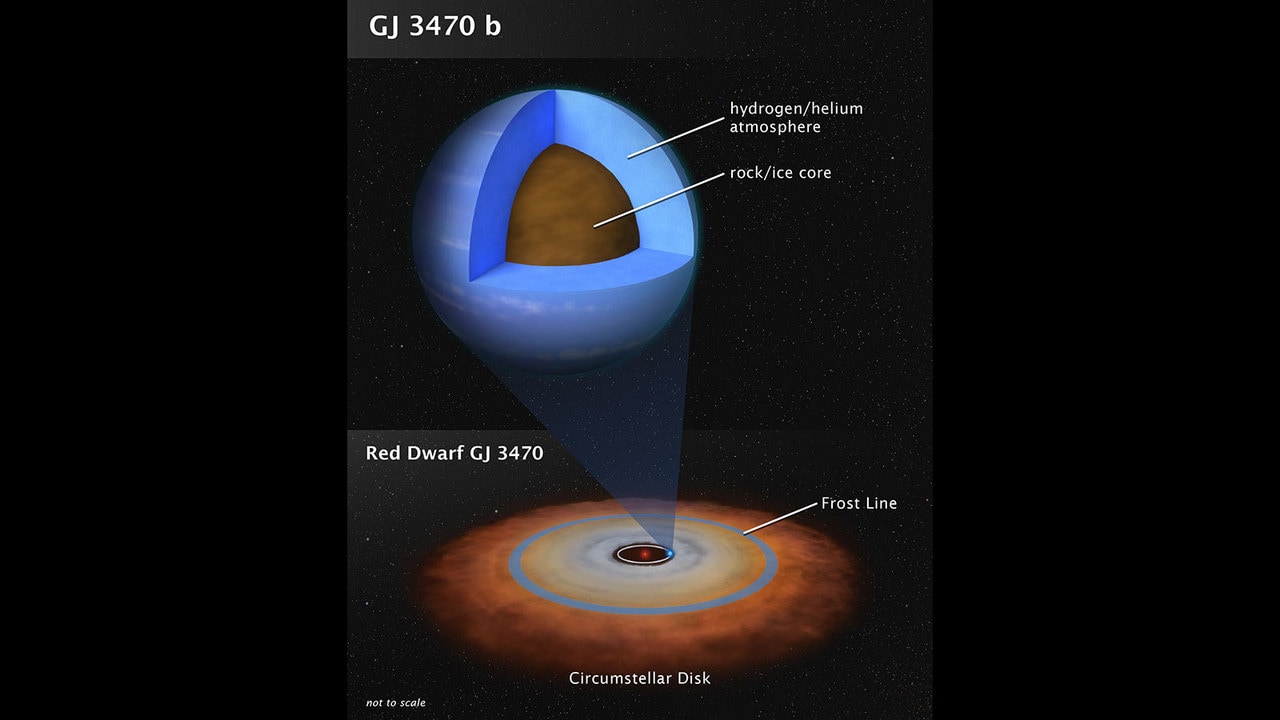
Two NASA telescopes — Hubble and Spitzer, joined their (metaphorical) telescope hands for the first time to seek out chemical 'fingerprints' of an exoplanet 12.6 times the size of Earth. The telescopes are equipped with tools to study chemical fingerprints in light signals from the exoplanet using a process known as spectroscopy.The planet in question, called Gliese 3470 b, is not in our solar system, which is why it is called an 'exoplanet'. Gliese 3470 b is almost a cross between planets Earth and Neptune and has a large, rocky core. Scientists thought this planet would have heavier elements like oxygen and carbon, too, but its atmosphere is dominated with hydrogen and helium, much closer in composition to the Sun.Before being retired in 2018, another telescope project by NASA — the Kepler Space Telescope — made several exoplanet discoveries with very similar properties to Gliese 3470 b. And while it was clear that Kepler's Earth-like exoplanets were between the sizes of Earth and Neptune, scientists weren't able to spell out the chemical nature of these planets — till now.

Careless Whispers: Scientists discover that plants can 'talk' to each other using smells
Life on Mars? European Space Agency’s Orbiter discovers ice water deposits at equator
Microsoft briefly overtakes Apple as the most valuable company, Apple back on top again
Even NASA is facing a tough time, starts layoffs following major budget cuts
ISRO, NASA's NISAR satellite to get ready by Jan-end, will monitor Earth's snow-covered regions