


NASA-ESA Solar Orbiter mission spots 'campfires' in closest images ever taken of the Sun
Campfires, researchers say, could be tiny versions of solar flares or an entirely new phenomenon that isn't yet understood.

To fill the massive gaps in our understanding of the Sun, the European Space Agency (ESA) and the National Aeronautics and Space Administration (NASA) launched the Solar Orbiter mission on 9 February 2020.The spacecraft completed its first close pass of the Sun in mid-June and the first images from it have now been released, including the closest pictures ever taken of the Sun."These amazing images will help scientists piece together the Sun’s atmospheric layers, which is important for understanding how it drives space weather near the Earth and throughout the solar system," said Holly Gilbert, NASA project scientist for the mission at NASA's Goddard Space Flight Center in Greenbelt, Maryland.[caption id="attachment_8611011" align="alignnone" width="1000"]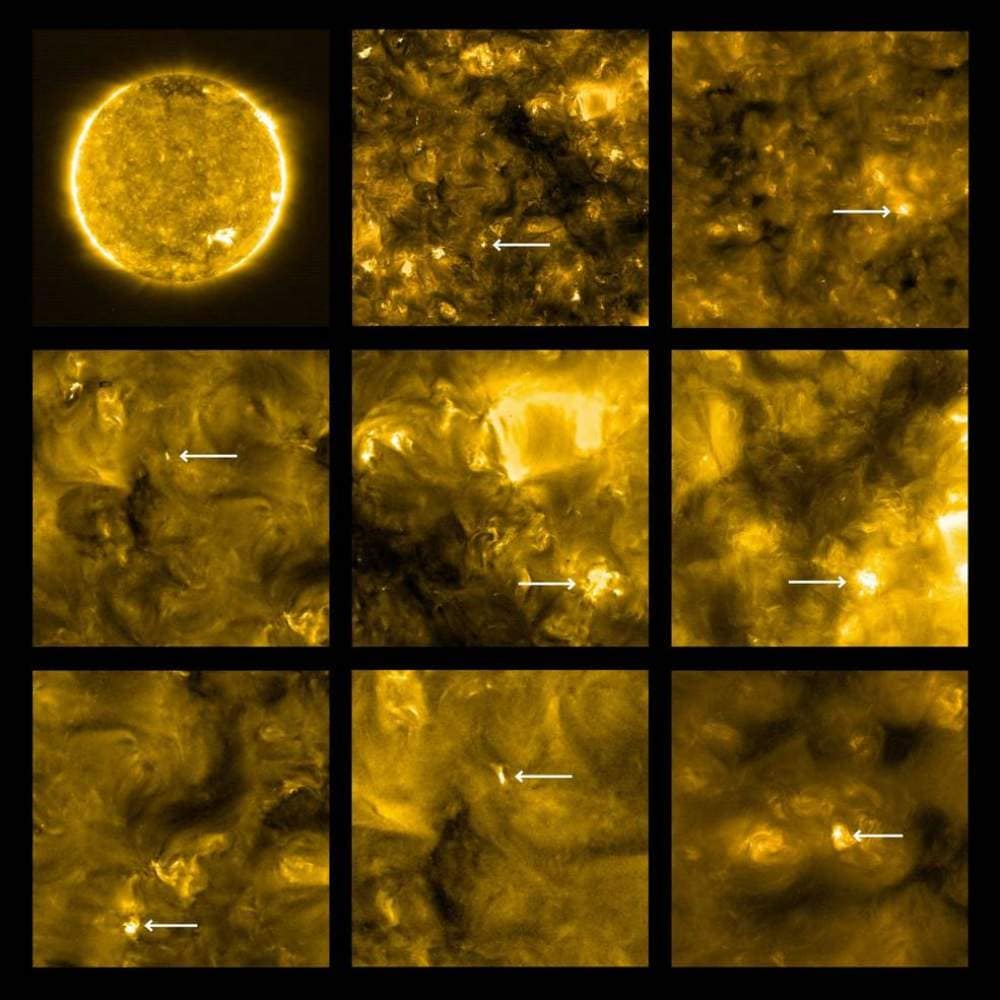 'Campfires' spotted by the Solar Orbiter are annotated with white arrows. Image: NASA/ESA[/caption]At the time the images were captured, the spacecraft was just 77 million km away from the Sun, Science Daily reported.An instrument called the Extreme Ultraviolet Imager (EUI) on the Solar Orbiter captured this first image, showing "campfires" during its first perihelion – the position of the spacecraft in its elliptical orbit where it makes its closest approach to the Sun."The campfires are little relatives of solar flares that we can observe from Earth, million or billion times smaller," Science Daily quoted David Berghmans of the Royal Observatory of Belgium (ROB), Principal Investigator of the EUI instrument, as saying.Berghmans also said that the Sun might look quiet at first glance, but those miniature flares can be observed everywhere “when we look in detail.”[caption id="attachment_8610871" align="alignnone" width="1280"]
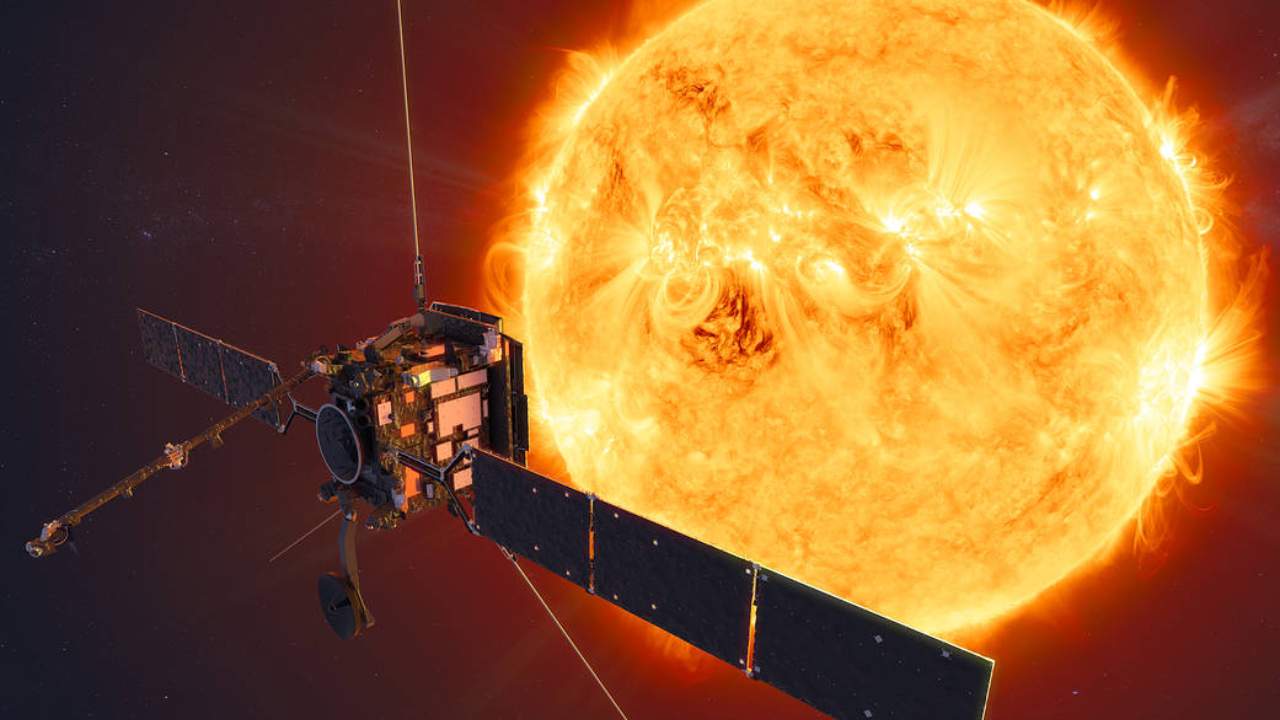 The Solar Orbiter is returning its first science data, including images of the Sun taken from closer than any spacecraft in history. Image: NASA/ESA[/caption]Scientists are unsure if these campfires are just tiny versions of big flares or they are generated due to an entirely different mechanism that isn't yet known.ESA’s Solar Orbiter project scientist Daniel Müller said that they did not expect these results so early, adding that the photos show the spacecraft is "off to an excellent start."According to EurekAlert, the coronavirus pandemic threw multiple challenges to the mission. It led to the shut down of mission control at the European Space Operations Center in Darmstadt, Germany, for over a week. Owing to the COVID-19 situation, teams involved in the mission also had to perform some critical operations remotely.

Careless Whispers: Scientists discover that plants can 'talk' to each other using smells
Life on Mars? European Space Agency’s Orbiter discovers ice water deposits at equator
Microsoft briefly overtakes Apple as the most valuable company, Apple back on top again
Even NASA is facing a tough time, starts layoffs following major budget cuts
ISRO, NASA's NISAR satellite to get ready by Jan-end, will monitor Earth's snow-covered regions