


Moon's surface is pretty cracked up, getting worse with time and meteor impacts
The Moon is far less dense & has way more deep fissures than scientists thought it did.

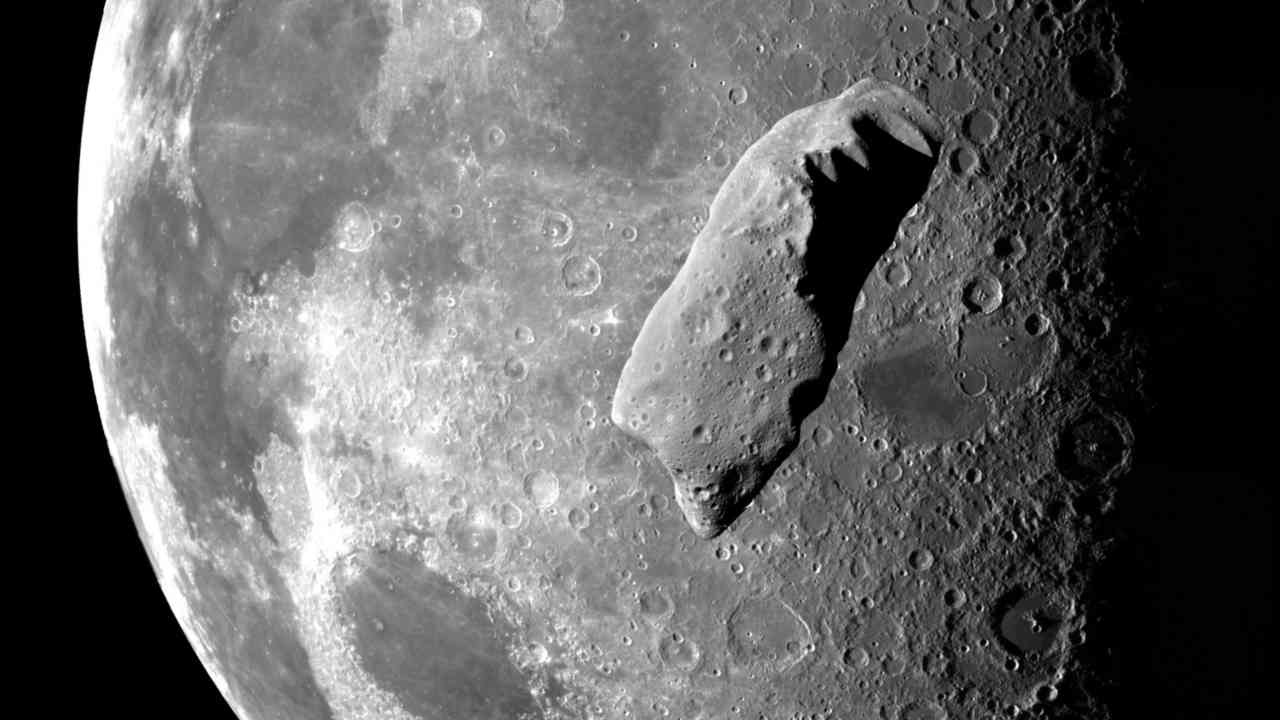
Artist's impression of the moon and a fly-by asteroid. Image courtesy: FederalLabs.org[/caption]This study is exciting since the moon, despite being very well researched and documented, we are constantly finding new aspects like these."The fragmentation goes much deeper than we thought," Sean Wiggins, lead author of the paper and student at Brown University, told LiveScience.Researchers simulated physical tests using the volcanic rock on Earth — the closest analogs to moon rocks. Wiggins and his colleagues also used computer simulations to find out how deeply and widely the lunar crust might have been cracked by impacts from asteroids and any other debris from the early solar system. The cracks grew, over time, and connected to create a lunar crust that is very fragmented — called the "megaregolith."The density of the Moon is also much lower than scientists had earlier thought."Data gathered by GRAIL (Gravity Recovery and Interior Laboratory) showed that the moon's crust was far less dense than expected", Wiggins told Live Science. By putting together detailed maps of the Moon's megaregolith, scientists are hoping to better understand how those regions conduct heat differently. This could lend clues to the formation of moons of other planets, or even the planets themselves.

Careless Whispers: Scientists discover that plants can 'talk' to each other using smells
Life on Mars? European Space Agency’s Orbiter discovers ice water deposits at equator
Microsoft briefly overtakes Apple as the most valuable company, Apple back on top again
Even NASA is facing a tough time, starts layoffs following major budget cuts
ISRO, NASA's NISAR satellite to get ready by Jan-end, will monitor Earth's snow-covered regions