


MIT develops a material ten times blacker than anything currently in existence
Test results showed that the material absorbed greater than 99.995 percent of incoming light, from every angle.

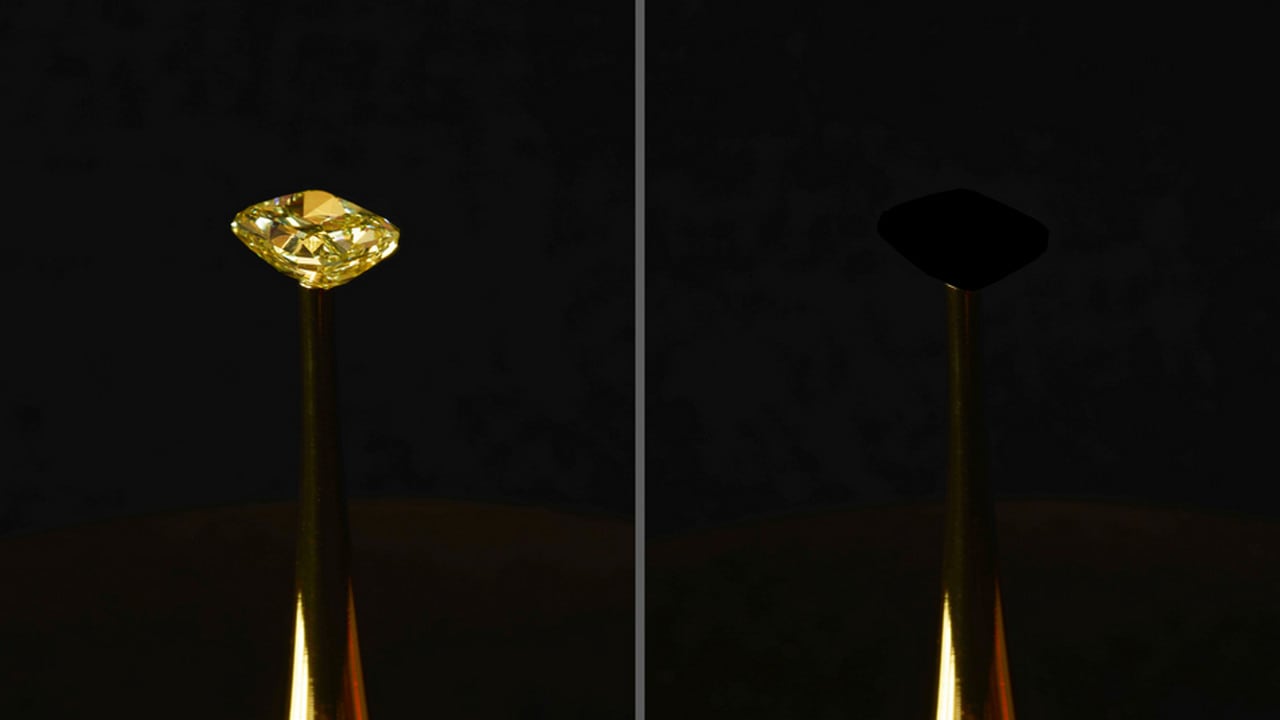
The blackest material in action. Image: Diemut Strebe[/caption]"Our material is 10 times blacker than anything that's ever been reported, but I think the blackest black is a constantly moving target," he said.Wardle and former MIT postdoc Kehang Cui, now a professor at Shanghai Jiao Tong University in China, didn't intend to engineer an ultrablack material.Instead, they were experimenting with ways to grow carbon nanotubes on electrically conducting materials such as aluminum, to boost their electrical and thermal properties."I remember noticing how black it was before growing carbon nanotubes on it, and then after growth, it looked even darker," Cui said.He measured the amount of light reflected by the material, not just from directly overhead, but also from every other possible angle.The results showed that the material absorbed greater than 99.995 percent of incoming light, from every angle.In essence, if the material contained bumps or ridges, or features of any kind, no matter what angle it was viewed from, these features would be invisible, obscured in a void of black, researchers said.They are not entirely sure of the mechanism contributing to the material's opacity, but they suspect that it may have something to do with the combination of etched aluminum, which is somewhat blackened, with the carbon nanotubes.Scientists believe that forests of carbon nanotubes can trap and convert most incoming light to heat, reflecting very little of it back out as light, thereby giving CNTs a particularly black shade."CNT forests of different varieties are known to be extremely black, but there is a lack of mechanistic understanding as to why this material is the blackest. That needs further study," Wardle said.

Careless Whispers: Scientists discover that plants can 'talk' to each other using smells
Life on Mars? European Space Agency’s Orbiter discovers ice water deposits at equator
Microsoft briefly overtakes Apple as the most valuable company, Apple back on top again
Even NASA is facing a tough time, starts layoffs following major budget cuts
ISRO, NASA's NISAR satellite to get ready by Jan-end, will monitor Earth's snow-covered regions