
Advertisement


Sections
Meghalayan Age for dummies: Here's all you need to know about the geologic era
The history of our planet now has a new chapter, the Meghalayan Age, that began 4,200 years ago.

Welcome to the Meghalayan Age! The history of our planet now has a new chapter that began 4,200 years ago and here's all you need to know about this new geological era.What is the Meghalayan Age?Geologists divide up the Earth's existence into slices of time and have classified a distinct age in Earth's history, and they're calling it the Meghalayan Age.Which is the 'slice' that we live in?We currently live in what is called the Holocene, which reflects everything that has happened over the past 11,700 years. Further, the Holocene is subdivided into three parts, the Greenlandian, the Northgrippian, and the youngest addition, the Meghalayan.The Greenlandian runs from 11,700 to 8,200 years ago; the Northgrippan runs from 8,200 to 4,200 years ago, and finally, the Meghalayan runs from 4,200 years ago to present.[caption id="attachment_4773251" align="alignnone" width="1280"]![Representational Image]() Representational Image[/caption]Is it official?Yes, Indeed. The International Commission on Stratigraphy has a famous diagram called the International Chronostratigraphic Chart, that depicts the timeline for Earth's history, and it has been updated.The commission is the official keeper of geologic time.They had tweeted about the newly named age via an image of the chart. However, they later issued a correction about the Meghalayan time period. That age goes to the present time and not up to 1950 that they tweeted out by mistake.The official version of the newly updated International Chronostratigraphic Chart can be viewed here.What is a geological age, and how is it calculated?You can’t really guess the age of a rock from looking at it. Yet in school kids are taught that Earth is 4.6 billion years old and that dinosaurs disappeared about 65 million years ago and so on. So how do scientists really identify these ages?They do it by something called geologic age dating, where they assign an age to a material, like a rock, and then calculate the history of the earth by relating it to time, along with with major event in the Earth's past, such as the break-up of continents, dramatic shifts in climate and more.This discipline is called geochronology and involves some serious detective work by scientists.Note four things here: name of the age, time, material (like a rock) and a major event.In the current era, age, as we all know, is called the 'Meghalayan' and the time that has been calculated is 4,200 years to present.That raises the next question: What is the material that the geologists found?It's a rock! A stalagmite which was found in the northeastern Indian state of Meghalaya has provided chemical signatures as evidence. For those who do not know, a stalagmite is a type of a rock formation that forms on the floor of a cave due to the accumulation from ceiling drippings.This concept of the Meghalayan age, according to a report by the BBC, was first proposed about six years ago, in a scholarly paper.[caption id="attachment_4773231" align="alignnone" width="1280"]
Representational Image[/caption]Is it official?Yes, Indeed. The International Commission on Stratigraphy has a famous diagram called the International Chronostratigraphic Chart, that depicts the timeline for Earth's history, and it has been updated.The commission is the official keeper of geologic time.They had tweeted about the newly named age via an image of the chart. However, they later issued a correction about the Meghalayan time period. That age goes to the present time and not up to 1950 that they tweeted out by mistake.The official version of the newly updated International Chronostratigraphic Chart can be viewed here.What is a geological age, and how is it calculated?You can’t really guess the age of a rock from looking at it. Yet in school kids are taught that Earth is 4.6 billion years old and that dinosaurs disappeared about 65 million years ago and so on. So how do scientists really identify these ages?They do it by something called geologic age dating, where they assign an age to a material, like a rock, and then calculate the history of the earth by relating it to time, along with with major event in the Earth's past, such as the break-up of continents, dramatic shifts in climate and more.This discipline is called geochronology and involves some serious detective work by scientists.Note four things here: name of the age, time, material (like a rock) and a major event.In the current era, age, as we all know, is called the 'Meghalayan' and the time that has been calculated is 4,200 years to present.That raises the next question: What is the material that the geologists found?It's a rock! A stalagmite which was found in the northeastern Indian state of Meghalaya has provided chemical signatures as evidence. For those who do not know, a stalagmite is a type of a rock formation that forms on the floor of a cave due to the accumulation from ceiling drippings.This concept of the Meghalayan age, according to a report by the BBC, was first proposed about six years ago, in a scholarly paper.[caption id="attachment_4773231" align="alignnone" width="1280"]![A portion of an Indian stalagmite that defines the beginning of the Meghalayan Age. Image: IUGS webiste]() A portion of an Indian stalagmite that defines the beginning of the Meghalayan Age. Image: IUGS webiste[/caption]Why is it called 'Meghalayan' though?The evidence was found in the state of Meghalaya in India, and that's how the new era gets its name.Finally, what was the event that marked the beginning of this era?According to the BBC report, the Meghalayan age began when a mega-drought devastated civilisations across the world, whose effects lasted two centuries. It severely disrupted civilisations in Egypt, Greece, Syria, Palestine, Mesopotamia, the Indus Valley, and the Yangtze River Valley.For those who dream of travelling back in time, expect no water.[caption id="attachment_4773221" align="alignnone" width="1280"]
A portion of an Indian stalagmite that defines the beginning of the Meghalayan Age. Image: IUGS webiste[/caption]Why is it called 'Meghalayan' though?The evidence was found in the state of Meghalaya in India, and that's how the new era gets its name.Finally, what was the event that marked the beginning of this era?According to the BBC report, the Meghalayan age began when a mega-drought devastated civilisations across the world, whose effects lasted two centuries. It severely disrupted civilisations in Egypt, Greece, Syria, Palestine, Mesopotamia, the Indus Valley, and the Yangtze River Valley.For those who dream of travelling back in time, expect no water.[caption id="attachment_4773221" align="alignnone" width="1280"]![Representational Image]() Representational Image[/caption]What is the debate around the Meghalayan era then?The new is always welcomed with objections, and here's why some researchers have objected to the Meghalaya’s creation.Currently, there is still an active debate about assigning a new geologic slice of time, other than Holocene, and is being referred to as the Anthropocene.Mark Maslin is a professor of geography at University College London, told the BBC, "It's official, we're in a new age; who knew?" mocking the abrupt imposition of the era.
Representational Image[/caption]What is the debate around the Meghalayan era then?The new is always welcomed with objections, and here's why some researchers have objected to the Meghalaya’s creation.Currently, there is still an active debate about assigning a new geologic slice of time, other than Holocene, and is being referred to as the Anthropocene.Mark Maslin is a professor of geography at University College London, told the BBC, "It's official, we're in a new age; who knew?" mocking the abrupt imposition of the era.
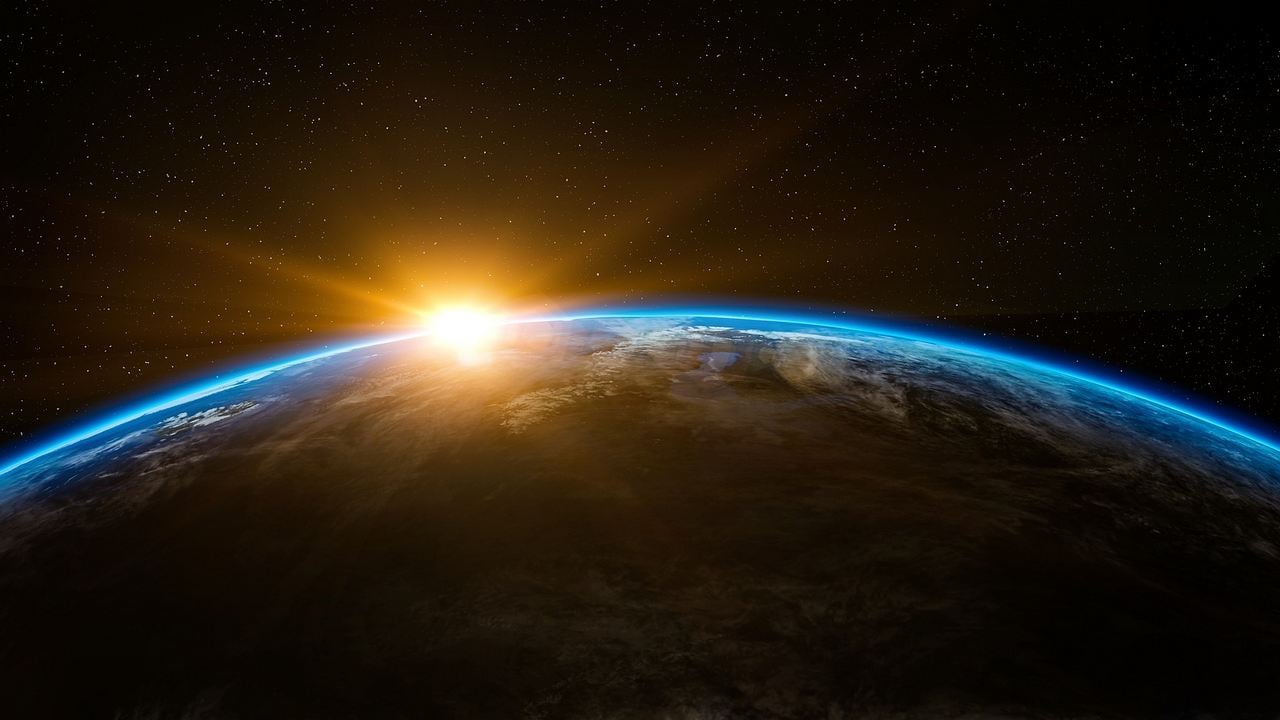 Representational Image[/caption]Is it official?Yes, Indeed. The International Commission on Stratigraphy has a famous diagram called the International Chronostratigraphic Chart, that depicts the timeline for Earth's history, and it has been updated.The commission is the official keeper of geologic time.They had tweeted about the newly named age via an image of the chart. However, they later issued a correction about the Meghalayan time period. That age goes to the present time and not up to 1950 that they tweeted out by mistake.The official version of the newly updated International Chronostratigraphic Chart can be viewed here.What is a geological age, and how is it calculated?You can’t really guess the age of a rock from looking at it. Yet in school kids are taught that Earth is 4.6 billion years old and that dinosaurs disappeared about 65 million years ago and so on. So how do scientists really identify these ages?They do it by something called geologic age dating, where they assign an age to a material, like a rock, and then calculate the history of the earth by relating it to time, along with with major event in the Earth's past, such as the break-up of continents, dramatic shifts in climate and more.This discipline is called geochronology and involves some serious detective work by scientists.Note four things here: name of the age, time, material (like a rock) and a major event.In the current era, age, as we all know, is called the 'Meghalayan' and the time that has been calculated is 4,200 years to present.That raises the next question: What is the material that the geologists found?It's a rock! A stalagmite which was found in the northeastern Indian state of Meghalaya has provided chemical signatures as evidence. For those who do not know, a stalagmite is a type of a rock formation that forms on the floor of a cave due to the accumulation from ceiling drippings.This concept of the Meghalayan age, according to a report by the BBC, was first proposed about six years ago, in a scholarly paper.[caption id="attachment_4773231" align="alignnone" width="1280"]
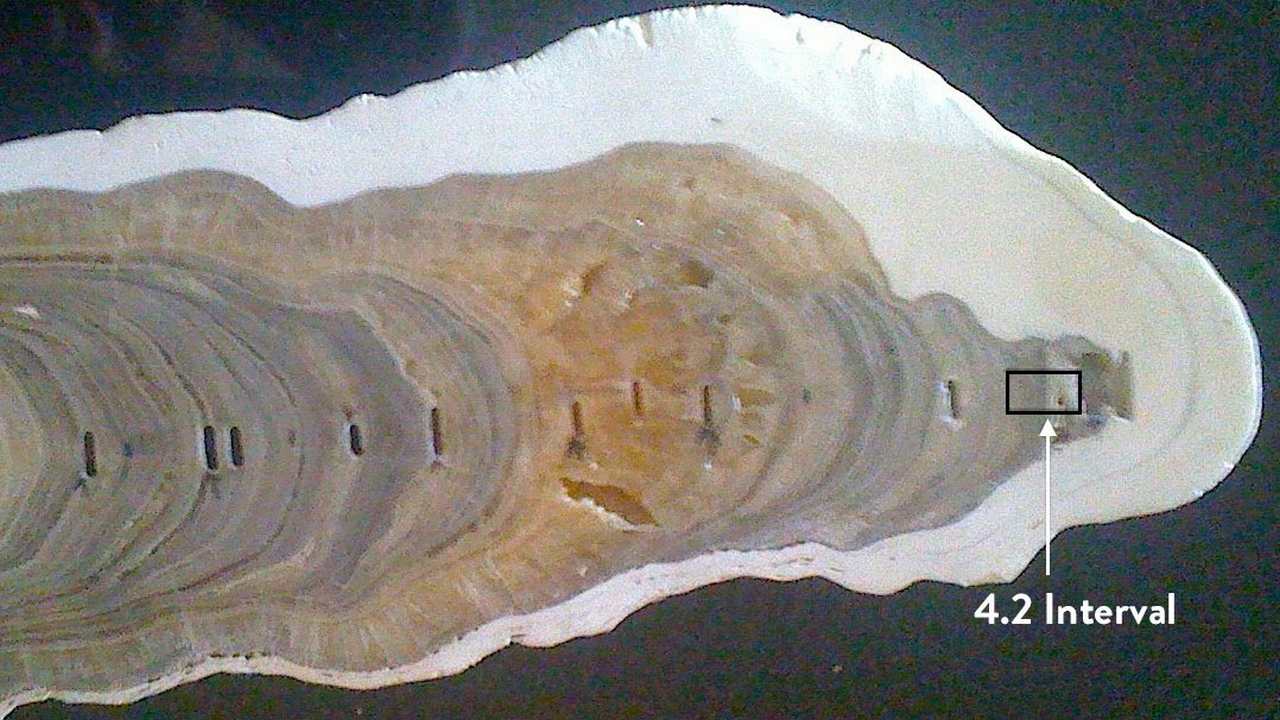 A portion of an Indian stalagmite that defines the beginning of the Meghalayan Age. Image: IUGS webiste[/caption]Why is it called 'Meghalayan' though?The evidence was found in the state of Meghalaya in India, and that's how the new era gets its name.Finally, what was the event that marked the beginning of this era?According to the BBC report, the Meghalayan age began when a mega-drought devastated civilisations across the world, whose effects lasted two centuries. It severely disrupted civilisations in Egypt, Greece, Syria, Palestine, Mesopotamia, the Indus Valley, and the Yangtze River Valley.For those who dream of travelling back in time, expect no water.[caption id="attachment_4773221" align="alignnone" width="1280"]
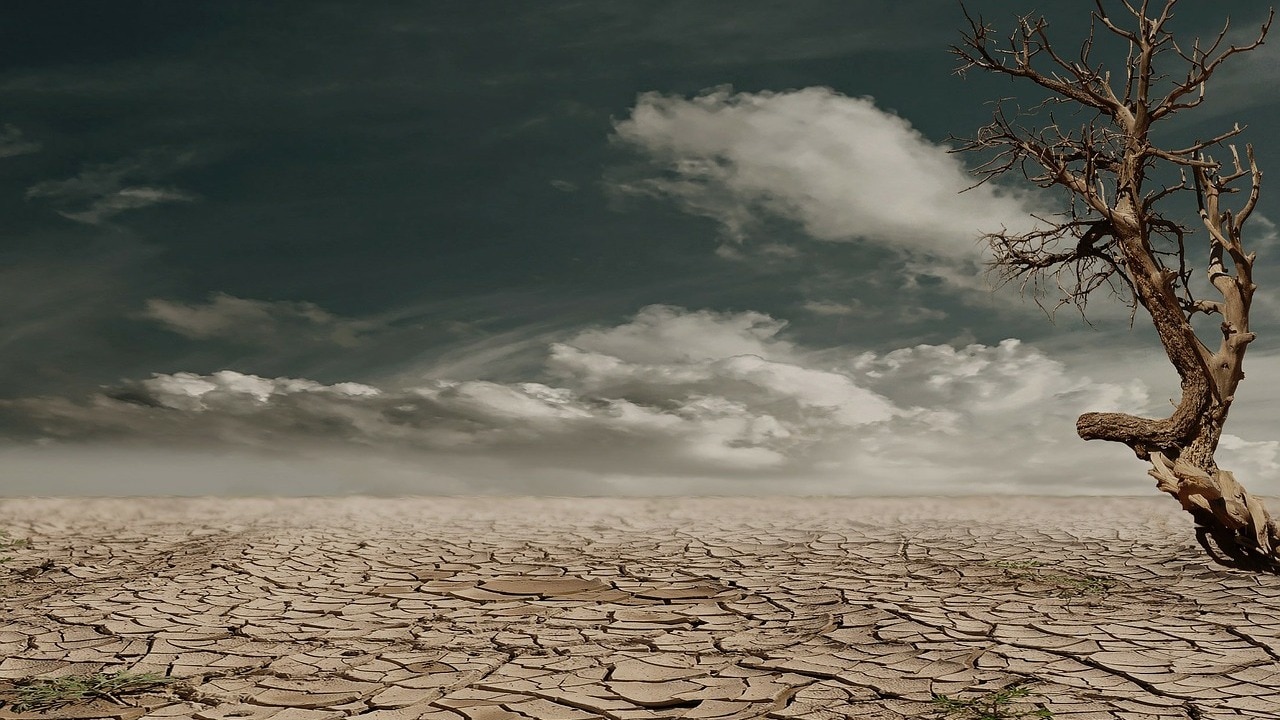 Representational Image[/caption]What is the debate around the Meghalayan era then?The new is always welcomed with objections, and here's why some researchers have objected to the Meghalaya’s creation.Currently, there is still an active debate about assigning a new geologic slice of time, other than Holocene, and is being referred to as the Anthropocene.Mark Maslin is a professor of geography at University College London, told the BBC, "It's official, we're in a new age; who knew?" mocking the abrupt imposition of the era.
First Published:Jul 19, 2018, 11:27:57 IST
Advertisement
Advertisement

Careless Whispers: Scientists discover that plants can 'talk' to each other using smells
Japanese scientists have recorded a video that shows plants, in certain conditions, communicate with each other using mists that carry smells. The discovery, reveals that plants release a fine mist of airborne compounds, to warn nearby plants of potential dangers
Life on Mars? European Space Agency’s Orbiter discovers ice water deposits at equator
European Space Agency's Mars Express Orbiter has identified massive ice and ice water deposits beneath the surface of Mars. The Mars Express orbiter was also the first to confirmed the presence of ice on Mars in 2004
Microsoft briefly overtakes Apple as the most valuable company, Apple back on top again
At its peak during the session, Microsoft's value reached $2.903 trillion, with a 2% surge. As of writing this article, Apple closed at $2.89 trillion, whereas Microsoft closed at $2.86 trillion
Even NASA is facing a tough time, starts layoffs following major budget cuts
NASA is facing some massive budget cuts, because of which, it has been forced to postpone some upcoming missions. NASA's Jet Propulsion Laboratory has been hit hard by recent federal budget cuts, resulting in the layoff of 100 contractors last week
ISRO, NASA's NISAR satellite to get ready by Jan-end, will monitor Earth's snow-covered regions
The NISAR satellite which has been developed jointly ISRO and NASA, should be ready for launch by the end of January 2024. The collaboration between NASA and ISRO on NISAR is the first time the two agencies have cooperated on hardware development for an Earth-observing mission
Advertisement
Advertisement