


Massive chunk of Greenland's ice caps has broken off, falls into the sea; evidence of rapid climate change
The ice came off a fjord called Nioghalvfjerdsfjorden and is around 110 square kilometres big.

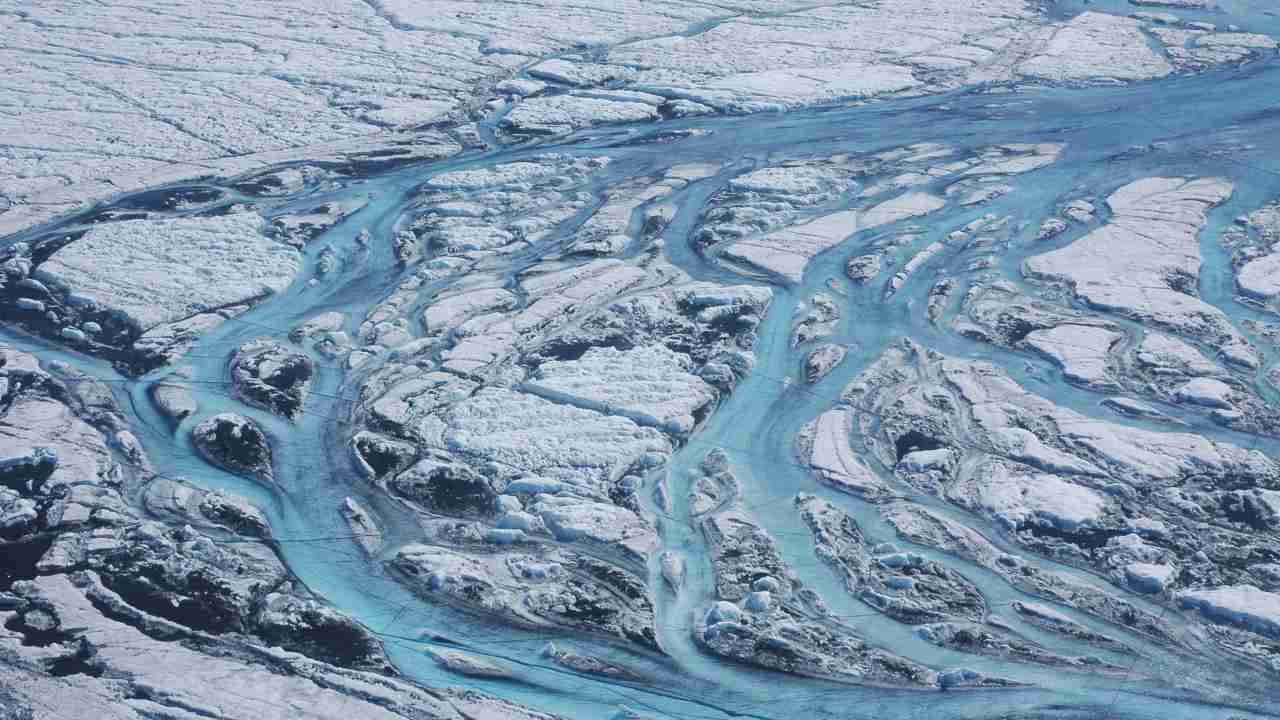
Melting ice in Greenland has been higher than it has ever been in recent years. Image credit: Woods Hole Oceanographic Institution[/caption]Annual end-of-melt-season changes for the Arctic’s largest ice shelf in Northeast Greenland are measured by optical satellite imagery, the survey is known as GEUS said. It shows that the area’s ice losses for the past two years each exceeded 50 square kilometres.The ice shelf has lost 160 square kilometres, an area nearly twice that of Manhattan in New York, since 1999.“We should be very concerned about what appears to be progressive disintegration at the Arctic’s largest remaining ice shelf,” said GEUS professor Jason Box.“Another massive chunk of vital sea ice has fallen into the ocean,” said Greenpeace spokeswoman Laura Meller who is aboard the organization’s ship Arctic Sunrise at the edge of the sea ice. “This is yet another alarm bell being rung by the climate crisis in a rapidly heating Arctic.”Last week, Ruth Mottram, an ice scientist at the Danish Meteorological Institute in Copenhagen, said, “again this year, the ice sheet has lost more ice than has been added in the form of snow.”“What is thought-provoking is that if we ... had seen this meltdown 30 years ago, we would have called it extreme. So in recent years, we have become accustomed to a high meltdown.”In August, a study showed that Greenland lost a record amount of ice during an extra-warm 2019, with the melt massive enough to cover California in more than 1.25 meters of water.

Careless Whispers: Scientists discover that plants can 'talk' to each other using smells
Life on Mars? European Space Agency’s Orbiter discovers ice water deposits at equator
Microsoft briefly overtakes Apple as the most valuable company, Apple back on top again
Even NASA is facing a tough time, starts layoffs following major budget cuts
ISRO, NASA's NISAR satellite to get ready by Jan-end, will monitor Earth's snow-covered regions