


National effort needed for making advanced materials for space missions: ISRO chief
The agency calls for national R&D efforts to make crucial components for the mission

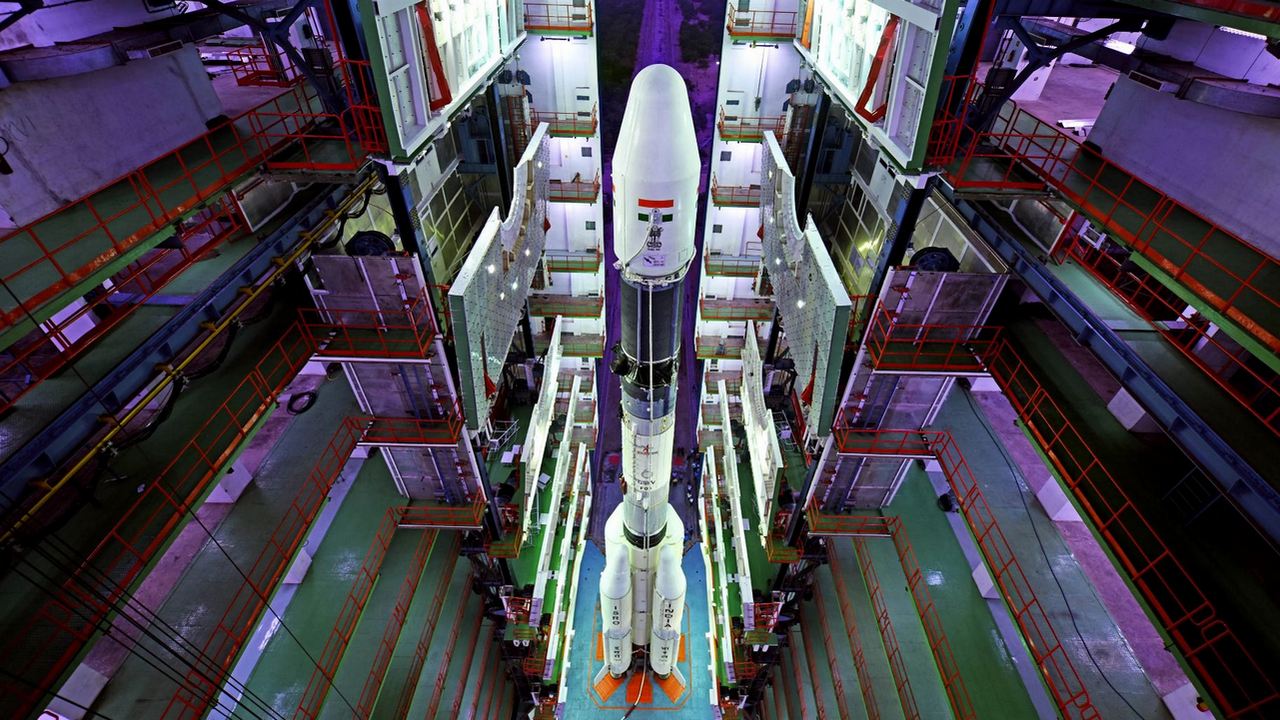
A glimpse of the fully-integrated GSLV-F08, ISRO's expendable launch vehicle, inside the vehicle assembly building. Image courtesy: ISRO[/caption]In the past, ISRO has sourced many resources from local industries: maraging steel alloys; a temperature-resistant niobium-hafnium alloy called Niobhat; aluminium composites; chemical requirements and temperature-resistant coatings among many more.Sivan added that while these resources met the needs of the ISRO's missions so far, the human space program will require a much larger — national — effort to develop advanced material like carbon-carbon composites and special electronic material. These, Sivan explains, are investments that will also propel smaller projects and launches in the future.“Lab-level R&D can produce small quantities of special materials... we want the industry to come forward and produce them in large quantities,” Sivan was quoted to have said to the Hindu. “Materials are the heart of any space programme. Without advancements in them we cannot keep it going.”Much of the material research ISRO conducts comes from researchers developing metals, ceramics, and electronics at the Vikram Sarabhai Space Centre's rocket development centre in Thiruvananthapuram.One of the agency's biggest success stories from indigenous partnerships is its tech-transfer for titanium sponges to Kerala Metals and Minerals in 2006, which erased an estimated import of 200-300 tonnes annually and lowered ISRO's cost enough to create a surplus supply in the country.

Careless Whispers: Scientists discover that plants can 'talk' to each other using smells
Life on Mars? European Space Agency’s Orbiter discovers ice water deposits at equator
Microsoft briefly overtakes Apple as the most valuable company, Apple back on top again
Even NASA is facing a tough time, starts layoffs following major budget cuts
ISRO, NASA's NISAR satellite to get ready by Jan-end, will monitor Earth's snow-covered regions