
Advertisement


Sections
Japan-UK private mission to demonstrate new space debris removal service on 22 March
The Space Surveillance Network is supposedly tracking over 28,000 pieces of debris, on top of the 3,600 working satellites in low-Earth orbit.

Japan-UK based company Astroscale is all set to launch a mission aimed at removal of debris from Earth's orbit. A service under the "End-of-Life Services" offerings by Astroscale, the technology demonstration dubbed Elsa-d is being touted as the world's first commercial mission for the demonstration of the space debris removal system. The mission, slated to launch on Saturday, 22 March at 6.07 am GMT (11.37 am IST), from the Baikonur Cosmodrome in Kazakhstan, will be managed out of the In-orbit Servicing Control Centre (IOCC) at the Satellite Applications Catapult in Harwel, UK.The unused man-made objects revolving in Earth’s orbit are called space debris. The removal of unwanted junk from orbit will eliminate the risk of collision between new and old satellites. This lowers the risk of exponential damage that could come from an unpredictable collision in the tightly-monitored and -regulated low-Earth orbit, where the vast majority of Earth's artificial satellites are placed. [caption id="attachment_9446631" align="alignnone" width="1280"]![Elsa-d ESA says approximately 9,200 tonnes of debris in orbit. Image: Astroscale/PA]() Elsa-d ESA says approximately 9,200 tonnes of debris in orbit. Image: Astroscale/PA[/caption]Elsa-d is reportedly a small satellite comprising a 17-kg client satellite and a 175-kg service spacecraft. Together, they are designed to find, intersect with and clamp on to a potentially unwanted satellite. Post this, it pushes the unwanted satellite into the Earth's atmosphere, where it burns up. As a part of the mission, Elsa-d will use a smaller spacecraft for the demonstration purpose. The spacecraft will act as a piece of the debris to capture scenarios before it burns up.The National Aeronautics and Space Administration (NASA) had earlier estimated that more than 20,000 pieces of debris are currently orbiting the Earth. These pieces move at a speed of 28,163 kmph (17,500 mph) and are enough to damage a satellite or a spacecraft.Also read: ESA signs 102 million dollar deal with Swiss startup to bring back space junk[caption id="attachment_6350601" align="alignnone" width="1280"]
Elsa-d ESA says approximately 9,200 tonnes of debris in orbit. Image: Astroscale/PA[/caption]Elsa-d is reportedly a small satellite comprising a 17-kg client satellite and a 175-kg service spacecraft. Together, they are designed to find, intersect with and clamp on to a potentially unwanted satellite. Post this, it pushes the unwanted satellite into the Earth's atmosphere, where it burns up. As a part of the mission, Elsa-d will use a smaller spacecraft for the demonstration purpose. The spacecraft will act as a piece of the debris to capture scenarios before it burns up.The National Aeronautics and Space Administration (NASA) had earlier estimated that more than 20,000 pieces of debris are currently orbiting the Earth. These pieces move at a speed of 28,163 kmph (17,500 mph) and are enough to damage a satellite or a spacecraft.Also read: ESA signs 102 million dollar deal with Swiss startup to bring back space junk[caption id="attachment_6350601" align="alignnone" width="1280"]![Space debris can be dangerous for other objects in space.]() Space debris can be dangerous for other objects in space.[/caption]The US Space Surveillance Network is supposedly tracking over 28,000 pieces of debris, in addition to 3,600 working satellites in low-Earth orbit, as an estimation by the European Space Agency. Satellite internet providers like OneWeb and SpaceX are looking to launch tens of thousands of satellites in the next decade. This makes space debris removal a top priority for both public and private space industry, to ensure that satellites and the space-based services they enable are unaffected by accidental collisions in orbit.
Space debris can be dangerous for other objects in space.[/caption]The US Space Surveillance Network is supposedly tracking over 28,000 pieces of debris, in addition to 3,600 working satellites in low-Earth orbit, as an estimation by the European Space Agency. Satellite internet providers like OneWeb and SpaceX are looking to launch tens of thousands of satellites in the next decade. This makes space debris removal a top priority for both public and private space industry, to ensure that satellites and the space-based services they enable are unaffected by accidental collisions in orbit.
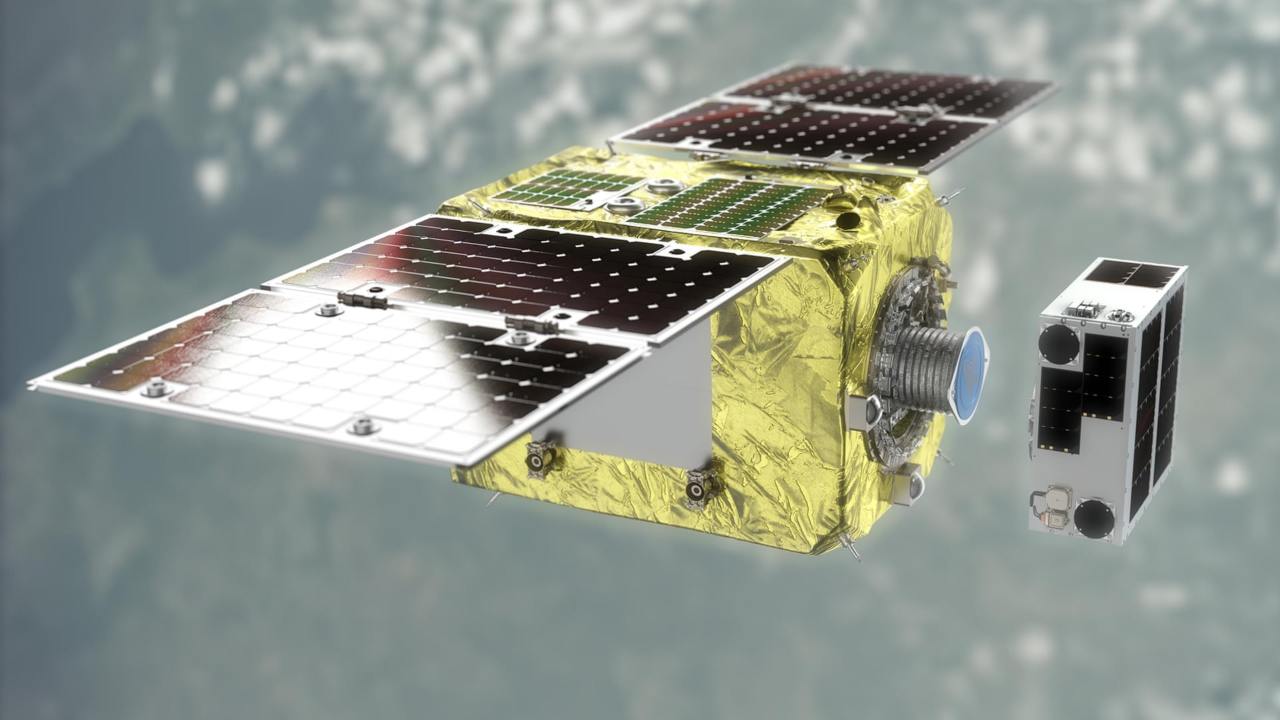 Elsa-d ESA says approximately 9,200 tonnes of debris in orbit. Image: Astroscale/PA[/caption]Elsa-d is reportedly a small satellite comprising a 17-kg client satellite and a 175-kg service spacecraft. Together, they are designed to find, intersect with and clamp on to a potentially unwanted satellite. Post this, it pushes the unwanted satellite into the Earth's atmosphere, where it burns up. As a part of the mission, Elsa-d will use a smaller spacecraft for the demonstration purpose. The spacecraft will act as a piece of the debris to capture scenarios before it burns up.The National Aeronautics and Space Administration (NASA) had earlier estimated that more than 20,000 pieces of debris are currently orbiting the Earth. These pieces move at a speed of 28,163 kmph (17,500 mph) and are enough to damage a satellite or a spacecraft.Also read: ESA signs 102 million dollar deal with Swiss startup to bring back space junk[caption id="attachment_6350601" align="alignnone" width="1280"]
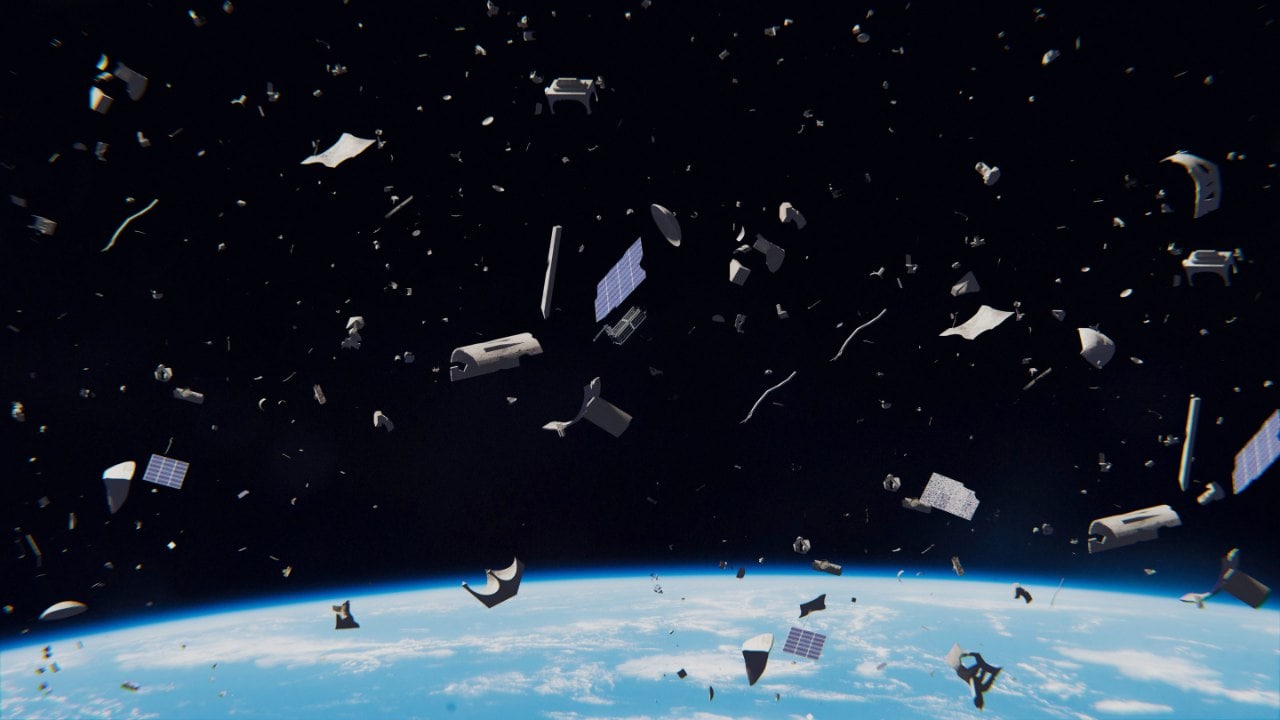 Space debris can be dangerous for other objects in space.[/caption]The US Space Surveillance Network is supposedly tracking over 28,000 pieces of debris, in addition to 3,600 working satellites in low-Earth orbit, as an estimation by the European Space Agency. Satellite internet providers like OneWeb and SpaceX are looking to launch tens of thousands of satellites in the next decade. This makes space debris removal a top priority for both public and private space industry, to ensure that satellites and the space-based services they enable are unaffected by accidental collisions in orbit.
First Published:Mar 22, 2021, 09:31:28 IST
Advertisement
Advertisement

Careless Whispers: Scientists discover that plants can 'talk' to each other using smells
Japanese scientists have recorded a video that shows plants, in certain conditions, communicate with each other using mists that carry smells. The discovery, reveals that plants release a fine mist of airborne compounds, to warn nearby plants of potential dangers
Life on Mars? European Space Agency’s Orbiter discovers ice water deposits at equator
European Space Agency's Mars Express Orbiter has identified massive ice and ice water deposits beneath the surface of Mars. The Mars Express orbiter was also the first to confirmed the presence of ice on Mars in 2004
Microsoft briefly overtakes Apple as the most valuable company, Apple back on top again
At its peak during the session, Microsoft's value reached $2.903 trillion, with a 2% surge. As of writing this article, Apple closed at $2.89 trillion, whereas Microsoft closed at $2.86 trillion
Even NASA is facing a tough time, starts layoffs following major budget cuts
NASA is facing some massive budget cuts, because of which, it has been forced to postpone some upcoming missions. NASA's Jet Propulsion Laboratory has been hit hard by recent federal budget cuts, resulting in the layoff of 100 contractors last week
ISRO, NASA's NISAR satellite to get ready by Jan-end, will monitor Earth's snow-covered regions
The NISAR satellite which has been developed jointly ISRO and NASA, should be ready for launch by the end of January 2024. The collaboration between NASA and ISRO on NISAR is the first time the two agencies have cooperated on hardware development for an Earth-observing mission
Advertisement
Advertisement