


Issue of space debris brought back into focus after Russian rocket breaks down above Indian Ocean
A US Airforce unit that detects and tracks artificial objects in Earth’s orbit, has identified 65 pieces from the incident.

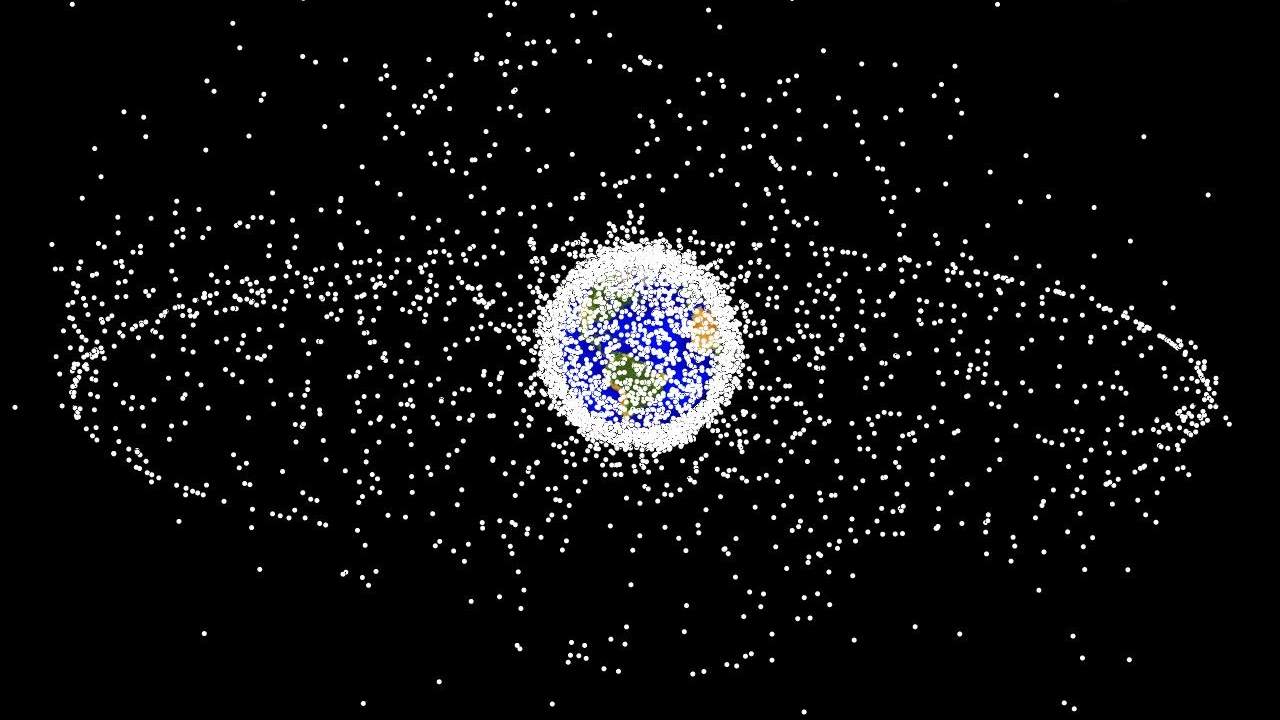
A computer-generated image of objects in Earth orbit that are currently being tracked by the US Air Force. Roughly 95% of the these objects are debris/not-functional satellites. Image credit: NASA[/caption]The United Launch Alliance (ULA) of the American Institute of Aeronautics and Astronautics revealed in a paper that several launch vehicle upper stages lack the “propulsive capability” of “de-orbiting themselves after placing their payload into orbit”.The ULA has found that if space agencies use technologies that enhance disposal capabilities, the cost involved in manoeuvring satellite vehicles to “preclude possible collisions” can be considerably lowered.According to the news agency AFP, the Russian space agency had said in a statement that “the breakdown [of Fregat-SB had] happened on May 8 2020,” above the Indian Ocean. “Currently we are working to collect data to confirm the quantity and orbit parameters of the fragments,” the statement added.The report said that the radio telescope inside Spektr-R had stopped responding to ground signals in January of 2019 and a few months later, the mission was closed down.

Careless Whispers: Scientists discover that plants can 'talk' to each other using smells
Life on Mars? European Space Agency’s Orbiter discovers ice water deposits at equator
Microsoft briefly overtakes Apple as the most valuable company, Apple back on top again
Even NASA is facing a tough time, starts layoffs following major budget cuts
ISRO, NASA's NISAR satellite to get ready by Jan-end, will monitor Earth's snow-covered regions