
Advertisement


Sections
ISRO's new PSLV variant to launch, power student satellites for free starting 25 Jan
ISRO has launched 9 student satellites, but this is the first to be launched by the new PSLV variant.

On 24 January, a new variant of the Indian Space Research Organisation's PSLV will launch the world's smallest satellite built by a student startup from Chennai, the KalamSAT. The satellite will be powered by the PSLV's fourth stage — a first for any space agency.The launch mission, called PSLV-C44, will be the first in the world to not just launch a satellite but use the rocket as a platform for experiments in space.The same rocket will also carry an earth observation satellite for the Defence Research and Development Organisation (DRDO), called MicroSAT-R, into orbit for surveillance and imaging.[caption id="attachment_5935521" align="alignnone" width="1280"]![KalamSAT was launched by NASA along with several other experiments on the Terrier Orion sounding rocket 22 June 2017 from the Wallops Island facility in Virginia. The satellite weighs just 64 grams. Image: Wikimedia Commons]() KalamSAT was launched by NASA along with several other experiments on the Terrier Orion sounding rocket 22 June 2017 from the Wallops Island facility in Virginia. The satellite weighs just 64 grams. Image: Wikimedia Commons[/caption]"PSLV-C44 is a new variant of the PSLV whose last stage PS-4, which usually becomes dead after ejecting the primary satellite, will remain active for six months," said ISRO's Chairman K Sivan at a press briefing, according to a Times of India report."We have received seven applications from students for doing experiments in space. Based on requirements from students, we will launch more such PSLV rockets this year so as to enable students to perform tests in space. This facility will be free for all students," Sivan added.[caption id="attachment_5636861" align="alignnone" width="1024"]
KalamSAT was launched by NASA along with several other experiments on the Terrier Orion sounding rocket 22 June 2017 from the Wallops Island facility in Virginia. The satellite weighs just 64 grams. Image: Wikimedia Commons[/caption]"PSLV-C44 is a new variant of the PSLV whose last stage PS-4, which usually becomes dead after ejecting the primary satellite, will remain active for six months," said ISRO's Chairman K Sivan at a press briefing, according to a Times of India report."We have received seven applications from students for doing experiments in space. Based on requirements from students, we will launch more such PSLV rockets this year so as to enable students to perform tests in space. This facility will be free for all students," Sivan added.[caption id="attachment_5636861" align="alignnone" width="1024"]![Representational image.]() Representational image.[/caption]With this new opportunity, students need not worry about the launches or rocket modules for their satellites, and can instead focus just on their experiments. This PS4 platforms will provide both platform and power to their satellite, the ISRO chief said.In 2017, one of the students had designed an earlier version of the KalamSAT and launched it on a NASA's sounding rocket. The Class 12 student from Chennai broke the global space record for the smallest and lightest satellite launched at the time.So far, the agency has already sent up nine satellites built by students, but this is the first to be launch in the new PSLV variant.
Representational image.[/caption]With this new opportunity, students need not worry about the launches or rocket modules for their satellites, and can instead focus just on their experiments. This PS4 platforms will provide both platform and power to their satellite, the ISRO chief said.In 2017, one of the students had designed an earlier version of the KalamSAT and launched it on a NASA's sounding rocket. The Class 12 student from Chennai broke the global space record for the smallest and lightest satellite launched at the time.So far, the agency has already sent up nine satellites built by students, but this is the first to be launch in the new PSLV variant.
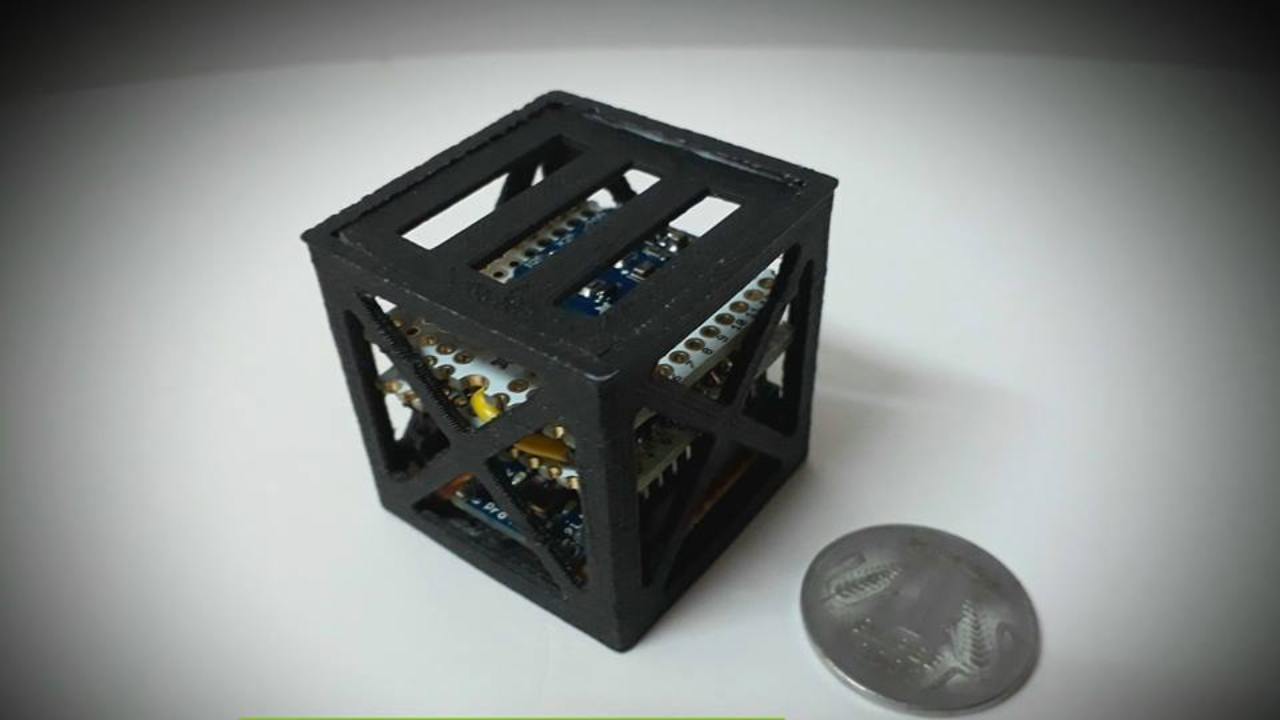 KalamSAT was launched by NASA along with several other experiments on the Terrier Orion sounding rocket 22 June 2017 from the Wallops Island facility in Virginia. The satellite weighs just 64 grams. Image: Wikimedia Commons[/caption]"PSLV-C44 is a new variant of the PSLV whose last stage PS-4, which usually becomes dead after ejecting the primary satellite, will remain active for six months," said ISRO's Chairman K Sivan at a press briefing, according to a Times of India report."We have received seven applications from students for doing experiments in space. Based on requirements from students, we will launch more such PSLV rockets this year so as to enable students to perform tests in space. This facility will be free for all students," Sivan added.[caption id="attachment_5636861" align="alignnone" width="1024"]
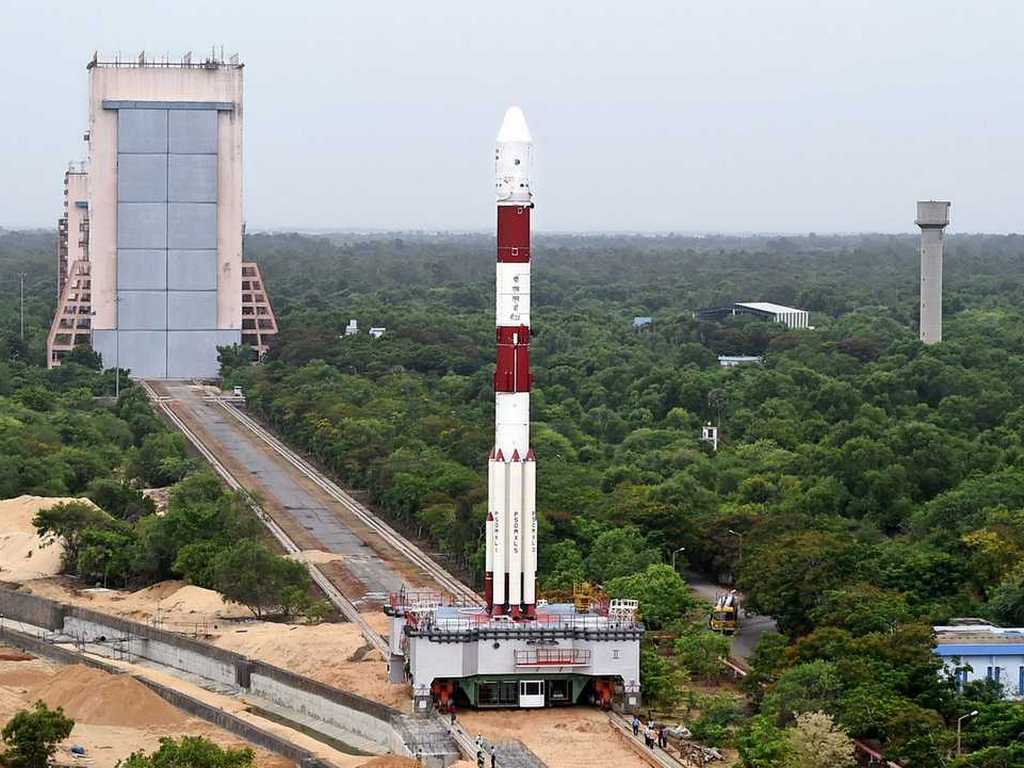 Representational image.[/caption]With this new opportunity, students need not worry about the launches or rocket modules for their satellites, and can instead focus just on their experiments. This PS4 platforms will provide both platform and power to their satellite, the ISRO chief said.In 2017, one of the students had designed an earlier version of the KalamSAT and launched it on a NASA's sounding rocket. The Class 12 student from Chennai broke the global space record for the smallest and lightest satellite launched at the time.So far, the agency has already sent up nine satellites built by students, but this is the first to be launch in the new PSLV variant.
First Published:Jan 21, 2019, 18:15:41 IST
Advertisement
Advertisement

Careless Whispers: Scientists discover that plants can 'talk' to each other using smells
Japanese scientists have recorded a video that shows plants, in certain conditions, communicate with each other using mists that carry smells. The discovery, reveals that plants release a fine mist of airborne compounds, to warn nearby plants of potential dangers
Life on Mars? European Space Agency’s Orbiter discovers ice water deposits at equator
European Space Agency's Mars Express Orbiter has identified massive ice and ice water deposits beneath the surface of Mars. The Mars Express orbiter was also the first to confirmed the presence of ice on Mars in 2004
Microsoft briefly overtakes Apple as the most valuable company, Apple back on top again
At its peak during the session, Microsoft's value reached $2.903 trillion, with a 2% surge. As of writing this article, Apple closed at $2.89 trillion, whereas Microsoft closed at $2.86 trillion
Even NASA is facing a tough time, starts layoffs following major budget cuts
NASA is facing some massive budget cuts, because of which, it has been forced to postpone some upcoming missions. NASA's Jet Propulsion Laboratory has been hit hard by recent federal budget cuts, resulting in the layoff of 100 contractors last week
ISRO, NASA's NISAR satellite to get ready by Jan-end, will monitor Earth's snow-covered regions
The NISAR satellite which has been developed jointly ISRO and NASA, should be ready for launch by the end of January 2024. The collaboration between NASA and ISRO on NISAR is the first time the two agencies have cooperated on hardware development for an Earth-observing mission
Advertisement
Advertisement