
Advertisement


Sections
ISRO's GSAT29 satellite successfully lifted in first of 3 raises to its final orbit
The GSAT-29 was put into orbit by India's heaviest rocket geosynchronous satellite launch vehicle.

India's latest communication satellite GSAT-29's orbit was successfully raised on 15 November by firing its motors for 4,875 seconds, said the Indian Space Research Organisation (ISRO).The first of its scheduled three orbit-raising operations was successfully carried out by firing the liquid apogee motor on board the satellite, it said.The motor was fired at 8.34 am for one hour and 35 minutes.The GSAT-29, which will link Jammu and Kashmir and the northeastern states under the Digital India programme, was put into orbit by India's latest and heaviest rocket geosynchronous satellite launch vehicle (GSLV-Mk III/D2) on 14 November.[caption id="attachment_5554821" align="alignnone" width="940"]![Indian Space Research Organisation (ISRO) launched a communication satellite (GSAT-29) in the orbit with its heaviest rocket (GSLV-Mk III) in its latest space mission. Twitter/@isro]()
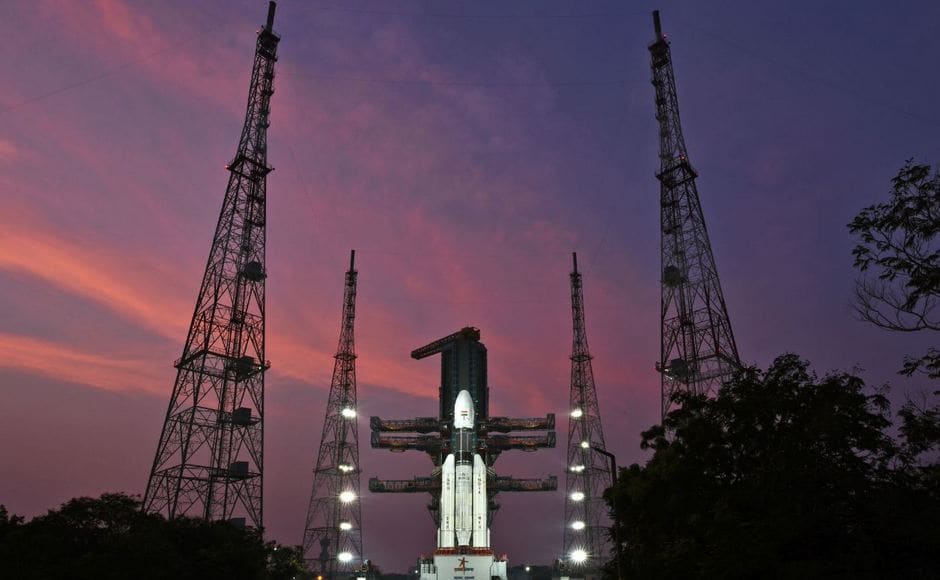
Indian Space Research Organisation (ISRO) launched a communication satellite (GSAT-29) in the orbit with its heaviest rocket (GSLV-Mk III) in its latest space mission. Twitter/@isro[/caption]According to ISRO, after the raising of the orbit, the apogee x perigee was changed from 35,897 km x 189 km to 35,745 km x 7,542 km.Apogee refers to the farthest point from the earth and perigee is the closest point to earth in case of a satellite in orbit.On 14 November, ISRO Chairman K Sivan said the three orbit-raising operations would raise the satellite from the geostationary transfer orbit (GTO) to geostationary orbit (GSO).
The GSAT-29, with a lifespan of 10 years, is a multi-beam satellite that carries Ka/Ku-band high throughput communication transponders. It was intended to meet the communication requirements of users, especially in remote areas.In addition, several new technologies such as Q/V-band payload, data transmission through optical communication link would also be demonstrated helping realise future advanced satellites, Sivan added.The Q/V-band payload, data transmission through optical communication link would be used for the satellite to satellite communication, said D.K. Das, Director, Space Applications Centre, ISRO. Its frequency is not yet crowded.The satellite also carries a 55-metre geo-high resolution camera that would be fixed in the weather satellites, once it starts functioning, Sivan said.A combination of high throughput satellites — GSAT-19, GSAT-29, GSAT-11 and GSAT-20 — would provide the high-speed internet needed for the success of the Digital India programme, he added.First Published:Nov 15, 2018, 16:23:36 IST
Advertisement
Advertisement

Careless Whispers: Scientists discover that plants can 'talk' to each other using smells
Japanese scientists have recorded a video that shows plants, in certain conditions, communicate with each other using mists that carry smells. The discovery, reveals that plants release a fine mist of airborne compounds, to warn nearby plants of potential dangers
Life on Mars? European Space Agency’s Orbiter discovers ice water deposits at equator
European Space Agency's Mars Express Orbiter has identified massive ice and ice water deposits beneath the surface of Mars. The Mars Express orbiter was also the first to confirmed the presence of ice on Mars in 2004
Microsoft briefly overtakes Apple as the most valuable company, Apple back on top again
At its peak during the session, Microsoft's value reached $2.903 trillion, with a 2% surge. As of writing this article, Apple closed at $2.89 trillion, whereas Microsoft closed at $2.86 trillion
Even NASA is facing a tough time, starts layoffs following major budget cuts
NASA is facing some massive budget cuts, because of which, it has been forced to postpone some upcoming missions. NASA's Jet Propulsion Laboratory has been hit hard by recent federal budget cuts, resulting in the layoff of 100 contractors last week
ISRO, NASA's NISAR satellite to get ready by Jan-end, will monitor Earth's snow-covered regions
The NISAR satellite which has been developed jointly ISRO and NASA, should be ready for launch by the end of January 2024. The collaboration between NASA and ISRO on NISAR is the first time the two agencies have cooperated on hardware development for an Earth-observing mission
Advertisement
Advertisement