


ISRO's GSAT-29 successfully launched: All you need to know about India's latest satellite in orbit
The satellite is part of the ‘Digital India’ program to expand telecom, internet service nationwide.

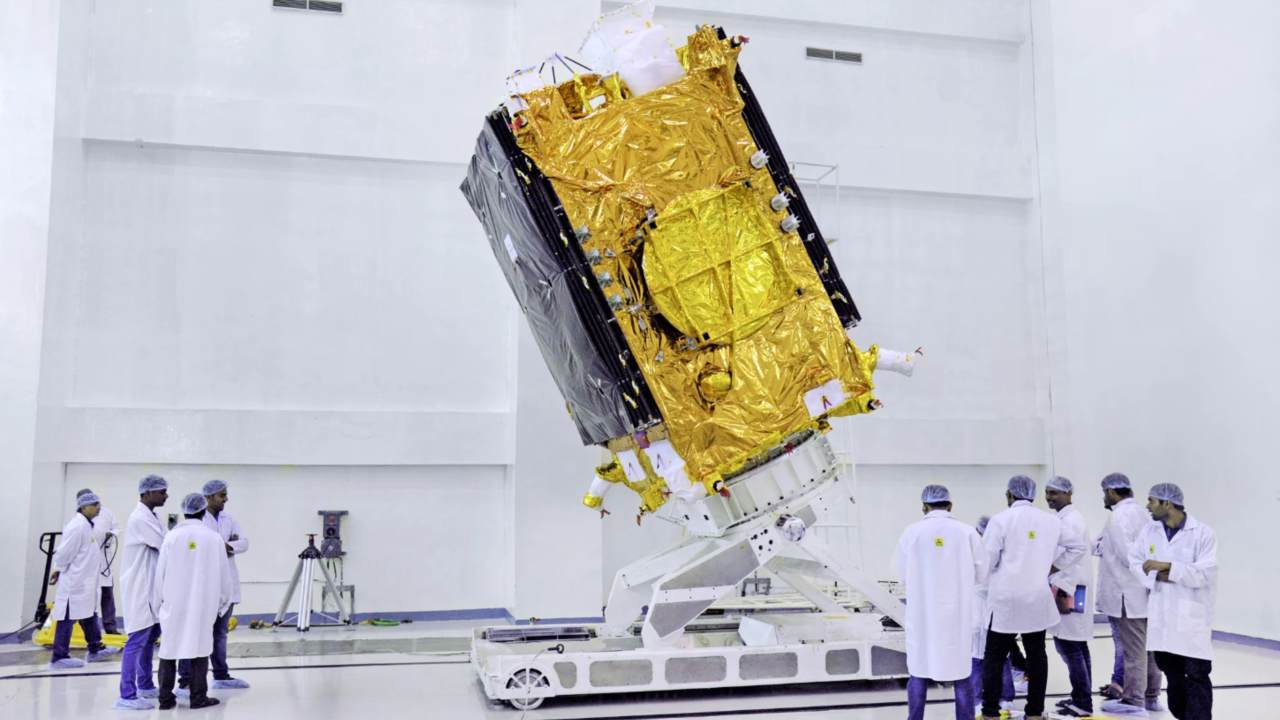
The GSAT-29 satellite being positioned for transport to ISRO's Sriharikota launchpad. Image courtesy: ISRO[/caption]The launch of the GSAT-29 satellite on the 64—tonne GSLV-III rocket adds to a series of test flights ISRO is carrying out to develop the agency’s heaviest rocket for use in the manned space mission planned for 2022.India's first manned mission Gaganyaan is expected to carry a three-person team of Indian astronauts to space for a seven days trip in low-Earth orbit, planned for late 2022.There are two more launches planned before the year-end — the GSAT-7A satellite for use by the Indian Air Force later this month, and the GSAT-11, which was recalled from the launchpad in April this year during pre-flight tests. The satellite will have another go at a launch from the European spaceport in French Guinea on 4 December, the ToI report said.Also, just a few months away is the Chandrayaan-2 mission that will carry an orbiter, lander and rover in ISRO’s second mission to the moon. Chandrayaan-2 is scheduled to launch on 3 January, 2019, as per ISRO’s most recent updates.What makes the mission significant:The GSAT-29 mission, satellite, and rocket are important to fulfilling different aspects of ISRO’s future plans.Dusting off the MarkIII: The GSLV-MkIII is ISRO's heaviest rocket by far and will be flown almost seven months after its last mission in April to put the IRNSS-1I satellite into low-Earth orbit.Developmental flight for Gaganyaan: The GSAT-29 mission is especially important to ISRO's Gaganyaan mission. It is the second in a series of developmental trials of ISRO’s heavy-weight GSLV-MkIII rocket before it flies three Indian astronauts to low-Earth orbit in India's first manned mission to space (or more accurately, low-Earth orbit).The next milestone: The agency's launch calendar is brimming with launches for the months leading up the next launch of global importance — the Chandrayaan-2 mission to send an orbiter, lander, and rover to the moon, scheduled for launch on 3 January 2019.

Careless Whispers: Scientists discover that plants can 'talk' to each other using smells
Life on Mars? European Space Agency’s Orbiter discovers ice water deposits at equator
Microsoft briefly overtakes Apple as the most valuable company, Apple back on top again
Even NASA is facing a tough time, starts layoffs following major budget cuts
ISRO, NASA's NISAR satellite to get ready by Jan-end, will monitor Earth's snow-covered regions