


ISRO is set to launch its 40th communication satellite GSAT-31 on 6 February
The GSAT-31 will be used for applications like DTH television services, cellular backhaul, etc.

The Indian Space Research Organisation is all set to launch its 40th communication satellite GSAT-31 on Wednesday from the spaceport in French Guiana.The satellite with a mission life of 15 years will provide continuity to operational services on some of the in-orbit satellites and augment the Ku-band transponder capacity in Geostationary Orbit, the space agency said.In a statement, the Indian Space Research Organisation (ISRO) said the satellite, weighing about 2,535 kg, is scheduled for launch onboard the Ariane-5 (VA247) from Kourou in French Guiana.[caption id="attachment_5535361" align="alignnone" width="1280"]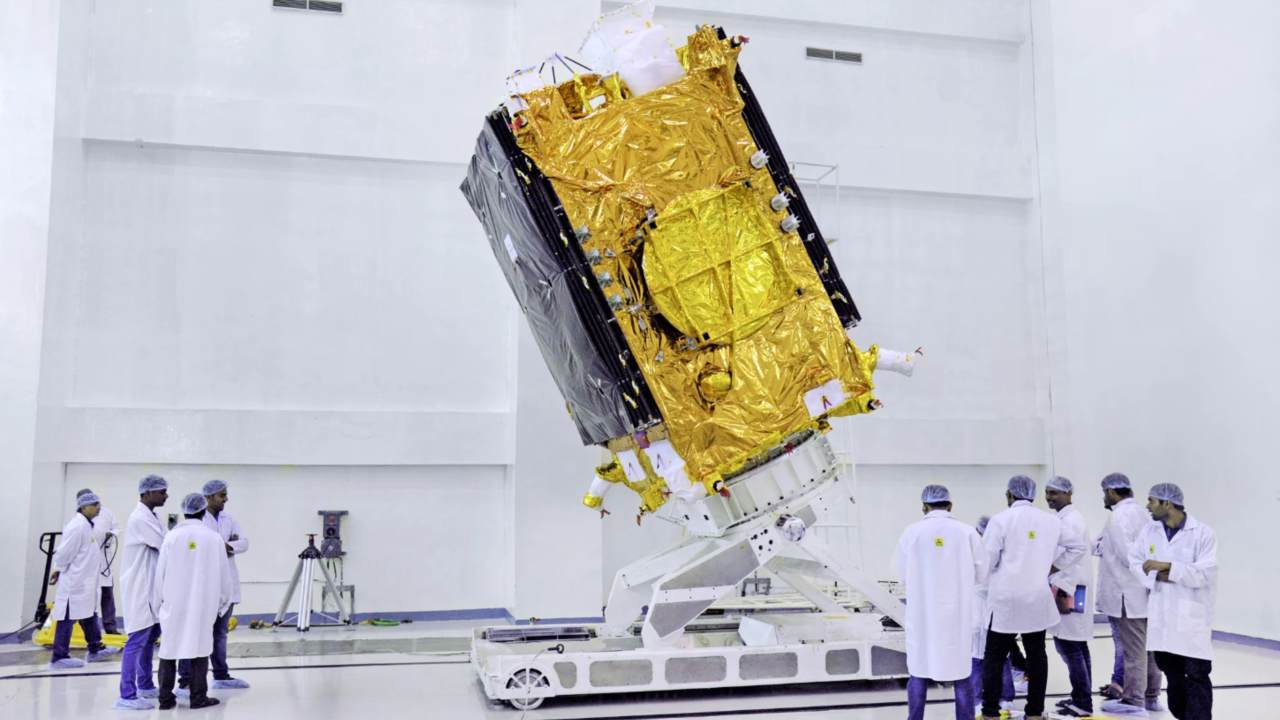 Representational Image. Image courtesy: ISRO[/caption]"The satellite GSAT-31 is configured on ISRO's enhanced I-2K Bus, utilising the maximum bus capabilities of this type. The satellite derives its heritage from ISROs earlier INSAT/GSAT satellite series. The satellite provides Indian mainland and island coverage," the agency said.ISRO also said the GSAT-31 will be used for supporting VSAT networks, television uplinks, digital satellite news gathering, DTH television services, cellular back haul connectivity and many such applications.The satellite will also provide wide beam coverage to facilitate communication over large oceanic region comprising large part of the Arabian Sea, the Bay of Bengal and the Indian Ocean using wide band transponder, ISRO said.The agency added that two Ku-band beacon downlink signals are transmitted for ground tracking purpose.

Careless Whispers: Scientists discover that plants can 'talk' to each other using smells
Life on Mars? European Space Agency’s Orbiter discovers ice water deposits at equator
Microsoft briefly overtakes Apple as the most valuable company, Apple back on top again
Even NASA is facing a tough time, starts layoffs following major budget cuts
ISRO, NASA's NISAR satellite to get ready by Jan-end, will monitor Earth's snow-covered regions