
Advertisement


Sections
Inventor of CRISPR calls for a global moratorium on gene-edited embryos, humans
The risks of such an experiment are still far greater than its benefits, Zhang said in a statement.

One of the inventors of the revolutionary gene-editing technology CRISPR, published a statement calling for an international moratorium on using the technique to make gene-edited babies.A Harvard and MIT member, renowned genetic research Feng Zhang made the statement after a Chinese researcher claimed having helped create the world’s first babies with modified genes using CRISPR. The genes edited by the researcher were to make them resistant to HIV, according to reports.In the IVF trials carried out by the Chinese research team, a gene called CCR5 was removed using CRISPR, making them ‘resistant’ to HIV infection. Without a published paper to authenticate the trials, multiple experts have questioned the safety and need for the procedure since the story made headlines.[caption id="attachment_5625431" align="alignnone" width="1280"]![]() Feng Zhang, inventor of the CRISPR gene-editing technology. Image courtesy: Broad Institute[/caption]“Given the current state of the technology, I am in favour of a moratorium on implantation of edited embryos,” Zhang told MIT Technology Review.Zhang also points out in his statement that the risks of such an experiment are far greater than its benefits, adding that he was also “deeply concerned” by the secrecy around the project in question.The researcher claiming to have contributed to the success of the gene-editing trial in babies, He Jiankui, took responsibility for the health of the babies but left the ethical debate about the procedure to the scientific community, Associated Press reports. Early reactions from the scientific community“I feel a strong responsibility that it’s not just to make a first, but also make it an example,” He told AP. “Society will decide what to do next” in terms of allowing or forbidding such science.Some members of the scientific community were astounded to hear the claim, strongly condemning it.It’s “unconscionable ... an experiment on human beings that is not morally or ethically defensible,” said Dr Kiran Musunuru, a University of Pennsylvania gene editing expert and editor of a genetics journal.[caption id="attachment_5624541" align="alignnone" width="1280"]
Feng Zhang, inventor of the CRISPR gene-editing technology. Image courtesy: Broad Institute[/caption]“Given the current state of the technology, I am in favour of a moratorium on implantation of edited embryos,” Zhang told MIT Technology Review.Zhang also points out in his statement that the risks of such an experiment are far greater than its benefits, adding that he was also “deeply concerned” by the secrecy around the project in question.The researcher claiming to have contributed to the success of the gene-editing trial in babies, He Jiankui, took responsibility for the health of the babies but left the ethical debate about the procedure to the scientific community, Associated Press reports. Early reactions from the scientific community“I feel a strong responsibility that it’s not just to make a first, but also make it an example,” He told AP. “Society will decide what to do next” in terms of allowing or forbidding such science.Some members of the scientific community were astounded to hear the claim, strongly condemning it.It’s “unconscionable ... an experiment on human beings that is not morally or ethically defensible,” said Dr Kiran Musunuru, a University of Pennsylvania gene editing expert and editor of a genetics journal.[caption id="attachment_5624541" align="alignnone" width="1280"]![An image of the IVF procedure used in the gene-editing experiment. AP]() An image of the IVF procedure used in the gene-editing experiment. AP[/caption]“This is far too premature,” said Dr Eric Topol, who heads the Scripps Research Translational Institute in California. “We’re dealing with the operating instructions of a human being. It’s a big deal.”However, one famed geneticist, Harvard University’s George Church, defended attempting gene editing for HIV, which he called “a major and growing public health threat.”“I think this is justifiable,” Church said of the goal.Feng’s statement calling for a complete moratorium on using CRISPR gene-editing in human trials comes a day before a global genome-editing summit in Hong Kong.CRISPR was first demonstrated as a tool to edit DNA in Zhang’s 2013 paper, enabling several breakthroughs in gene-editing in a range of different species.With inputs from the Associated Press
An image of the IVF procedure used in the gene-editing experiment. AP[/caption]“This is far too premature,” said Dr Eric Topol, who heads the Scripps Research Translational Institute in California. “We’re dealing with the operating instructions of a human being. It’s a big deal.”However, one famed geneticist, Harvard University’s George Church, defended attempting gene editing for HIV, which he called “a major and growing public health threat.”“I think this is justifiable,” Church said of the goal.Feng’s statement calling for a complete moratorium on using CRISPR gene-editing in human trials comes a day before a global genome-editing summit in Hong Kong.CRISPR was first demonstrated as a tool to edit DNA in Zhang’s 2013 paper, enabling several breakthroughs in gene-editing in a range of different species.With inputs from the Associated Press
 Feng Zhang, inventor of the CRISPR gene-editing technology. Image courtesy: Broad Institute[/caption]“Given the current state of the technology, I am in favour of a moratorium on implantation of edited embryos,” Zhang told MIT Technology Review.Zhang also points out in his statement that the risks of such an experiment are far greater than its benefits, adding that he was also “deeply concerned” by the secrecy around the project in question.The researcher claiming to have contributed to the success of the gene-editing trial in babies, He Jiankui, took responsibility for the health of the babies but left the ethical debate about the procedure to the scientific community, Associated Press reports.
 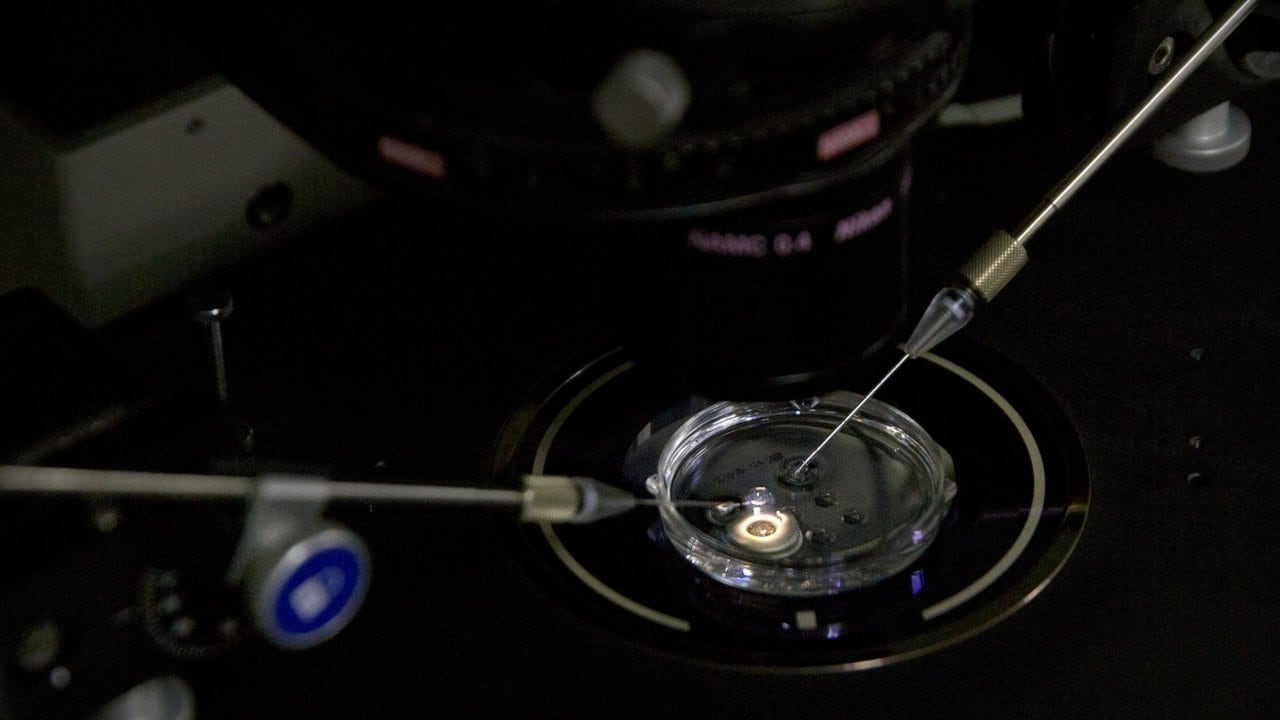 An image of the IVF procedure used in the gene-editing experiment. AP[/caption]“This is far too premature,” said Dr Eric Topol, who heads the Scripps Research Translational Institute in California. “We’re dealing with the operating instructions of a human being. It’s a big deal.”However, one famed geneticist, Harvard University’s George Church, defended attempting gene editing for HIV, which he called “a major and growing public health threat.”“I think this is justifiable,” Church said of the goal.Feng’s statement calling for a complete moratorium on using CRISPR gene-editing in human trials comes a day before a global genome-editing summit in Hong Kong.CRISPR was first demonstrated as a tool to edit DNA in Zhang’s 2013 paper, enabling several breakthroughs in gene-editing in a range of different species.With inputs from the Associated Press
First Published:Nov 27, 2018, 17:23:28 IST
Advertisement
Advertisement

Careless Whispers: Scientists discover that plants can 'talk' to each other using smells
Japanese scientists have recorded a video that shows plants, in certain conditions, communicate with each other using mists that carry smells. The discovery, reveals that plants release a fine mist of airborne compounds, to warn nearby plants of potential dangers
Life on Mars? European Space Agency’s Orbiter discovers ice water deposits at equator
European Space Agency's Mars Express Orbiter has identified massive ice and ice water deposits beneath the surface of Mars. The Mars Express orbiter was also the first to confirmed the presence of ice on Mars in 2004
Microsoft briefly overtakes Apple as the most valuable company, Apple back on top again
At its peak during the session, Microsoft's value reached $2.903 trillion, with a 2% surge. As of writing this article, Apple closed at $2.89 trillion, whereas Microsoft closed at $2.86 trillion
Even NASA is facing a tough time, starts layoffs following major budget cuts
NASA is facing some massive budget cuts, because of which, it has been forced to postpone some upcoming missions. NASA's Jet Propulsion Laboratory has been hit hard by recent federal budget cuts, resulting in the layoff of 100 contractors last week
ISRO, NASA's NISAR satellite to get ready by Jan-end, will monitor Earth's snow-covered regions
The NISAR satellite which has been developed jointly ISRO and NASA, should be ready for launch by the end of January 2024. The collaboration between NASA and ISRO on NISAR is the first time the two agencies have cooperated on hardware development for an Earth-observing mission
Advertisement
Advertisement