
Advertisement


Sections
Indian monsoon: The challenges of accurately predicting the deadly thundershowers
It is just the inherent complexity of the tropical systems like that over India that hold us behind in weather prediction.

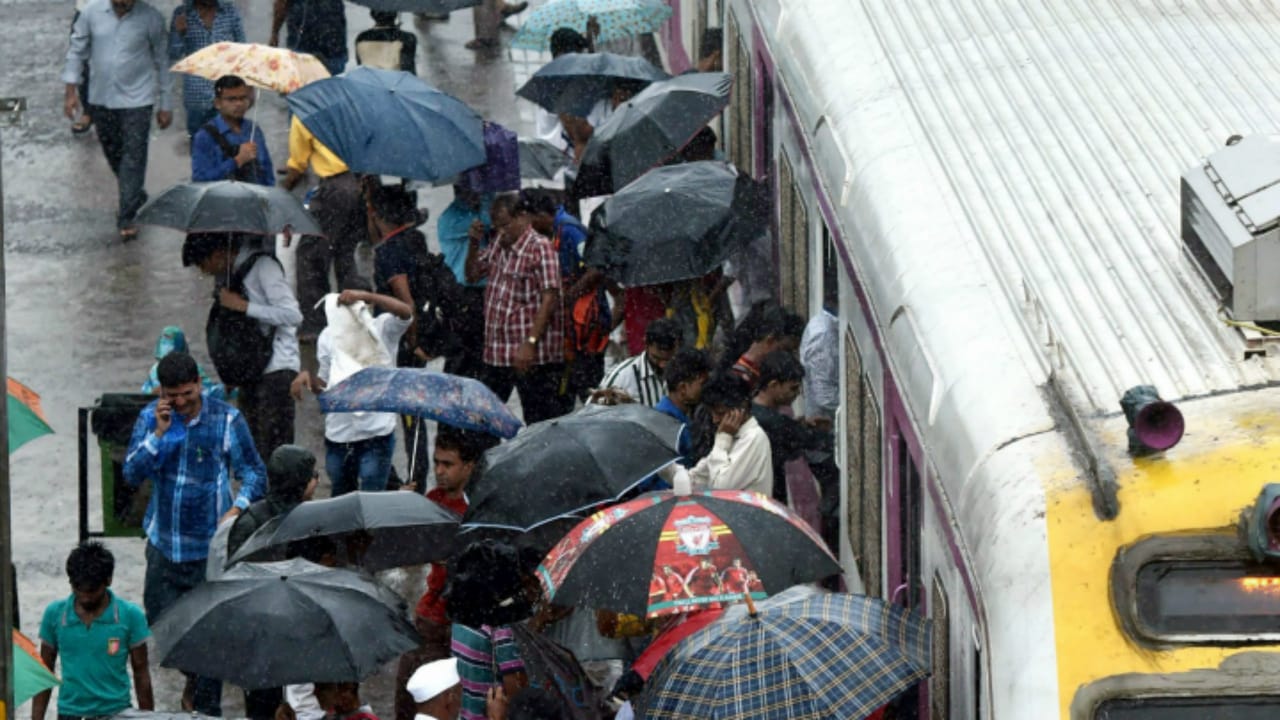 Mumbai rains. PTI[/caption]The recommended steps for disaster preparedness during monsoons have been well documented by scores of studies over decades. "The simplest thing is to start with permeable pavements, rain gardens, water harvesting structures etc. Then comes recovering the upstream damping natural structures like forests and abandoned hydrological structures which used to help navigate the water into oceans and so on," veteran climate scientist Raghu Murtugudde from University of Maryland told Firstpost.But one factor that both the IMD official and Murtugudde stressed on for reducing the number of deaths due to floods, is better prediction of the rains. However, as we find out below, it is easier said than done.Why aren't we better at predicting the weather?You may complain about the "unreliability" of weather prediction as a layperson, Murtugudde says, but a scientist is concerned with its "uncertainty". The following is based on the rest of his explanation:Tropical systems, such as that over India, have something called convection where the heating of the land and the ocean creates certain instabilities in the atmosphere. Those instabilities are typically released into rains depending on how much moisture is available in the air. And when the rains then pour, these systems can grow very fast in a matter of hours.If you consider the European weather or the North American weather, where the systems are some thousand kilometres big and they linger around for over a week or more, the weather forecast there is very reliable, for up to 10 days ahead.Whereas in the tropics, where the systems are fast changing, the complex numerical models pose a big challenge for our scientists."We have the best models, the best computers, the best observation system, best instruments, best satellites and so on. But even after combining them, you can end up with a certain uncertainty," Murtugudde quips.On the large scale weather you may see an instability coming up, but if it doesn't build or builds a couple of hundred kilometres away from the expected location, "you are looking at your weather forecasts and saying this is just not reliable".Essentially, it is just the inherent complexity of the tropical systems that hold us behind in weather prediction.But are we getting better at weather prediction?Short answer: Yes."If you look at the Mumbai flood from 2005 — the number of people who died and the damage that happened — and you look at the 2017 flood, you will notice that the second instance was forecast five to seven days in advance. It was slightly off by a day or so, but it was forecast much better than what we managed in 2005," Murtugudde says.[caption id="attachment_4192905" align="alignnone" width="1280"]
 Chennai rains. Reuters[/caption]And it is not just in Mumbai; even though the floods have now become much more widespread because of climate change and despite an increase in population, he says the mortality due to floods has been steadily decreasing over the years."Weather systems grow very fast. We know what the equations that govern the system are and we are solving them, but the moisture dynamics and micro-physics involved in weather prediction happen at a molecular scale. We cannot really capture them right now, but that doesn't mean we won't be there in a few years."How many years till we have reliable and hyper-local weather prediction? About five years, according to Murtugudde.
First Published:Jun 27, 2018, 18:49:06 IST
Advertisement
Advertisement

Careless Whispers: Scientists discover that plants can 'talk' to each other using smells
Japanese scientists have recorded a video that shows plants, in certain conditions, communicate with each other using mists that carry smells. The discovery, reveals that plants release a fine mist of airborne compounds, to warn nearby plants of potential dangers
Life on Mars? European Space Agency’s Orbiter discovers ice water deposits at equator
European Space Agency's Mars Express Orbiter has identified massive ice and ice water deposits beneath the surface of Mars. The Mars Express orbiter was also the first to confirmed the presence of ice on Mars in 2004
Microsoft briefly overtakes Apple as the most valuable company, Apple back on top again
At its peak during the session, Microsoft's value reached $2.903 trillion, with a 2% surge. As of writing this article, Apple closed at $2.89 trillion, whereas Microsoft closed at $2.86 trillion
Even NASA is facing a tough time, starts layoffs following major budget cuts
NASA is facing some massive budget cuts, because of which, it has been forced to postpone some upcoming missions. NASA's Jet Propulsion Laboratory has been hit hard by recent federal budget cuts, resulting in the layoff of 100 contractors last week
ISRO, NASA's NISAR satellite to get ready by Jan-end, will monitor Earth's snow-covered regions
The NISAR satellite which has been developed jointly ISRO and NASA, should be ready for launch by the end of January 2024. The collaboration between NASA and ISRO on NISAR is the first time the two agencies have cooperated on hardware development for an Earth-observing mission
Advertisement
Advertisement