


Immunotherapy and the slow move towards less toxic tools to fight cancer
Immunotherapy trains the body's natural defenses — immune cells, also known as T-cells — to cancer cells.

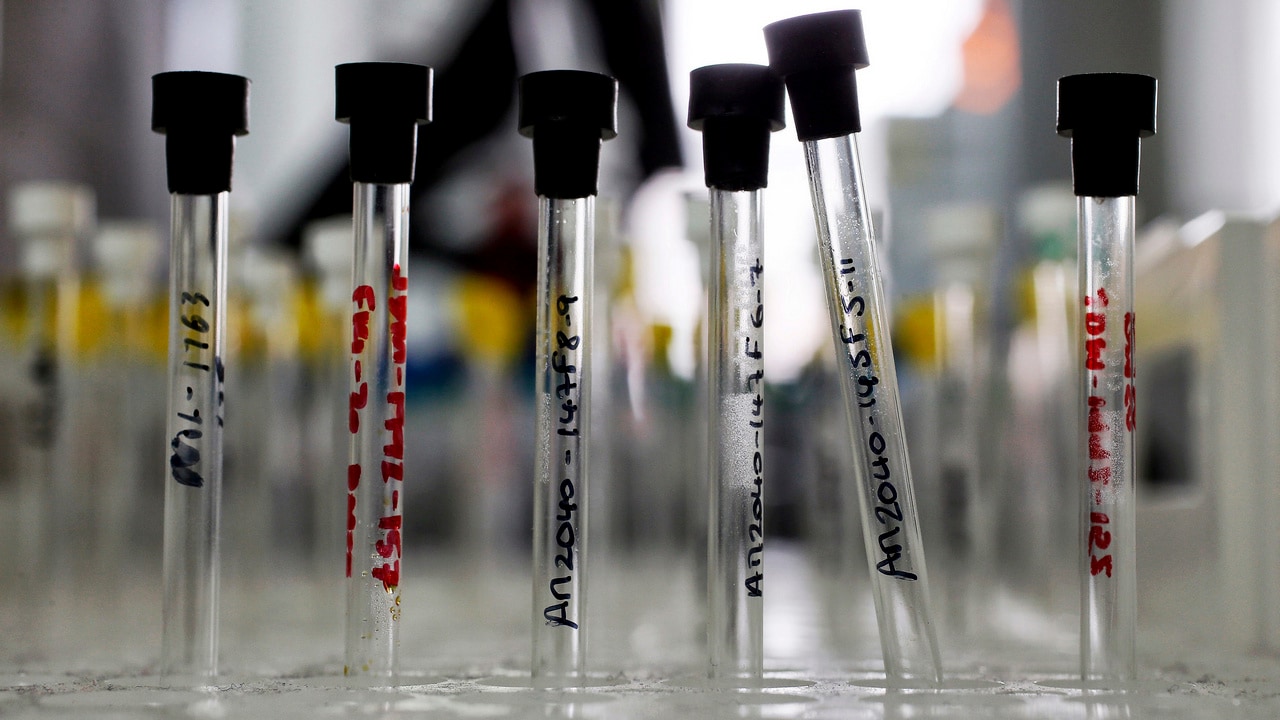
Sample analysis tubes are seen in a lab at the Institute of Cancer Research in Sutton. Reuters[/caption]The drug was delivered intravenously at the hospital, at first every two weeks, then once a month.His tumor rapidly disappeared, and 104 injections later, the main side effect has been itching.Recently, a mysterious mass appeared in his right lung. It was treated with radiation."They shot me with chemo, it almost killed me. And now I have been sucking up immunotherapy, and it's been good. My quality of life has been great," said Ryan.Relatively few patientsImmunotherapy trains the body's natural defenses — immune cells, also known as T-cells — to detect and kill cancer cells, which otherwise can adapt and hide.Some experts are cautious, having been disappointed numerous times by other newfangled approaches to fighting cancer.But many consider immunotherapy as a turning point. More than 30 immunotherapy drugs are in development, and 800 clinical trials are underway, according to Otis Brawley, medical director of the American Cancer Society.Ryan's oncologist, Julie Brahmer, said she now starts about a third of her lung cancer patients on immunotherapy first, not chemo.It helps that the Baltimore facility has numerous clinical trials under way, far more than the average US hospital.Doctors are intrigued by the unusually long remissions seen in a small number of patients like Ryan. These success stories make up about 10 to 15 percent of patients, said William Nelson, director of the Sidney Kimmel Comprehensive Cancer Center at Johns Hopkins.Normal remissions typically last a year and a half to two years.Chemotherapy and radiation are still the most dominant tools.But in recent years, a series of clinical trials have shaken up the cancer world, showing it was possible to better treat and even cure some of the most difficult forms of cancer without resorting to the most toxic techniques.Personalised treatmentsA spectacular example concerns prostate cancer.Researchers have found that recommendations of regular screening had the opposite effect of what was intended: too many tumors that would never have spread were were being treated in operations.Regarding breast cancer, a major study published in early June at the American Society of Clinical Oncology conference showed that for tens of thousands of women, surgery and hormone therapy were enough to keep cancer away. Chemotherapy was being given unnecessarily, they found, in a finding that surprised the cancer community.Meantime, genetic analyses are becoming ever more common for tumors, allowing more precise and rapid treatments for patients.Johns Hopkins has a genomic lab specially designed to help doctors personalise patient treatments, rather than basing treatment simply on the location of the tumor."At this point we have better and better tools to say, 'Yes, he needs to be treated, you don't,'" said Nelson.Some cancers, including brain cancer, remain on the margin of these new treatments.But for leukemia, breast, lung, cervical, colon and rectal cancer, as well as the serious skin cancer known as melanoma, immunotherapy and other personalised treatments are making progress "slowly but surely," said Nelson.For oncologist Julie Brahmer's part, she hopes that one day, metastatic cancers — those that can spread to points distant from the site of origin — will be treated like a "chronic disease," rather than a death sentence.John Ryan has a simpler objective in mind."My goal is to die of something other than lung cancer," he said.

Careless Whispers: Scientists discover that plants can 'talk' to each other using smells
Life on Mars? European Space Agency’s Orbiter discovers ice water deposits at equator
Microsoft briefly overtakes Apple as the most valuable company, Apple back on top again
Even NASA is facing a tough time, starts layoffs following major budget cuts
ISRO, NASA's NISAR satellite to get ready by Jan-end, will monitor Earth's snow-covered regions