


Hydropower generation in India is seeing the effects of climate change: Study
Factors like land use and land cover will affect future hydropower potential, the study adds

A new study has suggested that the government must consider changes occurring due to climate change while planning new hydropower projects.
The generation of hydropower from the top seven hydropower projects in India has suffered due to climate variability in the past six decades. Future projected climate change may also hit reservoir operations for power generation from these projects, says a study done by researchers from the Indian Institute of Technology, Gandhinagar.
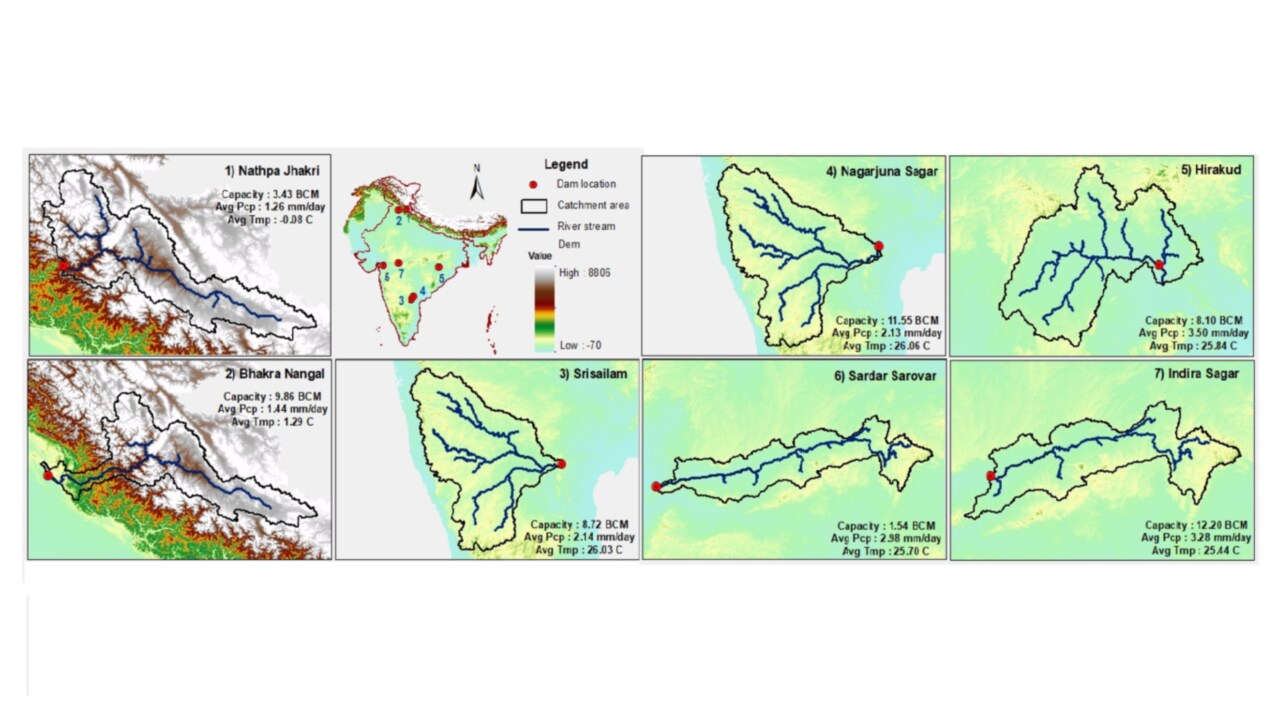
Location of the seven large hydropower projects in India — Nathpa Jhakri, Bhakra Nangal, Srisailam, Nagarjuna Sagar, Hirakud, Sardar Sarovar, and Indira Sagar — along with their topography. Image courtesy: Nature Scientific Reports[/caption]The study is based on observed climate variability over the years between 1951 and 2007, and model simulations for projected climate change under different scenarios, in relation to India's top seven large hydropower projects — Nathpa Jhakri, Bhakra Nangal, Srisailam, Nagarjuna Sagar, Hirakud, Sardar Sarovar, and Indira Sagar.
These large reservoirs are located in four major Indian sub-continental basins — Indus, Krishna, Mahanadi, and Narmada.
Using past observations from India Meteorological Department (IMD) and model simulations for future climate change, the study has found that seven large hydropower projects have experienced “significant warming” and a decline in rainfall and streamflow during the period 1951–2007.
 More from Science
All hydropower projects are projected to experience a warmer and wetter climate in the future.
“There might be a seasonal variability in reservoirs that get streamflow from snow and glacier melt. Due to higher increase in air temperature, flow due to snow and glacier melt is projected to decline in the pre-monsoon season as shown for Bhakhara Nangal and Nathpa Jhakhari projects," explained Assistant Professor Vimal Mishra, who led the research, to India Science Wire.
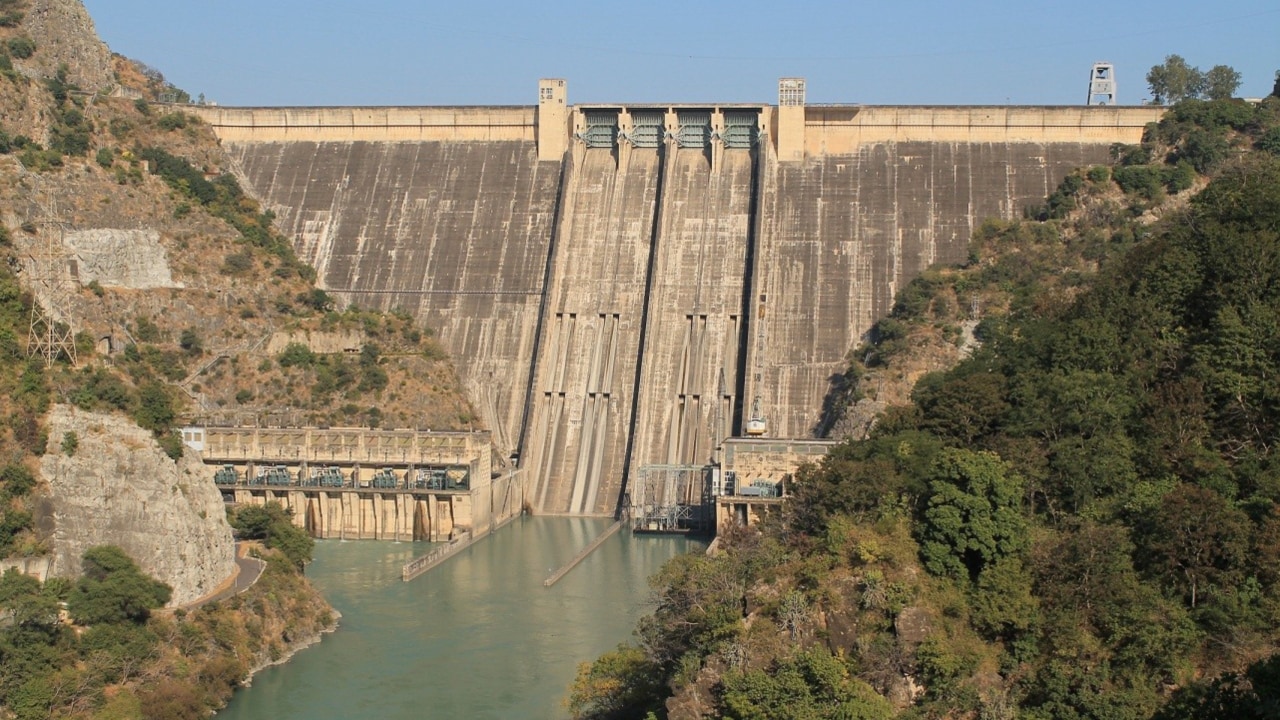
The Bhakra Nangal Dam. Image credit: HNN/Juhi Sarkar[/caption]Most of the catchments of the large reservoirs are projected to experience substantial warming under the projected future climate. The highest warming is likely for Nathpa Jhakri and Bhakra Nangal where the annual mean temperature is projected to increase by more than 6.25 degrees by period 2070–2099 under the Representative Concentration Pathway (RCP) 8.5 scenario. There will be increase in streamflow for the reservoirs located in the central and south India primarily due to the increase in the monsoon season precipitation under the future climate.Other factors like land use and land cover changes will also be critical in future in response to urbanisation and expansion of agriculture that will affect streamflow and so as hydropower production, the study says.The projected increase in precipitation and streamflow may also result in an increased sediment load to the reservoirs, which can affect the storage capacity of reservoirs and hydropower potential in future. Moreover, future irrigation demands can also influence the hydropower potential of the reservoirs."This study does not seem to take into account increased disaster potential of the new rainfall patterns. There are other important factors also such as increased upstream water use, both surface and groundwater, reducing inflows for projects like Sardar Sarovar, Srisailam and Nagarjunsagar," pointed out Himanshu Thakkar from the South Asia Network for Dams, Rivers and People.The research team included Syed Azhar Ali, Saran Aadhar , Harsh Shah and Vimal Mishra from the Department of Civil Engineering at the Indian Institute of Technology, Gandhinagar.

Careless Whispers: Scientists discover that plants can 'talk' to each other using smells
Life on Mars? European Space Agency’s Orbiter discovers ice water deposits at equator
Microsoft briefly overtakes Apple as the most valuable company, Apple back on top again
Even NASA is facing a tough time, starts layoffs following major budget cuts
ISRO, NASA's NISAR satellite to get ready by Jan-end, will monitor Earth's snow-covered regions