


Humans have a 'magnetic sense' that lets our brains detect Earth’s magnetic field
So far, scientists had not considered the possibility that humans were magnetically-sensitive beings.


Do you have a magnetic compass in your head? Image: Lightspring/Shutterstock[/caption]
How does a biological geomagnetic sense work?
Over the past 50 years or so, scientists have shown that hundreds of organisms in nearly all branches of the bacterial, protist and animal kingdoms have the ability to detect and respond to this geomagnetic field. In some animals – such as honey bees – the geomagnetic behavioral responses are as strong as the responses to light, odor or touch. Biologists have identified strong responses in vertebrates ranging from fish, amphibians, reptiles, numerous birds and a diverse variety of mammals including whales, rodents, bats, cows and dogs – the last of which can be trained to find a hidden bar magnet. In all of these cases, the animals are using the geomagnetic field as components of their homing and navigation abilities, along with other cues like sight, smell and hearing.The Earth is surrounded by a magnetic field, generated by the movement of the planet’s liquid core. It’s why a magnetic compass points north. At Earth’s surface, this magnetic field is fairly weak, about 100 times weaker than that of a refrigerator magnet.[caption id="attachment_6320481" align="alignnone" width="1280"]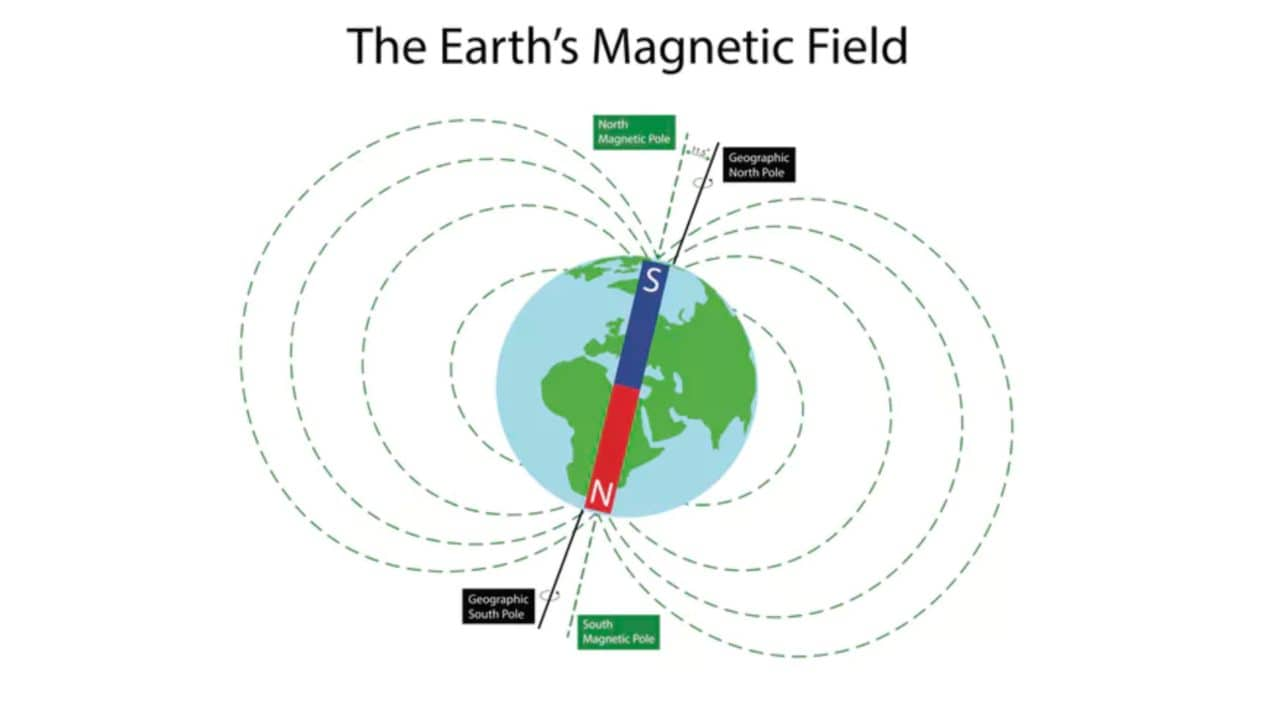
Life on Earth is exposed to the planet’s ever-present geomagnetic field that varies in intensity and direction across the planetary surface. Image: Nasky/Shutterstock[/caption]Skeptics dismissed early reports of these responses, largely because there didn’t seem to be a biophysical mechanism that could translate the Earth’s weak geomagnetic field into strong neural signals. This view was dramatically changed by the discovery that living cells have the ability to build nanocrystals of the ferromagnetic mineral magnetite – basically, tiny iron magnets. Biogenic crystals of magnetite were first seen in the teeth of one group of mollusks, later in bacteria, and then in a variety of other organisms ranging from protists and animals such as insects, fish and mammals, including within tissues of the human brain.Nevertheless, scientists haven’t considered humans to be magnetically sensitive organisms.
Manipulating the magnetic field
In our new study, we asked 34 participants simply to sit in our testing chamber while we directly recorded electrical activity in their brains with electroencephalography (EEG). Our modified Faraday cage included a set of 3-axis coils that let us create controlled magnetic fields of high uniformity via electric current we ran through its wires. Since we live in mid-latitudes of the Northern Hemisphere, the environmental magnetic field in our lab dips downwards to the north at about 60 degrees from horizontal.In normal life, when someone rotates their head – say, nodding up and down or turning the head from left to right – the direction of the geomagnetic field (which remains constant in space) will shift relative to their skull. This is no surprise to the subject’s brain, as it directed the muscles to move the head in the appropriate fashion in the first place.[caption id="attachment_6320561" align="alignnone" width="1280"]
Schematic drawing of the human magnetoreception test chamber at Caltech. Image: Modified from 'Center of attraction' by C Bickel (Hand, 2016).[/caption]In our experimental chamber, we can move the magnetic field silently relative to the brain, but without the brain having initiated any signal to move the head. This is comparable to situations when your head or trunk is passively rotated by somebody else, or when you’re a passenger in a vehicle which rotates. In those cases, though, your body will still register vestibular signals about its position in space, along with the magnetic field changes – in contrast, our experimental stimulation was only a magnetic field shift. When we shifted the magnetic field in the chamber, our participants did not experience any obvious feelings.The EEG data, on the other hand, revealed that certain magnetic field rotations could trigger strong and reproducible brain responses. One EEG pattern known from existing research, called alpha-ERD (event-related desynchronization), typically shows up when a person suddenly detects and processes a sensory stimulus. The brains were “concerned” with the unexpected change in the magnetic field direction, and this triggered the alpha-wave reduction. That we saw such alpha-ERD patterns in response to simple magnetic rotations is powerful evidence for human magnetoreception.
Brains register magnetic shifts, subconsciously
Our participants were all unaware of the magnetic field shifts and their brain responses. They felt that nothing had happened during the whole experiment – they’d just sat alone in dark silence for an hour. Underneath, though, their brains revealed a wide range of differences. Some brains showed almost no reaction, while other brains had alpha waves that shrank to half their normal size after a magnetic field shift.[caption id="attachment_6320531" align="alignnone" width="640"]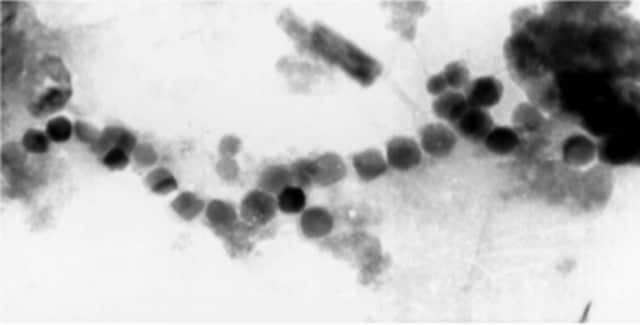 Chains of magnetosomes from a sockeye salmon. Image credit: Mann, Sparks, Walker & Kirschvink (1988)[/caption]It remains to be seen what these hidden reactions might mean for human behavioral capabilities. Do the weak and strong brain responses reflect some kind of individual differences in navigational ability? Can those with weaker brain responses benefit from some kind of training? Can those with strong brain responses be trained to actually feel the magnetic field?Human response to Earth-strength magnetic fields might seem surprising. But given the evidence for magnetic sensation in our animal ancestors, it might be more surprising if humans had completely lost every last piece of the system. Thus far, we’ve found evidence that people have working magnetic sensors sending signals to the brain – a previously unknown sensory ability in the subconscious human mind. The full extent of our magnetic inheritance remains to be discovered.
 Shinsuke Shimojo, Gertrude Baltimore Professor of Experimental Psychology, California Institute of Technology; Daw-An Wu, California Institute of Technology, and Joseph Kirschvink, Nico and Marilyn Van Wingen Professor of Geobiology, California Institute of TechnologyThis article is republished from The Conversation under a Creative Commons license. Read the original article.

Careless Whispers: Scientists discover that plants can 'talk' to each other using smells
Life on Mars? European Space Agency’s Orbiter discovers ice water deposits at equator
Microsoft briefly overtakes Apple as the most valuable company, Apple back on top again
Even NASA is facing a tough time, starts layoffs following major budget cuts
ISRO, NASA's NISAR satellite to get ready by Jan-end, will monitor Earth's snow-covered regions