


Hayabusa 2 comes back with charcoal like pieces from asteroid Ryugu
Following studies in Japan, some of the samples will be shared with NASA and other international space agencies for additional research.

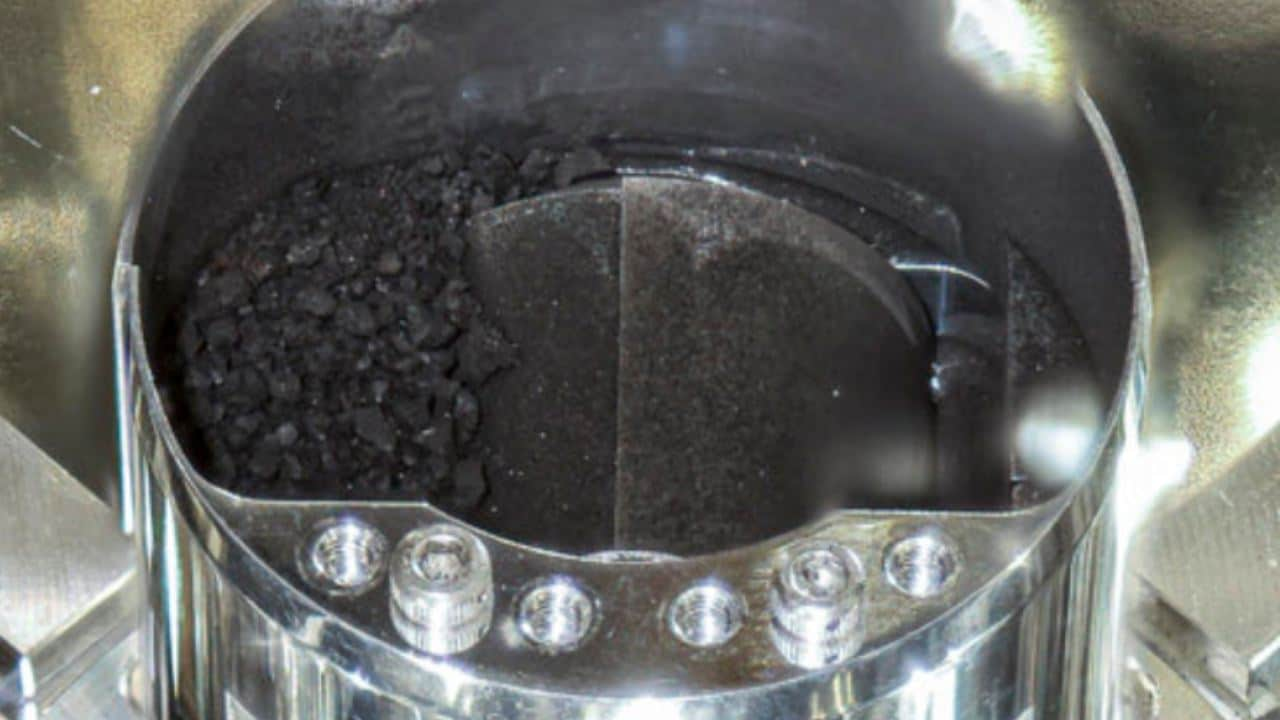
This image shows soil samples, seen inside C compartment of the capsule brought back by Hayabusa2, in Sagamihara, near Tokyo. Japanese space officials said Thursday they found more asteroid soil samples collected and brought back from the Hayabusa2 spacecraft, in addition to black sandy granules they found last week, raising their hopes of finding clues to the origins of the solar system. Image credit: Twitter/JAXA[/caption]The sandy granules the Japan Aerospace Exploration Agency described last week were from the spacecraft’s first touchdown in April 2019.The larger fragments were from the compartment allocated for the second touchdown on Ryugu, said Tomohiro Usui, space materials scientist.To get the second set of samples in July last year, Hayabusa2 dropped an impactor to blast below the asteroid’s surface, collecting material from the crafter so it would be unaffected by space radiation and other environmental factors.
Usui said the size differences suggest different hardness of the bedrock on the asteroid. “One possibility is that the place of the second touchdown was a hard bedrock and larger particles broke and entered the compartment.”JAXA is continuing the initial examination of the asteroid samples ahead of fuller studies next year. Scientists hope the samples will provide insight into the origins of the solar system and life on Earth. Following studies in Japan, some of the samples will be shared with NASA and other international space agencies for additional research.Hayabusa2, meanwhile, is on an 11-year expedition to another small and distant asteroid, 1998KY26, to try to study possible defences against meteorites that could fly toward Earth.
Careless Whispers: Scientists discover that plants can 'talk' to each other using smells
Life on Mars? European Space Agency’s Orbiter discovers ice water deposits at equator
Microsoft briefly overtakes Apple as the most valuable company, Apple back on top again
Even NASA is facing a tough time, starts layoffs following major budget cuts
ISRO, NASA's NISAR satellite to get ready by Jan-end, will monitor Earth's snow-covered regions