


Greenland glacier melting crosses 'tipping point', won't recover if global warming ended today: Study
Reports of the ice melt in the Arctic – which is warming twice as fast as the rest of the planet – have multiplied in recent years.

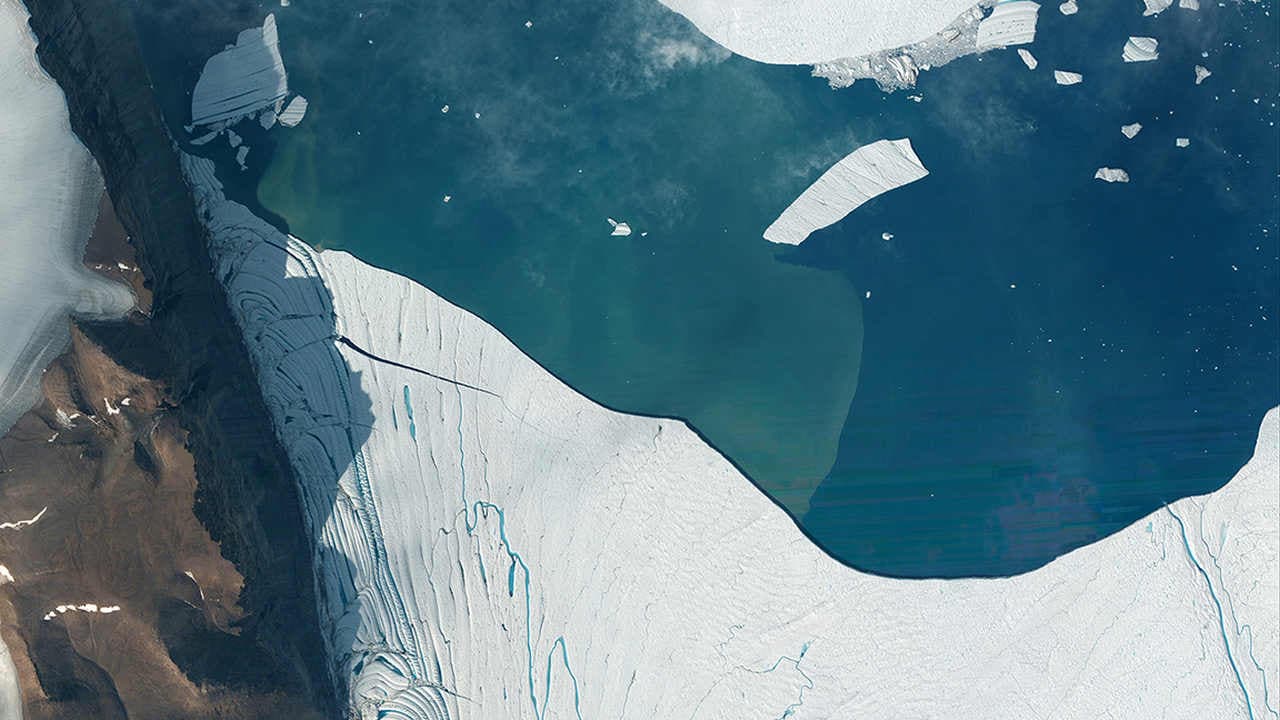
Climate change is causing an increase in temperatures all over the world and the glaciers and ice fields are bearing the brunt. As more ice melts, the sea levels are rising which has adverse effects on coastal cities. Here, a large piece of ice from the Petermann Glacier in Greenland broke off in 2012 and floated off to sea. Image credit: Maxar Technology Inc[/caption]But the ice melt has accelerated this century, climbing to 500 billion tonnes and it is no longer sufficiently replenished with snow."The Greenland ice sheet is losing mass at accelerated rates in the 21st century, making it the largest single contributor to rising sea levels," the study said.The melting ice actually causes more ice to melt, as the meltwater that collects on the ice sheet absorbs more of the Sun's radiative force than snow and ice do – snow and ice reflect sunlight back into space.In addition, the loss of ice exposes the permafrost, or frozen soil, which when thawed releases powerful greenhouse gases into the atmosphere, trapping heat.Therefore the melting ice is not just a symptom of global warming, it is also becoming a driver of global warming.
Tipping point debate
While researchers are in agreement that the Greenland ice melt is worrying, not all agree that it has reached a 'tipping point'."We don't know how much greenhouse gas concentrations will rise," Mottram said.The published results show that "even if we stabilised temperatures (and greenhouse gas emissions) at the present level, the ice sheet would still continue to melt, but only until the size of the ice sheet is once more in balance with the climate," she said.As the ice sheet is rapidly losing mass in contact with the ocean, once the ice loses contact with the water the massive ice discharge will stop.Meanwhile, a recent study from Britain's University of Lincoln concluded that Greenland's ice melt alone is expected to contribute 10-12 centimetres to the world's rising sea levels by 2100.The UN's IPCC climate science advisory panel said in 2013 it expected sea levels to rise 60 centimetres by the end of the century.

Careless Whispers: Scientists discover that plants can 'talk' to each other using smells
Life on Mars? European Space Agency’s Orbiter discovers ice water deposits at equator
Microsoft briefly overtakes Apple as the most valuable company, Apple back on top again
Even NASA is facing a tough time, starts layoffs following major budget cuts
ISRO, NASA's NISAR satellite to get ready by Jan-end, will monitor Earth's snow-covered regions