


Gravitational waves could quantify the rate at which our universe is expanding
Emitted gravitational waves could provide independent and precise measurement distance

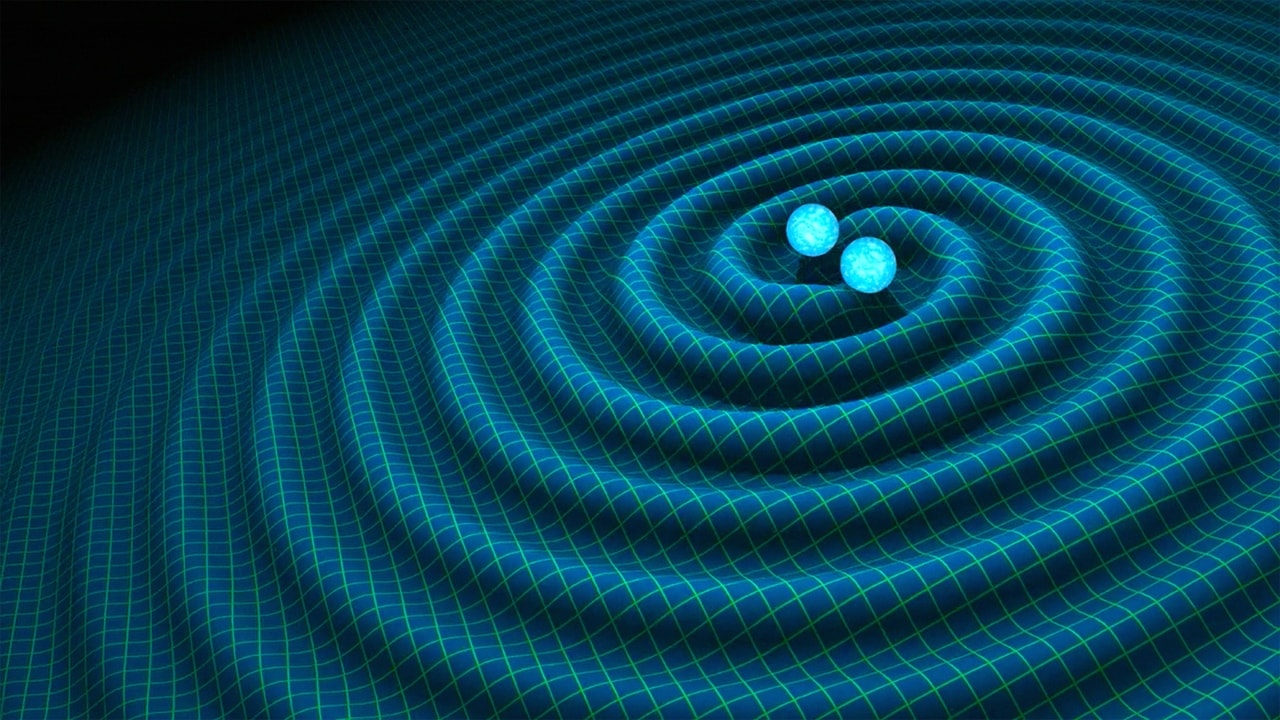
Artistic rendition of gravitational waves. CalTech/NASA[/caption]Scientists from Massachusetts Institute of Technology and Harvard University in the US have proposed a more accurate and independent way to measure the Hubble constant, using gravitational waves emitted by a relatively rare system: a black hole-neutron star binary.As these objects circle in toward each other, they should produce space-shaking gravitational waves and a flash of light when they ultimately collide.According to a study published in the journal Physical Review Letters, the flash of light would give scientists an estimate of the system's velocity, or how fast it is moving away from the Earth.The emitted gravitational waves, if detected on Earth, should provide an independent and precise measurement of the system's distance.Even though black hole-neutron star binaries are incredibly rare, researchers calculate that detecting even a few should yield the most accurate value yet for the Hubble constant and the rate of the expanding universe."Black hole-neutron star binaries are very complicated systems, which we know very little about," said Salvatore Vitale, assistant professor at MIT."If we detect one, the prize is that they can potentially give a dramatic contribution to our understanding of the universe," he said.Two independent measurements of the Hubble constant were made recently, one using NASA's Hubble Space Telescope and another using the European Space Agency's Planck satellite.The Hubble Space Telescope's measurement is based on observations of a type of star known as a Cepheid variable, as well as on observations of supernovae.Both of these objects are considered "standard candles," for their predictable pattern of brightness, which scientists can use to estimate the star's distance and velocity.The other type of estimate is based on observations of the fluctuations in the cosmic microwave background the electromagnetic radiation that was left over in the immediate aftermath of the Big Bang, when the universe was still in its infancy.While the observations by both probes are extremely precise, their estimates of the Hubble constant disagree significantly.

Careless Whispers: Scientists discover that plants can 'talk' to each other using smells
Life on Mars? European Space Agency’s Orbiter discovers ice water deposits at equator
Microsoft briefly overtakes Apple as the most valuable company, Apple back on top again
Even NASA is facing a tough time, starts layoffs following major budget cuts
ISRO, NASA's NISAR satellite to get ready by Jan-end, will monitor Earth's snow-covered regions