


Gigantic cavity under Antartic glacier indicates surge in rising sea levels: NASA
The huge cavity is under the main trunk of the glacier on its western side.

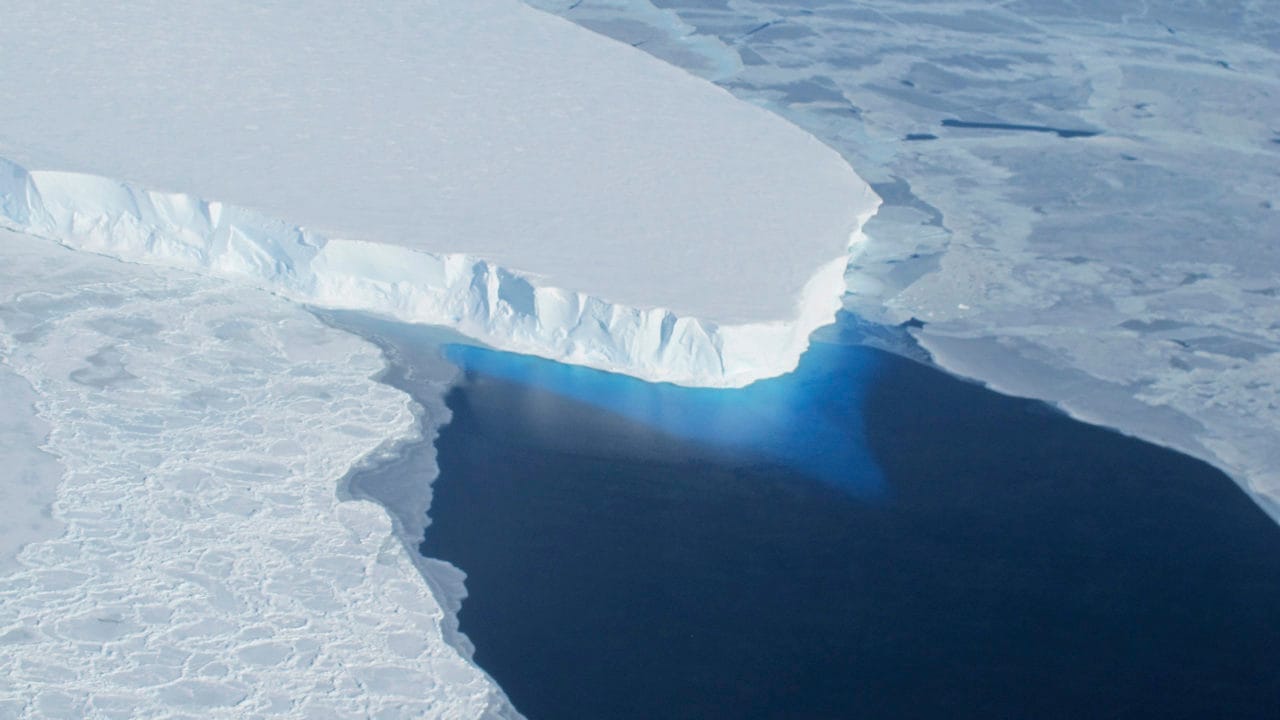
The Thwaites Glacier in Antarctica is seen in this undated NASA image. Image: Reuters[/caption]The researchers also used data from a constellation of Italian and German space-borne synthetic aperture radars.These very high-resolution data can be processed by a technique called radar interferometry to reveal how the ground surface below has moved between images."(The size of) a cavity under a glacier plays an important role in melting. As more heat and water get under the glacier, it melts faster," said Pietro Milillo of JPL.Thwaites Glacier is currently responsible for about four per cent of global sea level rise, researchers said.It holds enough ice to raise the world ocean a little over 65 centimetres and backstops neighbouring glaciers that would raise sea levels an additional 2.4 metres if all the ice were lost, they said."We are discovering different mechanisms of retreat," Millilo said.Different processes at various parts of the 160-kilometre-long front of the glacier are putting the rates of grounding-line retreat and of ice loss out of sync, NASA said.The huge cavity is under the main trunk of the glacier on its western side — the side farther from the West Antarctic Peninsula.In this region, as the tide rises and falls, the grounding line retreats and advances across a zone of about three to five kilometres.The glacier has been coming unstuck from a ridge in the bedrock at a steady rate of about 0.6 to 0.8 kilometres a year since 1992.Despite this stable rate of grounding-line retreat, the melt rate on this side of the glacier is extremely high."On the eastern side of the glacier, the grounding-line retreat proceeds through small channels, maybe a kilometre wide, like fingers reaching beneath the glacier to melt it from below," Milillo said.In that region, the rate of grounding-line retreat doubled from about 0.6 kilometres a year from 1992 to 2011 to 1.2 kilometres a year from 2011 to 2017, researchers said.Even with this accelerating retreat, however, melt rates on this side of the glacier are lower than on the western side, they said.

Careless Whispers: Scientists discover that plants can 'talk' to each other using smells
Life on Mars? European Space Agency’s Orbiter discovers ice water deposits at equator
Microsoft briefly overtakes Apple as the most valuable company, Apple back on top again
Even NASA is facing a tough time, starts layoffs following major budget cuts
ISRO, NASA's NISAR satellite to get ready by Jan-end, will monitor Earth's snow-covered regions