


Fossils show collective behaviour in animals might've began 480 million years ago
Biologists have studied group behaviour among animals, but we still don't know when or how it originated.

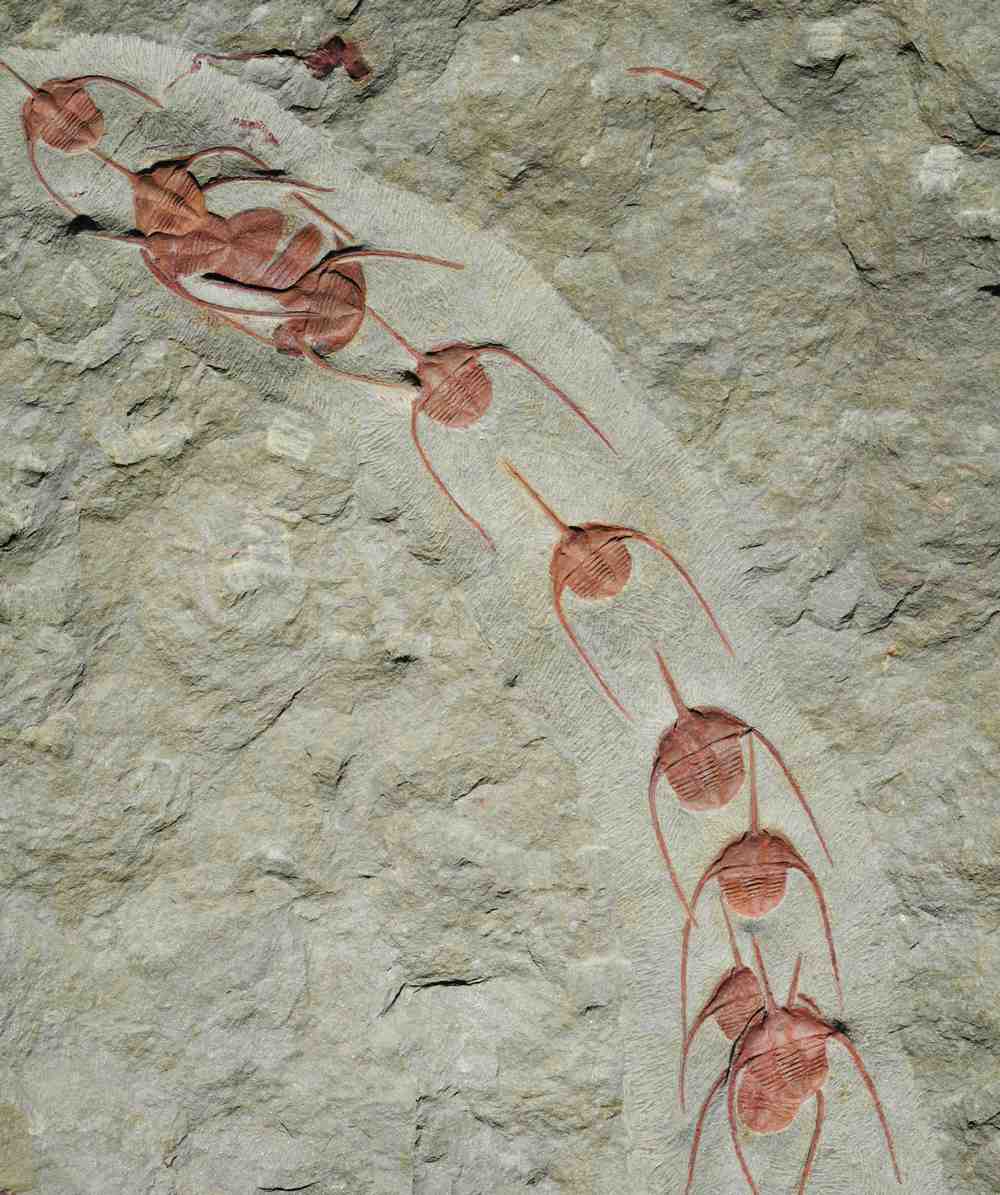
Fossil show anthropods walking in a single file line. Image credit: JEAN VANNIER[/caption]"We are talking about the oldest display of organised collective behaviour in such a precise manner," co-author Abderrazak El Albani, a scientist at France's National Centre for Scientific Research, told AFP.Group behaviour among animals — schools of fish, flocks of birds, herds of antelope — has been exhaustively studied by biologists, but little is known about when or how it originated.The new find suggests two possible scenarios, the scientists said.
Touchy, feely trilobites
The primitive animals, a species called Ampyx priscus, might have been moving from one micro-environment to another to avoid bad weather."Present-day spiny lobsters travel in single file at the onset of a storm," said co-author Muriel Vidal, a paleontologist at the University of Western Brittany in Brest, France. "It may be a stress response to the turbulence or a change in water temperature."Spiny lobsters — along with caterpillars, which also travel in single file — are distant cousins of A. priscus.[caption id="attachment_7517341" align="alignnone" width="1280"]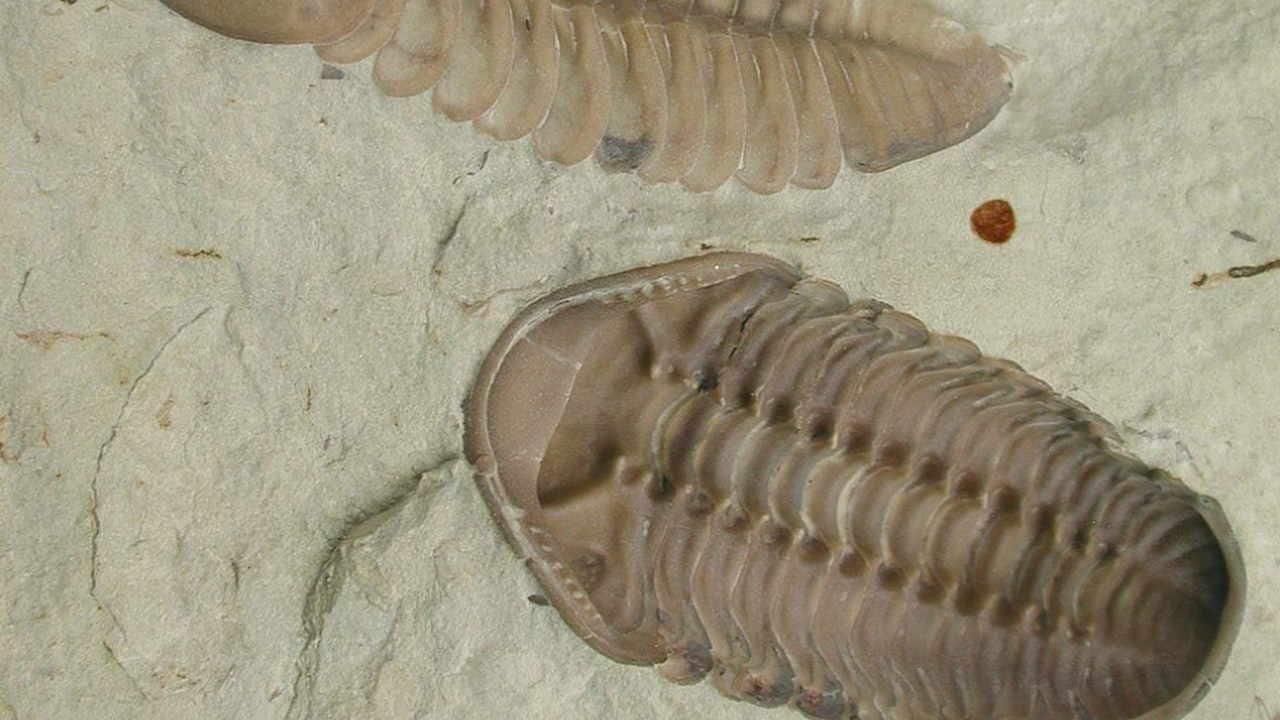
This fossil shows the internal surface of the exoskeleton of the trilobites. Image credit: WIkipedia[/caption]Alternatively, the orderly seabed procession could have been seasonal reproductive behaviour such as the migration of sexually mature individuals to spawning grounds, the authors suggested."The truth is, we know a lot more about their anatomy than we do about how they behaved," lead author Jean Vannier, a researcher at the University of Lyon, told AFP, noting that group behaviour also reduced the risk of being picked off by predators.Whatever was driving their nose-first, single-file marches along the ocean floor, it shows "a somewhat sophisticated nervous system," he said."To exhibit collective behaviour, one needs an adapted nervous system that can pass signals from one individual to another," he added. "That came into the picture very early in the saga of animal evolution."

Careless Whispers: Scientists discover that plants can 'talk' to each other using smells
Life on Mars? European Space Agency’s Orbiter discovers ice water deposits at equator
Microsoft briefly overtakes Apple as the most valuable company, Apple back on top again
Even NASA is facing a tough time, starts layoffs following major budget cuts
ISRO, NASA's NISAR satellite to get ready by Jan-end, will monitor Earth's snow-covered regions