


Foreign mussel pest identified in backwaters of Cochin harbour: Report
The mussel seen is more like Mytilopsis sallei, which is found in the Lam Tsuen River in Hong Kong.

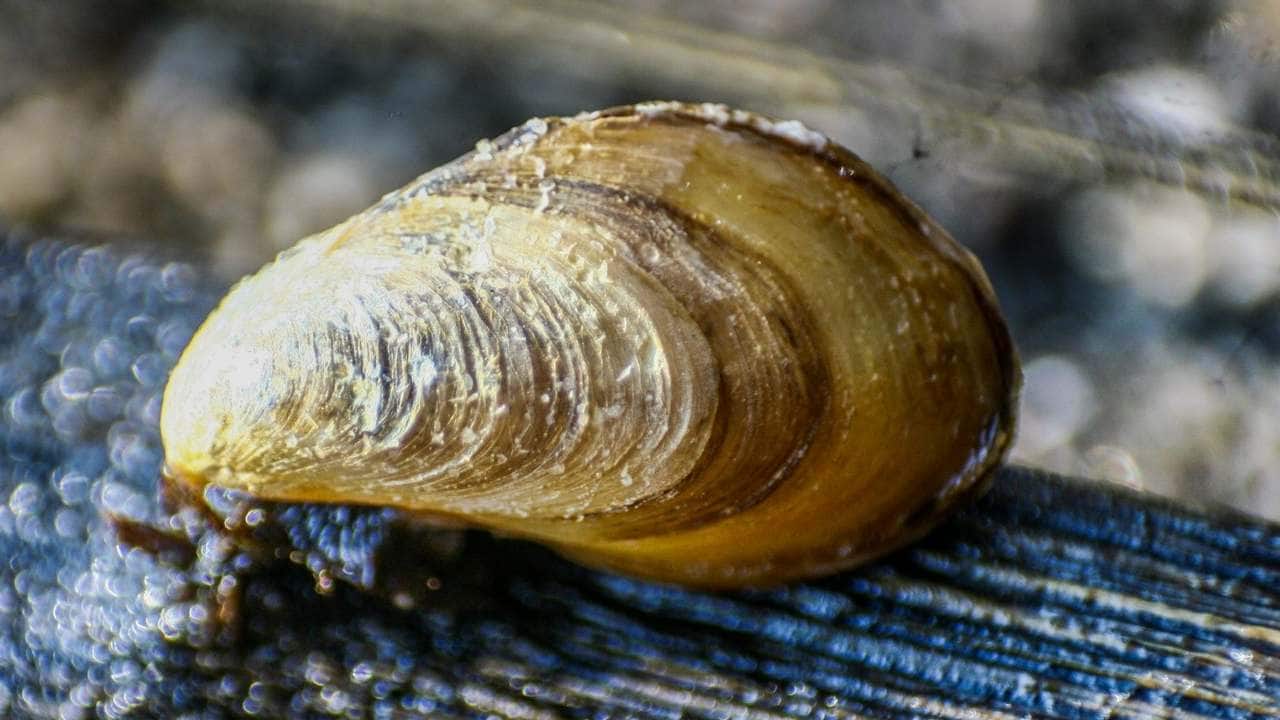
Mytilopsis sallei, also known as black striped mussel is a well known invasive mussel and has been known to populate strange seas across the world. Image: India Science Wire[/caption]Mytilopsis sallei, also known as black striped mussel is a well known invasive mussel and has been known to populate strange seas across the world since 16th Century by riding on seafarer ships.“In India, Mytilopsis species were recorded from Visakhapatnam harbour during the 1960s for the first time and then from Mumbai harbour in 1975. Our study records their presence in the south-west coast of India for the first time,” said Dr Jayachandran, a member of the research team.In order to confirm if the species is Mytilopsis or not, the team took samples of DNA from five specimens and compared them with unique DNA portions or sequences of Mytilopsis sallei from the Lam Tsuen River, and also with an Asian mussel Congeria kusceri. It is difficult to distinguish between the two merely from their looks.“The sequences of M. sallei exhibited 0% intraspecific divergence which confirms that the sequence from Cochin mussels clearly matched with those from Lam Tsuen River, Hong Kong, thus confirming bioinvasion of M sallei in the Cochin backwaters,” the study notes.“The results confirm that it is one of the several Mytilopsis species, if not Mytilopsis sallei. We can't surely say that our specimen is Mytilopsis sallei, because many researchers believe that the Indian and other Asian population, including the Lam Tsuen River species, are indeed Mytilopsis adamsi and is wrongly labelled as Mytilopsis sallei,” said Jayachandran. That requires matching the sequences with the mussels that are native to Guatemala. That data is not available now.In any case, mussels growing offshore in the backwaters of Cochin are surely not local. “This species is highly tolerant to salinity and temperature variations. Eradicating marine invasion is extremely difficult. A similar invasion in the harbour of Darwin islands required 2.2 million Australian dollars to chemically clean the water,” the study said.India does not have adequate control measures to avoid marine pest or fouler intrusion except using antifouling paints on ships, and these antifouling paints are marine pollutants.The research team included Dr P R Jayachandran, M Jima Philomina Joseph, V F Sanu, and S Bijoy Nandan. The study has been published in Current Science.

Careless Whispers: Scientists discover that plants can 'talk' to each other using smells
Life on Mars? European Space Agency’s Orbiter discovers ice water deposits at equator
Microsoft briefly overtakes Apple as the most valuable company, Apple back on top again
Even NASA is facing a tough time, starts layoffs following major budget cuts
ISRO, NASA's NISAR satellite to get ready by Jan-end, will monitor Earth's snow-covered regions