
Advertisement


Sections
Following govt mandate on AC temp at 24 degrees is good for you and the environment
Setting the ACs to a default temperature of 24 degrees will make a considerable difference both financially and environmentally.

The Ministry of Power, in a surprising direction to air conditioner manufacturers in the country on Saturday, asked them to set the default air temperature of ACs to 24 degree Celsius, to promote "energy efficient practices"."When the temperature for the AC is set at 24 degree Celsius as compared to 18 degrees, 36 percent electricity is saved. It is good for health and for the budget. AC manufacturers are also happy with the step," Union minister RK Singh said. "Normal human body temperature is approximately 36-37 degree Celsius, but a large number of commercial establishments, hotels and offices maintain a temperature around 18-21 degree Celsius. This is not only uncomfortable but is actually unhealthy."This led to a few sharp reactions on social media over the weekend, with many questioning the efficacy of the government's sudden directive.So is the government's directive actually going to save energy on a large scale? When Firstpost contacted a few experts in the field, they answered with a resounding yes."In the summer, our bodies are tuned for hot weather. In such times, we — academics and researchers in general — recommend the ACs to be set not even to 24 degrees, but to 28 degree Celsius. In the winter, we recommend the ACs to be set to 23 degrees," Dr Atul Kumar, a professor at the Department of Energy and Environment at the TERI School of Advanced Studies in New Delhi, said.![AC]() But first, some context.Kumar insists that the word 'default' in the government notification holds significance. The ministry mandates that new air conditioners have a default setting of 24 degree Celsius, which does not mean that we have to maintain the temperature at 24 degrees, but only that this should be the default temperature when the AC is switched on."While it does not impose a temperature setting upon the users, the notification will still have a significant implication given that most people do not tinker with the AC remote too much," he said.Even if the temperature indicator on the AC shows 16 degrees when it is switched on, Kumar explains, the room temperature may still be at 25 degree Celsius. The indicated temperature only means that when the temperature of the room is pulled down to 16 degrees, the motor of the AC compressor will switch off. And when the room temperature increases by even half a degree, the motor will resume work and start cooling once again.It is obviously much easier for the AC to reach 24 degrees than 16 degrees, so that means much less work for the AC compressor.In India, the average temperature at which air conditioners are operated stands between 21 and 22 degree Celsius, Pawan Kumar Tiwari, TERI Fellow at the institute's Industrial Energy Efficiency Division, points out. "But even a one or two degrees’ difference will make a significant impact. A study conducted by an American council showed that the energy consumption comes down by 3 to 5 percent upon decreasing the AC temperature by one degree," he said.Here is a breakdown of the kind of impact the notification can potentially make (with inputs from Tiwari):
But first, some context.Kumar insists that the word 'default' in the government notification holds significance. The ministry mandates that new air conditioners have a default setting of 24 degree Celsius, which does not mean that we have to maintain the temperature at 24 degrees, but only that this should be the default temperature when the AC is switched on."While it does not impose a temperature setting upon the users, the notification will still have a significant implication given that most people do not tinker with the AC remote too much," he said.Even if the temperature indicator on the AC shows 16 degrees when it is switched on, Kumar explains, the room temperature may still be at 25 degree Celsius. The indicated temperature only means that when the temperature of the room is pulled down to 16 degrees, the motor of the AC compressor will switch off. And when the room temperature increases by even half a degree, the motor will resume work and start cooling once again.It is obviously much easier for the AC to reach 24 degrees than 16 degrees, so that means much less work for the AC compressor.In India, the average temperature at which air conditioners are operated stands between 21 and 22 degree Celsius, Pawan Kumar Tiwari, TERI Fellow at the institute's Industrial Energy Efficiency Division, points out. "But even a one or two degrees’ difference will make a significant impact. A study conducted by an American council showed that the energy consumption comes down by 3 to 5 percent upon decreasing the AC temperature by one degree," he said.Here is a breakdown of the kind of impact the notification can potentially make (with inputs from Tiwari):![AC]() The ministry's notification, however, also extends to commercial spaces including airports, hotels, trains, shopping malls, and government buildings — and this is where both Kumar and Tiwari disagree with the government. Commercial public spaces are often crowded, they say, and because of the heat dissipated by the numerous bodies in close proximity, the temperature of the ACs will have to be brought down below 24 degrees to adequately cool down the area.But there has to be a balance, Kumar says. "If you see popular trains like Rajdhani or Shatabdi, they put the AC on full blast and then provide the passengers with blankets. Even at home during peak summers, we put the AC at 16 degrees and then put blankets on. This measure to set a default temperature may also be to discourage such mindless habits," he said.
The ministry's notification, however, also extends to commercial spaces including airports, hotels, trains, shopping malls, and government buildings — and this is where both Kumar and Tiwari disagree with the government. Commercial public spaces are often crowded, they say, and because of the heat dissipated by the numerous bodies in close proximity, the temperature of the ACs will have to be brought down below 24 degrees to adequately cool down the area.But there has to be a balance, Kumar says. "If you see popular trains like Rajdhani or Shatabdi, they put the AC on full blast and then provide the passengers with blankets. Even at home during peak summers, we put the AC at 16 degrees and then put blankets on. This measure to set a default temperature may also be to discourage such mindless habits," he said.
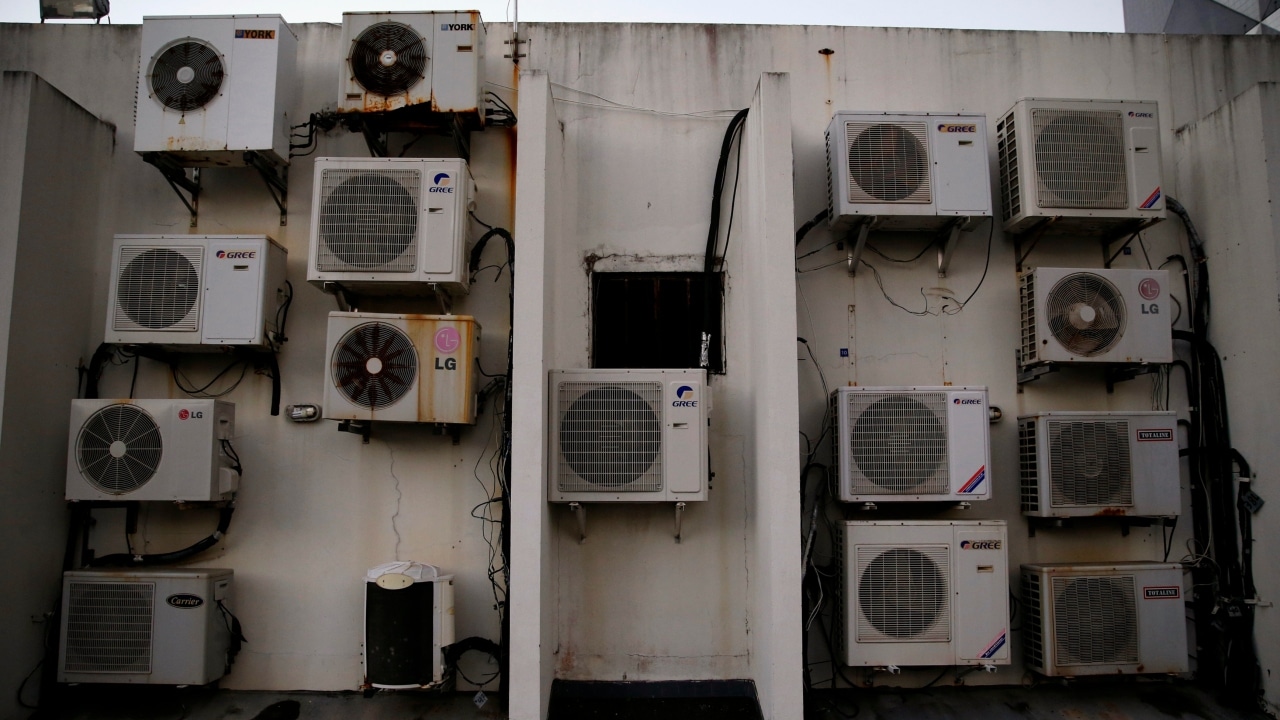 But first, some context.Kumar insists that the word 'default' in the government notification holds significance. The ministry mandates that new air conditioners have a default setting of 24 degree Celsius, which does not mean that we have to maintain the temperature at 24 degrees, but only that this should be the default temperature when the AC is switched on."While it does not impose a temperature setting upon the users, the notification will still have a significant implication given that most people do not tinker with the AC remote too much," he said.Even if the temperature indicator on the AC shows 16 degrees when it is switched on, Kumar explains, the room temperature may still be at 25 degree Celsius. The indicated temperature only means that when the temperature of the room is pulled down to 16 degrees, the motor of the AC compressor will switch off. And when the room temperature increases by even half a degree, the motor will resume work and start cooling once again.It is obviously much easier for the AC to reach 24 degrees than 16 degrees, so that means much less work for the AC compressor.In India, the average temperature at which air conditioners are operated stands between 21 and 22 degree Celsius, Pawan Kumar Tiwari, TERI Fellow at the institute's Industrial Energy Efficiency Division, points out. "But even a one or two degrees’ difference will make a significant impact. A study conducted by an American council showed that the energy consumption comes down by 3 to 5 percent upon decreasing the AC temperature by one degree," he said.Here is a breakdown of the kind of impact the notification can potentially make (with inputs from Tiwari):
- If you have a 1.5 ton air conditioner — which is the most common AC variant in India — it will consume approximately one power unit per hour.
- One power unit corresponds to approximately 0.98 kilograms of carbon dioxide emission into the air (CO2 emission is a major cause of climate change).
- On average, ACs run for about 8 to 10 hours a day. So in total, the average AC is responsible for almost 10 kilograms of carbon dioxide emission every day.
- Increasing the AC temperature from the average of 22 degree Celsius to the now recommended 24 degrees will reduce the energy usage by at least half a unit over the course of the day.
- That reduction of energy usage by even half a unit will make a considerable difference from both financially (by 3 to 5 percent decrease in the electricity bill) and from the environmental perspective (half a kilogram less carbon dioxide released into the atmosphere).
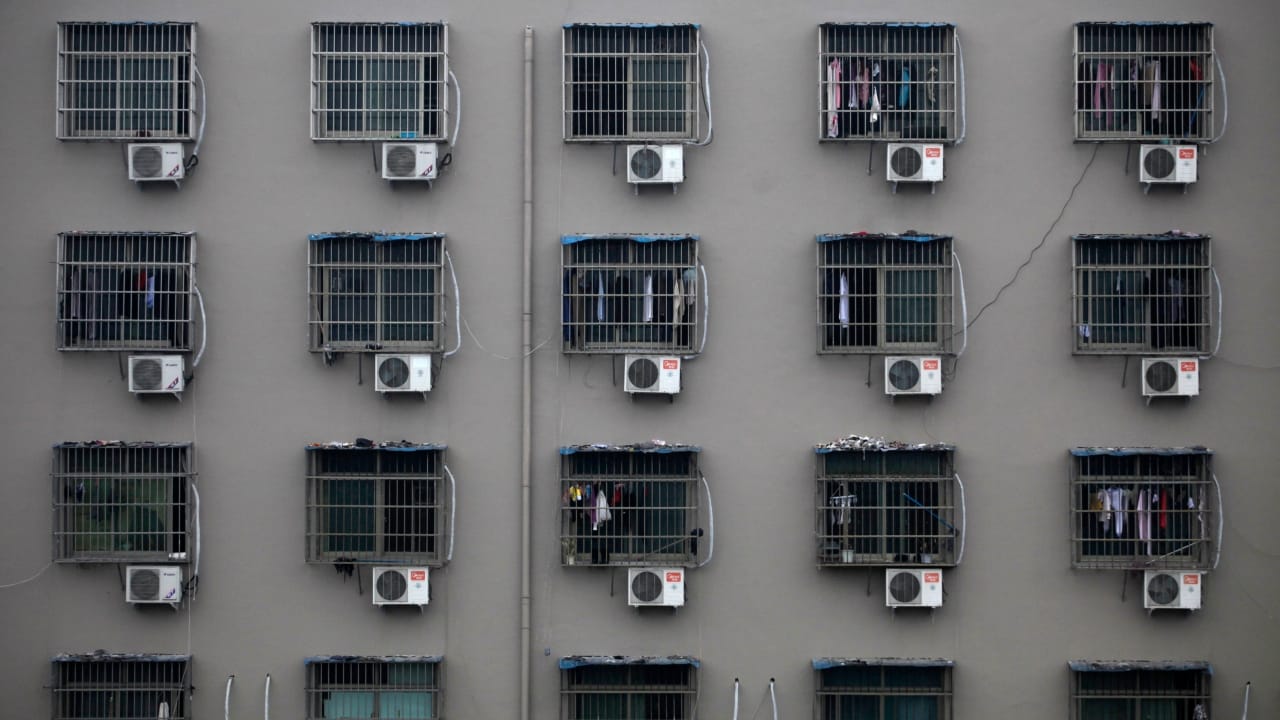 The ministry's notification, however, also extends to commercial spaces including airports, hotels, trains, shopping malls, and government buildings — and this is where both Kumar and Tiwari disagree with the government. Commercial public spaces are often crowded, they say, and because of the heat dissipated by the numerous bodies in close proximity, the temperature of the ACs will have to be brought down below 24 degrees to adequately cool down the area.But there has to be a balance, Kumar says. "If you see popular trains like Rajdhani or Shatabdi, they put the AC on full blast and then provide the passengers with blankets. Even at home during peak summers, we put the AC at 16 degrees and then put blankets on. This measure to set a default temperature may also be to discourage such mindless habits," he said.
First Published:Jun 26, 2018, 08:57:26 IST
Advertisement
Advertisement

Careless Whispers: Scientists discover that plants can 'talk' to each other using smells
Japanese scientists have recorded a video that shows plants, in certain conditions, communicate with each other using mists that carry smells. The discovery, reveals that plants release a fine mist of airborne compounds, to warn nearby plants of potential dangers
Life on Mars? European Space Agency’s Orbiter discovers ice water deposits at equator
European Space Agency's Mars Express Orbiter has identified massive ice and ice water deposits beneath the surface of Mars. The Mars Express orbiter was also the first to confirmed the presence of ice on Mars in 2004
Microsoft briefly overtakes Apple as the most valuable company, Apple back on top again
At its peak during the session, Microsoft's value reached $2.903 trillion, with a 2% surge. As of writing this article, Apple closed at $2.89 trillion, whereas Microsoft closed at $2.86 trillion
Even NASA is facing a tough time, starts layoffs following major budget cuts
NASA is facing some massive budget cuts, because of which, it has been forced to postpone some upcoming missions. NASA's Jet Propulsion Laboratory has been hit hard by recent federal budget cuts, resulting in the layoff of 100 contractors last week
ISRO, NASA's NISAR satellite to get ready by Jan-end, will monitor Earth's snow-covered regions
The NISAR satellite which has been developed jointly ISRO and NASA, should be ready for launch by the end of January 2024. The collaboration between NASA and ISRO on NISAR is the first time the two agencies have cooperated on hardware development for an Earth-observing mission
Advertisement
Advertisement