


Flight by light success: Planetary Society's LightSail 2 powers flight with Sun's photons
The solar sail LightSail 2 will continue to orbit for about a year before falling back into Earth's atmosphere.

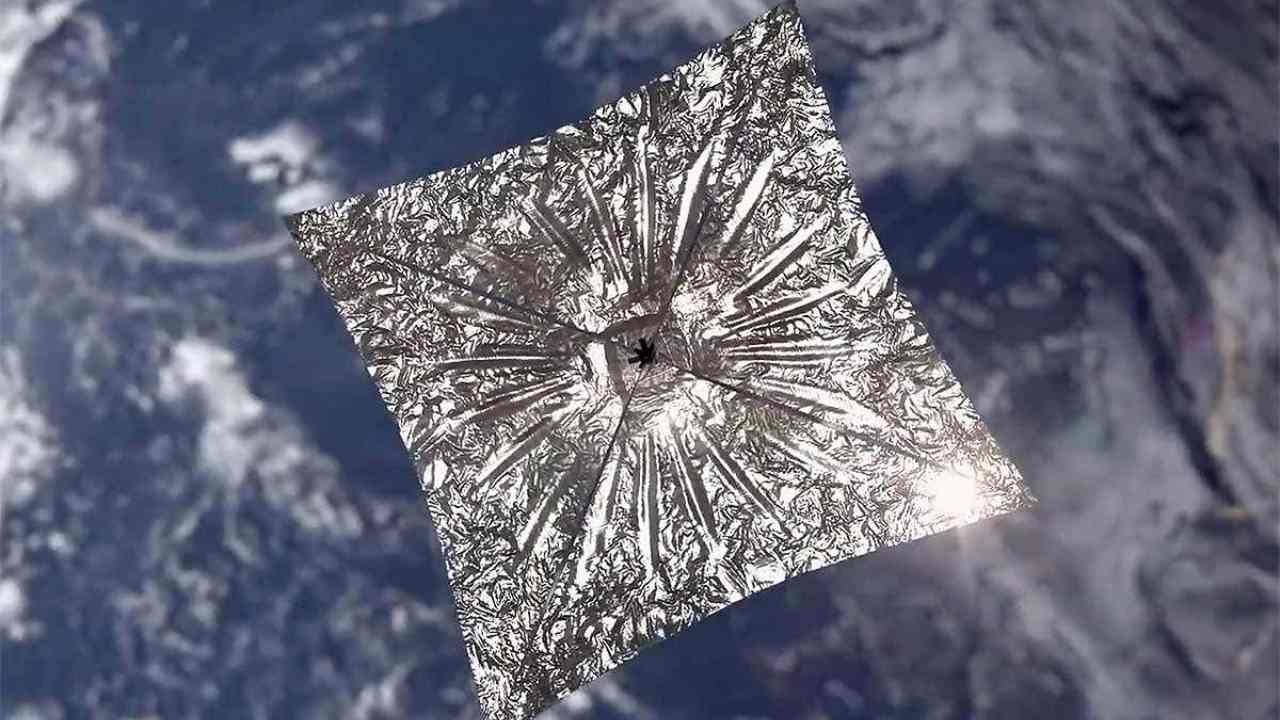
LightSail 2 will be propelled by sunshine. Image: Planetary Society[/caption]"This technology enables us to take things to extraordinary destinations in the solar system, and maybe even beyond, in a way that's never been possible because you don't need fuel and you don't need all the systems to control fuel," said Bill Nye, the chief executive of the Planetary Society.He added he would like to see the technology applied to missions searching for life on Mars, Jupiter's moon Europa, and Saturn's moon Titan, and "solar sails could enable you to lower the cost of these missions."Another application could be in maintaining a probe at a stationary point in space, such as a telescope that looks out for asteroids in the vicinity of Earth, or a satellite that needs to be fixed in a stationary orbit above the North Pole.The idea of solar sailing was first theorized in the 1600s by Johannes Kepler, who wrote that sails and ships "could be adapted to heavenly breezes."LightSail 2 puts that into practice via a sail made from Mylar that unfurls to a size of 32 square meters (yards).

Careless Whispers: Scientists discover that plants can 'talk' to each other using smells
Life on Mars? European Space Agency’s Orbiter discovers ice water deposits at equator
Microsoft briefly overtakes Apple as the most valuable company, Apple back on top again
Even NASA is facing a tough time, starts layoffs following major budget cuts
ISRO, NASA's NISAR satellite to get ready by Jan-end, will monitor Earth's snow-covered regions