
Advertisement


Sections
First wave of SpaceX's Starlink satellites liftoff in successful launch on 24 May
Starlink will be operational once 800 satellites have been activated, which is still a dozen or so launches away.

SpaceX launched a rocket packed to the brim with satellites part of its Starlink internet constellation, which could grow to a network of as many as 12,000 satellites in the future. To the delight of space enthusiasts everywhere, SpaceX successfully deployed all 60 satellites on Friday morning (IST) without hitch or glitch after two previous attempts to launch were called off within 30 minutes of liftoff due to bad winds and a necessary software upgrade on the satellites, which set it back by a week.But the third time was a charm for SpaceX to get the Starlink satellites airborne, as the Falcon 9 took off from Cape Canaveral in Florida around 10.30 pm EDT (8 am IST) on 24 May without incident.The Falcon 9's booster rocket was a thrice-flown first stage that returned and made a gentle touchdown on the Of Course I Still Love You! droneship at sea. This was the second time SpaceX has flown the first stage more than twice.The second stage went on to release the Starlink satellites an hour after launch at an altitude of 440 kilometers. SpaceX said that the satellites will use their thrusters to take up their places in a relatively low orbit of 550 kilometers. That's only slightly higher than the International Space Station, but well below most of the satellites orbiting Earth, the highest of which sit at an altitude of 36,000 kilometers in the geostationary orbit.[caption id="attachment_6593081" align="alignnone" width="1280"]![A prototype Starlink satellite. The first two prototype Starlink satellites were launched by SpaceX in February 2018. Image: SpaceX]()
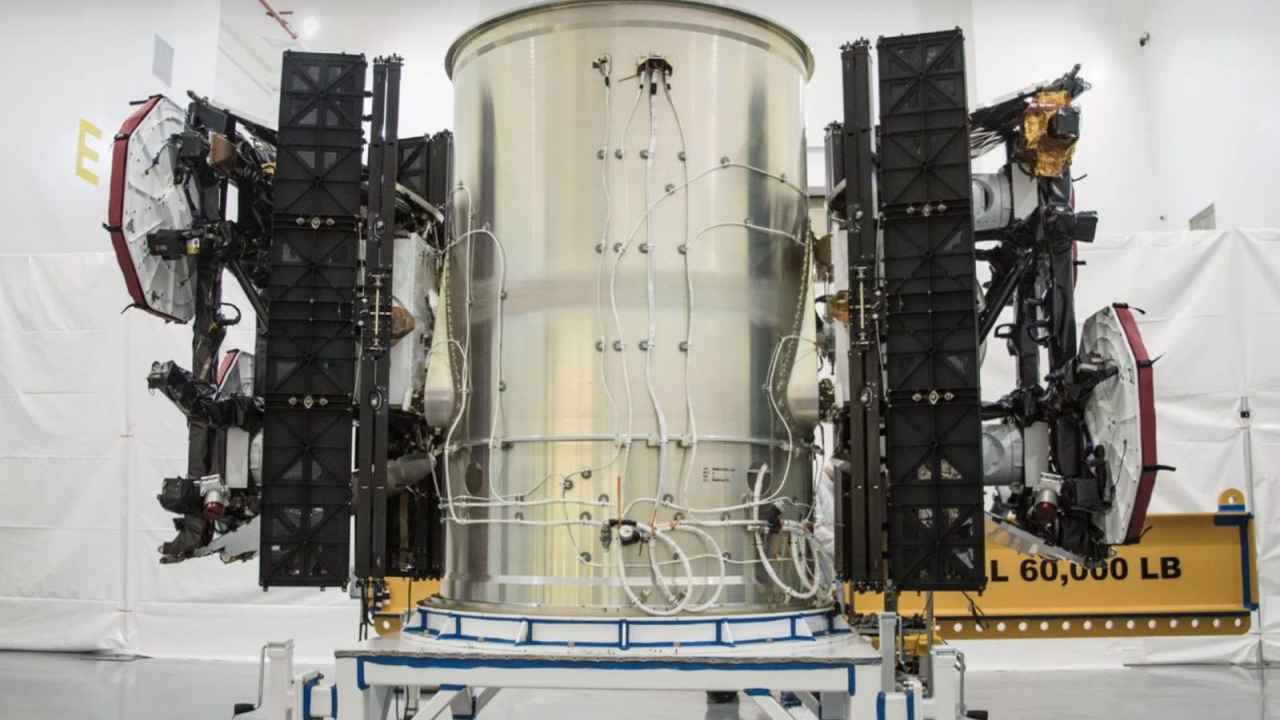
A prototype Starlink satellite. The first two prototype Starlink satellites were launched by SpaceX in February 2018. Image: SpaceX[/caption]The launch was originally scheduled for 16 May (IST), but was postponed by 24 hours the first time due to high winds, and then again by a week to "double check everything" and give the satellites a software update.
The launch has now made SpaceX an early entrant in the space internet race, alongside rivals OneWeb, Amazon's Project Kuiper among several others.The Starlink network is expected to become operational once 800 satellites have been activated. That still appears to be a dozen or so launches away for now.First Published:May 24, 2019, 10:50:26 IST
Advertisement
Advertisement

Careless Whispers: Scientists discover that plants can 'talk' to each other using smells
Japanese scientists have recorded a video that shows plants, in certain conditions, communicate with each other using mists that carry smells. The discovery, reveals that plants release a fine mist of airborne compounds, to warn nearby plants of potential dangers
Life on Mars? European Space Agency’s Orbiter discovers ice water deposits at equator
European Space Agency's Mars Express Orbiter has identified massive ice and ice water deposits beneath the surface of Mars. The Mars Express orbiter was also the first to confirmed the presence of ice on Mars in 2004
Microsoft briefly overtakes Apple as the most valuable company, Apple back on top again
At its peak during the session, Microsoft's value reached $2.903 trillion, with a 2% surge. As of writing this article, Apple closed at $2.89 trillion, whereas Microsoft closed at $2.86 trillion
Even NASA is facing a tough time, starts layoffs following major budget cuts
NASA is facing some massive budget cuts, because of which, it has been forced to postpone some upcoming missions. NASA's Jet Propulsion Laboratory has been hit hard by recent federal budget cuts, resulting in the layoff of 100 contractors last week
ISRO, NASA's NISAR satellite to get ready by Jan-end, will monitor Earth's snow-covered regions
The NISAR satellite which has been developed jointly ISRO and NASA, should be ready for launch by the end of January 2024. The collaboration between NASA and ISRO on NISAR is the first time the two agencies have cooperated on hardware development for an Earth-observing mission
Advertisement
Advertisement