


First solar eclipse of the year 2021 to occur on 10 June: Know the time and other details
The Solar eclipse will start at 1:42 pm IST (8:12 UTC) and end at 6.41 pm IST (13:11 UTC).

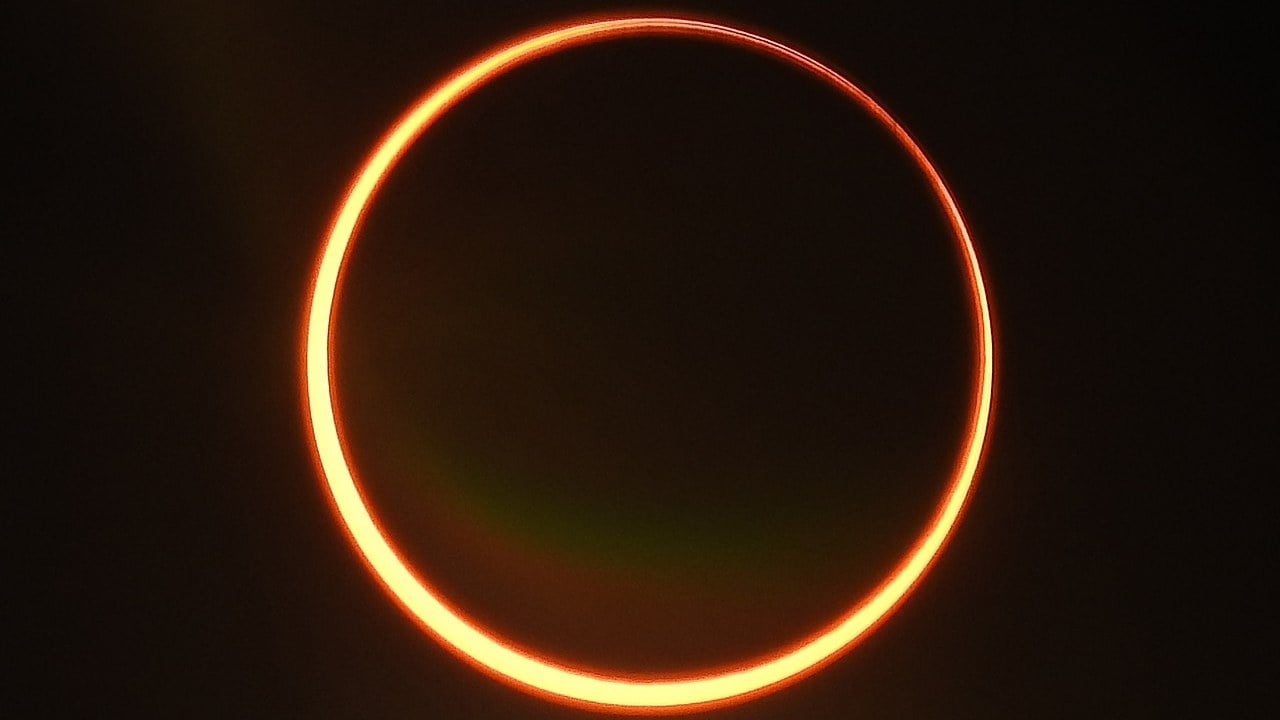
The annular solar eclipse of 26 December 2019, as seen from Jaffna, Sri Lanka. Representational image.[/caption]At its peak, it will be visible from Greenland where people will be able to see the Ring of Fire. After that, it will also be seen in Siberia and the North Pole.According to Timeanddate.com, the eclipse will start at 1:42 pm IST (8:12 UTC) and end at 6.41 pm IST (13:11 UTC) on 10 June.There are different kinds of solar eclipses, depending upon the light that gets blocked.For example, if the moon and Earth are in a direct line, only a small part of our world will be able to see the sunlight and the sky turns dark even during the day.In the case of a partial solar eclipse, the Sun, Moon and Earth are not exactly lined up. Hence, the Sun appears to have a dark shadow on only a small part of its surface.The last kind is the annular solar eclipse where the moon is farthest from Earth. Instead of blocking the sun’s light, a ‘Ring of Fire’ is created around the Moon.This will be an annular Solar Eclipse however, in some locations, it will be observed as a Partial Solar Eclipse.The Solar Eclipse on 10 June will cover the sun by 97 percent, reported NDTV. The shadow of the moon creates a trail on Earth known as the path of totality. It becomes totally dark during the day for a short while when the moon completely blocks the sun in the path of totality.

Careless Whispers: Scientists discover that plants can 'talk' to each other using smells
Life on Mars? European Space Agency’s Orbiter discovers ice water deposits at equator
Microsoft briefly overtakes Apple as the most valuable company, Apple back on top again
Even NASA is facing a tough time, starts layoffs following major budget cuts
ISRO, NASA's NISAR satellite to get ready by Jan-end, will monitor Earth's snow-covered regions