
Advertisement


Sections
Eye Donation Fortnight: India's struggle to bridge demand-supply gap for eye donation is real
More than 4.6 million cases of corneal blindness in India can be prevented with eye transplantation.

Eyes are our window to the world but some people are not as fortunate as the others to be able to see through that window.Blindness is considered as a major public health problem in most parts of the world. According to the Lancet Global Health Journal, there are approximately 36 million people across the world suffering from blindness and India alone carries one-fourth of that world’s burden with almost 8.8 million people who are blind. Vision impairment is certainly one of the most jarring disabilities that there is.[caption id="attachment_7290501" align="alignnone" width="1280"]![Representational image.]()
![Representational image]()
![Representational image]()
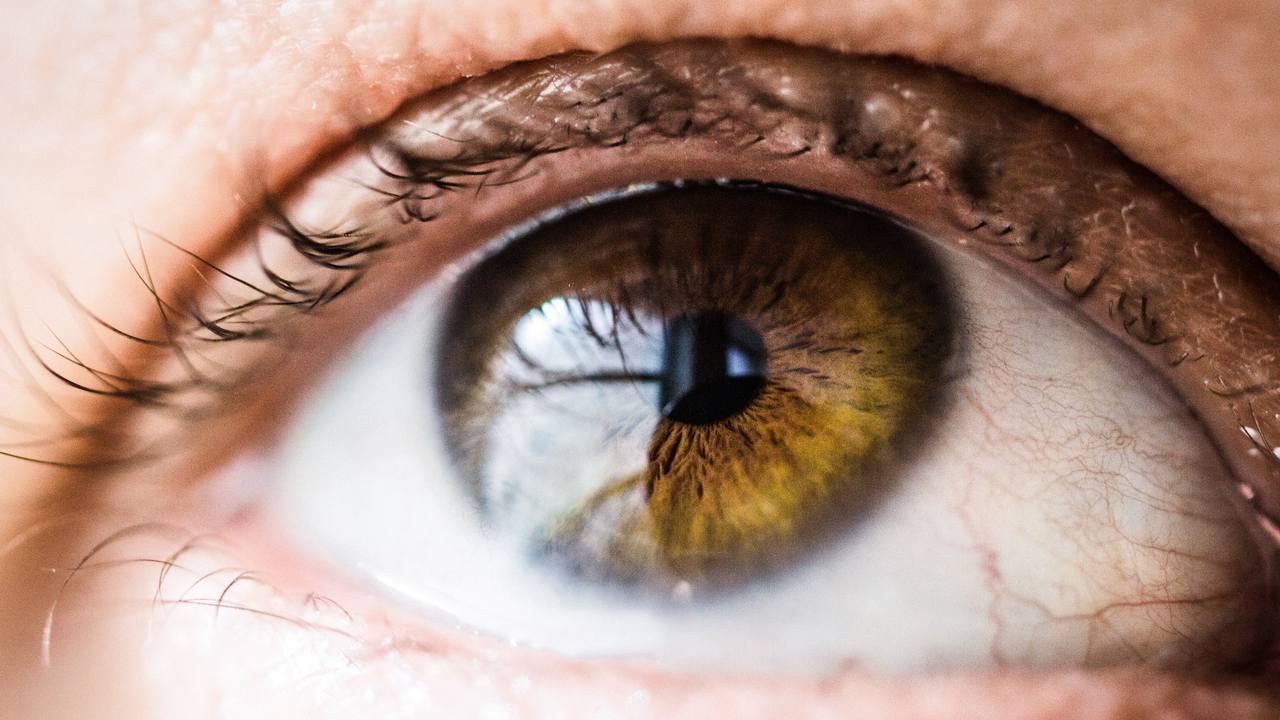
Representational image.[/caption]More than 4.6 million cases of corneal blindness in India are preventable by eye transplantation. This raises the question of the lack of participation from people and on the underlying gap within the ecosystem.
Magnitude and crux of the problem
Corneal blindness is considered as the fourth leading cause of blindness after glaucoma, cataract, and age-related macular degeneration. However, the corneal transplantation is solely dependent on the voluntary donation of eyes. Unfortunately, the magnitude of eye donation in Asia is pretty bleak when compared to the rest of the world.- Demand: There is a huge disparity between demand and supply of eye donation (one cornea available for every 70 needed) in the donation campaigns. The public health burden for eye donation majorly falls on China which has 10-15 percent of corneal blindness of the world’s population followed by India which has 9 percent of the world’s population with corneal blindness. Currently, there are approximately 2.5 lakh people in India who suffer from corneal blindness and require a transplant. Prevalence of corneal blindness is increasing every year in India due to various reasons ranging from occupational hazards and infections to congenital diseases and Vitamin A deficiency. Various informational campaigns are being carried out with the aim to promote and spread awareness about eye donation as there is a year-on-year backlog that is piling up due to lack of donors. The number of voluntary donations that actually take place in India and get successfully transplanted is quite underwhelming.

Representational image[/caption]
- Supply: According to the reports from the Ministry of Health, India, 51,345 eyes were donated in 2013-14 out of which only 22,384 were used for transplant. There is a dearth of people who are willing to donate but the lack of effective technologies and infrastructure is creating a gap. As per, recent data there has been an increase in the number of eye donations but due to the lack of proper infrastructure and training centres, simultaneously, the donations are going to waste.
What can we do to improve the situation?
There is significant scope to improve the process of eye donation in India, as the willingness to donate is favourably high (41.5 percent). The only factor missing is an adequate, well-planned approach. There are certain measures that people, government and non-government organizations can take to improve the eye donation rate in India.- Awareness is key. The awareness quotient in India is extremely low, particularly among the rural population. Awareness about eye donation in rural and urban population is 28 percent and 80 percent respectively. Moreover, families of the deceased are often dissuaded by the relatives with regards to organ donation. The general lack of awareness is a crucial factor behind all the taboos and ignorance. With the desirable amount of counselling and assistance given by medical practitioners and counsellors, the situation at hand can be improved.

Representational image[/caption]
- Hospital Cornea Retrieval Program (HCRP). The program was launched in 1990 with the aim to provide grief counselling to the family of the deceased and also for encouraging them to donate with a more planned approach. Here the grief counsellors who play a pivotal role in education the grieving families have been reported to not be equipped with the essential training. According to a study, only 12.1 percent of these counsellors had excellent knowledge and skills required to counsel people; 28.6 percent of those counsellors had poor or no knowledge of the subject. In order to create a proper intervention mechanism for eye donation, the need to enhance training capabilities for grief counsellors is dire and of utmost importance.
- Improving the Infrastructure – HCRP brings us to the subject of lack of eye banks (EB) and donation centres in India. An even distribution of functional eye banks is currently required in India. More than 2000 eye banks and eye donation centres (EDC) are required to fill the infrastructural gap. Apart from EBs and EDCs, surgical skill development and training facilities should also be made available to surgeons from all regions.
Tags
First Published:Sep 10, 2019, 14:41:58 IST
Advertisement
Advertisement

Careless Whispers: Scientists discover that plants can 'talk' to each other using smells
Japanese scientists have recorded a video that shows plants, in certain conditions, communicate with each other using mists that carry smells. The discovery, reveals that plants release a fine mist of airborne compounds, to warn nearby plants of potential dangers
Life on Mars? European Space Agency’s Orbiter discovers ice water deposits at equator
European Space Agency's Mars Express Orbiter has identified massive ice and ice water deposits beneath the surface of Mars. The Mars Express orbiter was also the first to confirmed the presence of ice on Mars in 2004
Microsoft briefly overtakes Apple as the most valuable company, Apple back on top again
At its peak during the session, Microsoft's value reached $2.903 trillion, with a 2% surge. As of writing this article, Apple closed at $2.89 trillion, whereas Microsoft closed at $2.86 trillion
Even NASA is facing a tough time, starts layoffs following major budget cuts
NASA is facing some massive budget cuts, because of which, it has been forced to postpone some upcoming missions. NASA's Jet Propulsion Laboratory has been hit hard by recent federal budget cuts, resulting in the layoff of 100 contractors last week
ISRO, NASA's NISAR satellite to get ready by Jan-end, will monitor Earth's snow-covered regions
The NISAR satellite which has been developed jointly ISRO and NASA, should be ready for launch by the end of January 2024. The collaboration between NASA and ISRO on NISAR is the first time the two agencies have cooperated on hardware development for an Earth-observing mission
Advertisement
Advertisement