
Advertisement


Sections
Explained: Process of transporting stem cell from donor to patient for a successful transplant
The blood stem cell must be transported between +1-10 degree Celsius temperature and the viability of the stem cells between said temperatures is 72 hours.

A successful stem cell transplant from a matching blood stem cell donor can be lifesaving for patients who suffer from diseases like blood cancer, Thalassemia or Aplastic Anemia. Finding a matching stem cell donor is only half the battle and it is also equally important for the stem cells of the donor to actually reach the patient on time as delays in transplant can be life-threatening for a patient. Blood stem cells are collected from a donor in the same way a blood platelet donation is done.But what happens to the stem cells after it has been collected from a donor?[caption id="attachment_9120311" align="alignnone" width="1024"]![Deepika is a donor from DKMS BMST registry who has successfully donated her blood stem cells for a patient suffering from blood cancer. Image credit: DKMS BMST Foundation India]() Deepika is a donor from DKMS BMST registry who has successfully donated her blood stem cells for a patient suffering from blood cancer. Image credit: DKMS BMST Foundation India[/caption]Once a potential donor comes up as a match for a patient, the blood stem cells are collected via peripheral blood stem cell collection method, post which the medical team waits for the stem cell count from the laboratory. The amount of stem cell count which is to be collected from a donor is related to the number of stem cells required by the recipient. The stem cells cannot be released for transport unless the stem cell count has been sent from the lab and clearance has been given from the Collection centre physician.The stem cells are stored at 2-8 degrees Celsius after the collection. As per the World Marrow Donor Association (WMDA) guidelines, the product must be transported between +1-10 degree Celsius and the viability of the stem cells between said temperatures is 72 hours.The stem cells are transported in a special package called a ‘Credo Box’ that is prepped in advance to 4 degrees Celsius. The credo box maintains a temperature of 2-8 degrees Celsius for 100 hours. There are two temperature loggers on this box that records the temperature of the inside of the box every 15 minutes.The transportation of stem cells is a carefully guided process that takes precision and training by the courier personnel. An interesting fact is that only a human courier can carry the product. The reason for this is that the viability of stem cells is 72 hours, which means that once the patient has been conditioned or their body has been prepped for a transplant, their immunity is very low. They should receive a transplant within that time frame or the consequences can be life-threatening. Therefore, it is extremely critical for the stem cells to be securely transported and delivered to the Transplant Centre within this timeframe.[caption id="attachment_9120321" align="alignnone" width="1280"]
Deepika is a donor from DKMS BMST registry who has successfully donated her blood stem cells for a patient suffering from blood cancer. Image credit: DKMS BMST Foundation India[/caption]Once a potential donor comes up as a match for a patient, the blood stem cells are collected via peripheral blood stem cell collection method, post which the medical team waits for the stem cell count from the laboratory. The amount of stem cell count which is to be collected from a donor is related to the number of stem cells required by the recipient. The stem cells cannot be released for transport unless the stem cell count has been sent from the lab and clearance has been given from the Collection centre physician.The stem cells are stored at 2-8 degrees Celsius after the collection. As per the World Marrow Donor Association (WMDA) guidelines, the product must be transported between +1-10 degree Celsius and the viability of the stem cells between said temperatures is 72 hours.The stem cells are transported in a special package called a ‘Credo Box’ that is prepped in advance to 4 degrees Celsius. The credo box maintains a temperature of 2-8 degrees Celsius for 100 hours. There are two temperature loggers on this box that records the temperature of the inside of the box every 15 minutes.The transportation of stem cells is a carefully guided process that takes precision and training by the courier personnel. An interesting fact is that only a human courier can carry the product. The reason for this is that the viability of stem cells is 72 hours, which means that once the patient has been conditioned or their body has been prepped for a transplant, their immunity is very low. They should receive a transplant within that time frame or the consequences can be life-threatening. Therefore, it is extremely critical for the stem cells to be securely transported and delivered to the Transplant Centre within this timeframe.[caption id="attachment_9120321" align="alignnone" width="1280"]![Blood stem cells are collected from a donor in the same way a blood platelet donation is done. Image credit: Wikipedia]() Blood stem cells are collected from a donor in the same way a blood platelet donation is done. Image credit: Wikipedia[/caption]Some guidelines followed while transporting blood stem cells are:
Blood stem cells are collected from a donor in the same way a blood platelet donation is done. Image credit: Wikipedia[/caption]Some guidelines followed while transporting blood stem cells are:![The stem cells are transported in a special package called a ‘Credo Box’ that is prepped in advance to 4 degrees Celsius and maintains a temperature of 2-8 degrees Celsius for 100 hours. Image credit: Wikipedia]() The stem cells are transported in a special package called a ‘Credo Box’ that is prepped in advance to 4 degrees Celsius and maintains a temperature of 2-8 degrees Celsius for 100 hours. Image credit: Wikipedia[/caption]The COVID-19 pandemic created a lot of challenges concerning blood stem cell donations due to the closing of borders, travel restrictions, quarantine guidelines, etc. Stem cell registries like DKMS-BMST came up with a unique solution of transporting the products without courier personnel but via the pilot in the cockpit. The product was handed over to the pilot via a courier at the airport, and the pilot would take the product into the cockpit. This also meant that most of the planes could be utilized, even cargo planes without constraints of flight schedules.With rising blood cancer cases in India, a successful blood stem cell donation from a matching donor can help blood cancer patients receive a second chance at life. The first step to ensuring this is that people are aware of the process of blood stem cell donation and register as a potential blood stem cell donor!The author is the CEO of the NGO DKMS BMST Foundation, India
The stem cells are transported in a special package called a ‘Credo Box’ that is prepped in advance to 4 degrees Celsius and maintains a temperature of 2-8 degrees Celsius for 100 hours. Image credit: Wikipedia[/caption]The COVID-19 pandemic created a lot of challenges concerning blood stem cell donations due to the closing of borders, travel restrictions, quarantine guidelines, etc. Stem cell registries like DKMS-BMST came up with a unique solution of transporting the products without courier personnel but via the pilot in the cockpit. The product was handed over to the pilot via a courier at the airport, and the pilot would take the product into the cockpit. This also meant that most of the planes could be utilized, even cargo planes without constraints of flight schedules.With rising blood cancer cases in India, a successful blood stem cell donation from a matching donor can help blood cancer patients receive a second chance at life. The first step to ensuring this is that people are aware of the process of blood stem cell donation and register as a potential blood stem cell donor!The author is the CEO of the NGO DKMS BMST Foundation, India
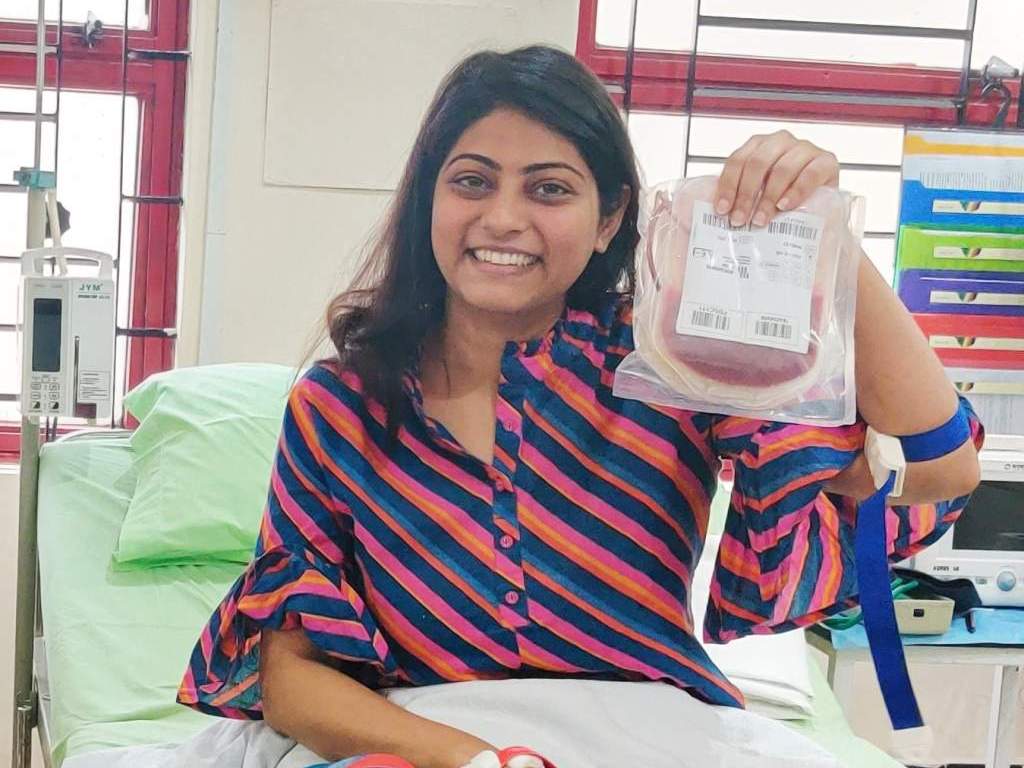 Deepika is a donor from DKMS BMST registry who has successfully donated her blood stem cells for a patient suffering from blood cancer. Image credit: DKMS BMST Foundation India[/caption]Once a potential donor comes up as a match for a patient, the blood stem cells are collected via peripheral blood stem cell collection method, post which the medical team waits for the stem cell count from the laboratory. The amount of stem cell count which is to be collected from a donor is related to the number of stem cells required by the recipient. The stem cells cannot be released for transport unless the stem cell count has been sent from the lab and clearance has been given from the Collection centre physician.The stem cells are stored at 2-8 degrees Celsius after the collection. As per the World Marrow Donor Association (WMDA) guidelines, the product must be transported between +1-10 degree Celsius and the viability of the stem cells between said temperatures is 72 hours.The stem cells are transported in a special package called a ‘Credo Box’ that is prepped in advance to 4 degrees Celsius. The credo box maintains a temperature of 2-8 degrees Celsius for 100 hours. There are two temperature loggers on this box that records the temperature of the inside of the box every 15 minutes.The transportation of stem cells is a carefully guided process that takes precision and training by the courier personnel. An interesting fact is that only a human courier can carry the product. The reason for this is that the viability of stem cells is 72 hours, which means that once the patient has been conditioned or their body has been prepped for a transplant, their immunity is very low. They should receive a transplant within that time frame or the consequences can be life-threatening. Therefore, it is extremely critical for the stem cells to be securely transported and delivered to the Transplant Centre within this timeframe.[caption id="attachment_9120321" align="alignnone" width="1280"]
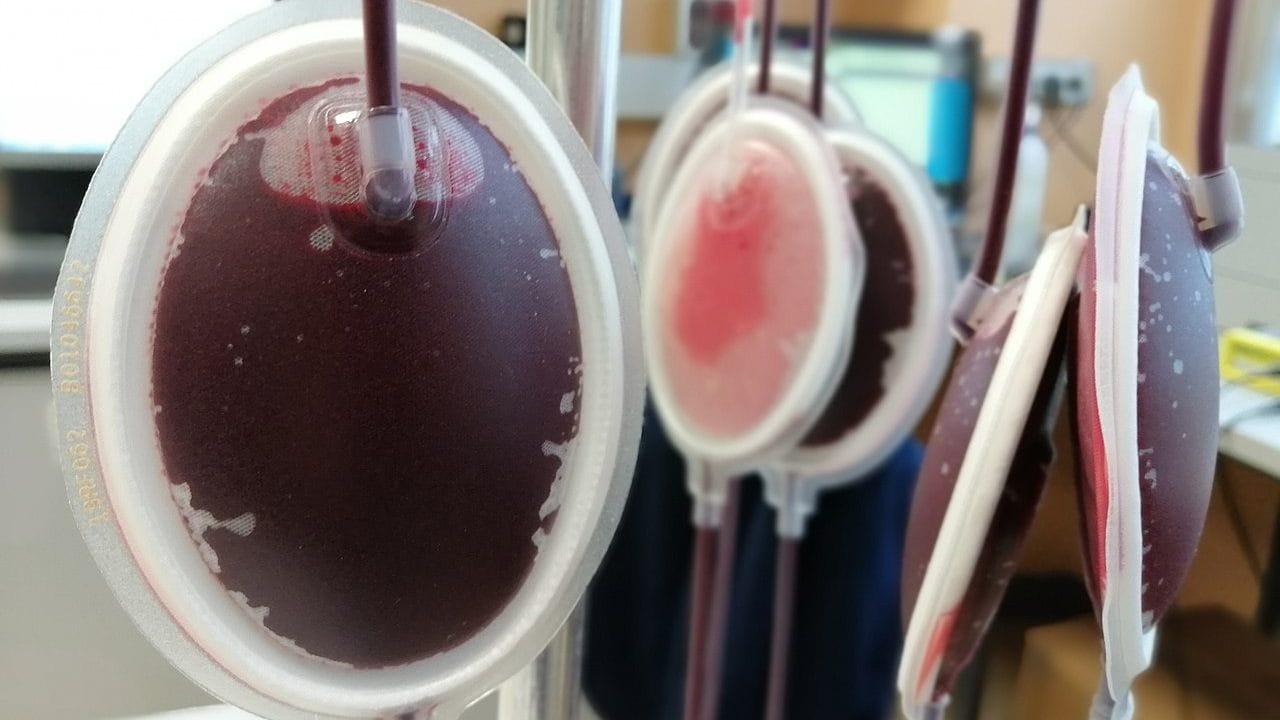 Blood stem cells are collected from a donor in the same way a blood platelet donation is done. Image credit: Wikipedia[/caption]Some guidelines followed while transporting blood stem cells are:
- Only a trained and experienced courier personnel verified by a stem cell registry can carry the stem cell product for domestic transplants.
- The stem cell product alone cannot travel via cargo, someone always must be with the product
- The stem cell product cannot go through an X-ray machine or a metal detector
- The stem cell product must travel in a container and within the temperature parameters as set by the WMDA
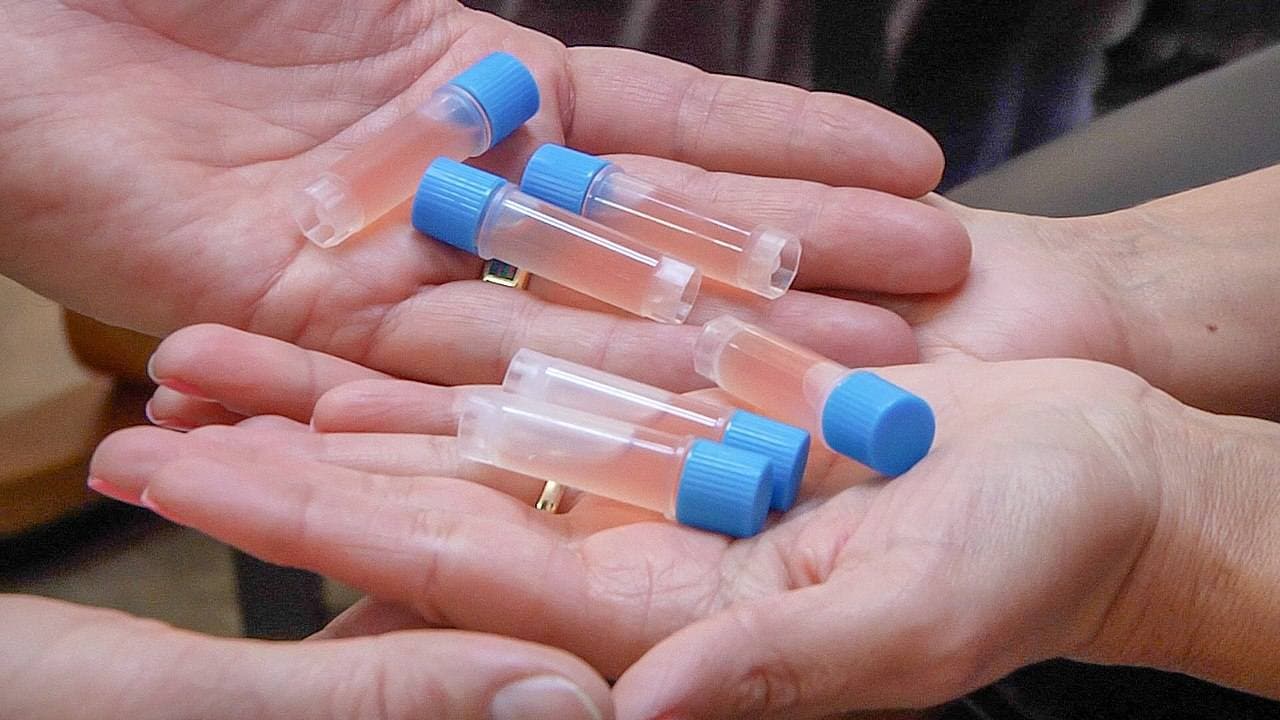 The stem cells are transported in a special package called a ‘Credo Box’ that is prepped in advance to 4 degrees Celsius and maintains a temperature of 2-8 degrees Celsius for 100 hours. Image credit: Wikipedia[/caption]The COVID-19 pandemic created a lot of challenges concerning blood stem cell donations due to the closing of borders, travel restrictions, quarantine guidelines, etc. Stem cell registries like DKMS-BMST came up with a unique solution of transporting the products without courier personnel but via the pilot in the cockpit. The product was handed over to the pilot via a courier at the airport, and the pilot would take the product into the cockpit. This also meant that most of the planes could be utilized, even cargo planes without constraints of flight schedules.With rising blood cancer cases in India, a successful blood stem cell donation from a matching donor can help blood cancer patients receive a second chance at life. The first step to ensuring this is that people are aware of the process of blood stem cell donation and register as a potential blood stem cell donor!The author is the CEO of the NGO DKMS BMST Foundation, India
First Published:Dec 17, 2020, 13:46:34 IST
Advertisement
Advertisement

Careless Whispers: Scientists discover that plants can 'talk' to each other using smells
Japanese scientists have recorded a video that shows plants, in certain conditions, communicate with each other using mists that carry smells. The discovery, reveals that plants release a fine mist of airborne compounds, to warn nearby plants of potential dangers
Life on Mars? European Space Agency’s Orbiter discovers ice water deposits at equator
European Space Agency's Mars Express Orbiter has identified massive ice and ice water deposits beneath the surface of Mars. The Mars Express orbiter was also the first to confirmed the presence of ice on Mars in 2004
Microsoft briefly overtakes Apple as the most valuable company, Apple back on top again
At its peak during the session, Microsoft's value reached $2.903 trillion, with a 2% surge. As of writing this article, Apple closed at $2.89 trillion, whereas Microsoft closed at $2.86 trillion
Even NASA is facing a tough time, starts layoffs following major budget cuts
NASA is facing some massive budget cuts, because of which, it has been forced to postpone some upcoming missions. NASA's Jet Propulsion Laboratory has been hit hard by recent federal budget cuts, resulting in the layoff of 100 contractors last week
ISRO, NASA's NISAR satellite to get ready by Jan-end, will monitor Earth's snow-covered regions
The NISAR satellite which has been developed jointly ISRO and NASA, should be ready for launch by the end of January 2024. The collaboration between NASA and ISRO on NISAR is the first time the two agencies have cooperated on hardware development for an Earth-observing mission
Advertisement
Advertisement