


Even at death's door, a 'Cold Quasar' can form new stars, as per new observations
One in ten galaxies with active supermassive black holes retain a cold gas supply for star formation.

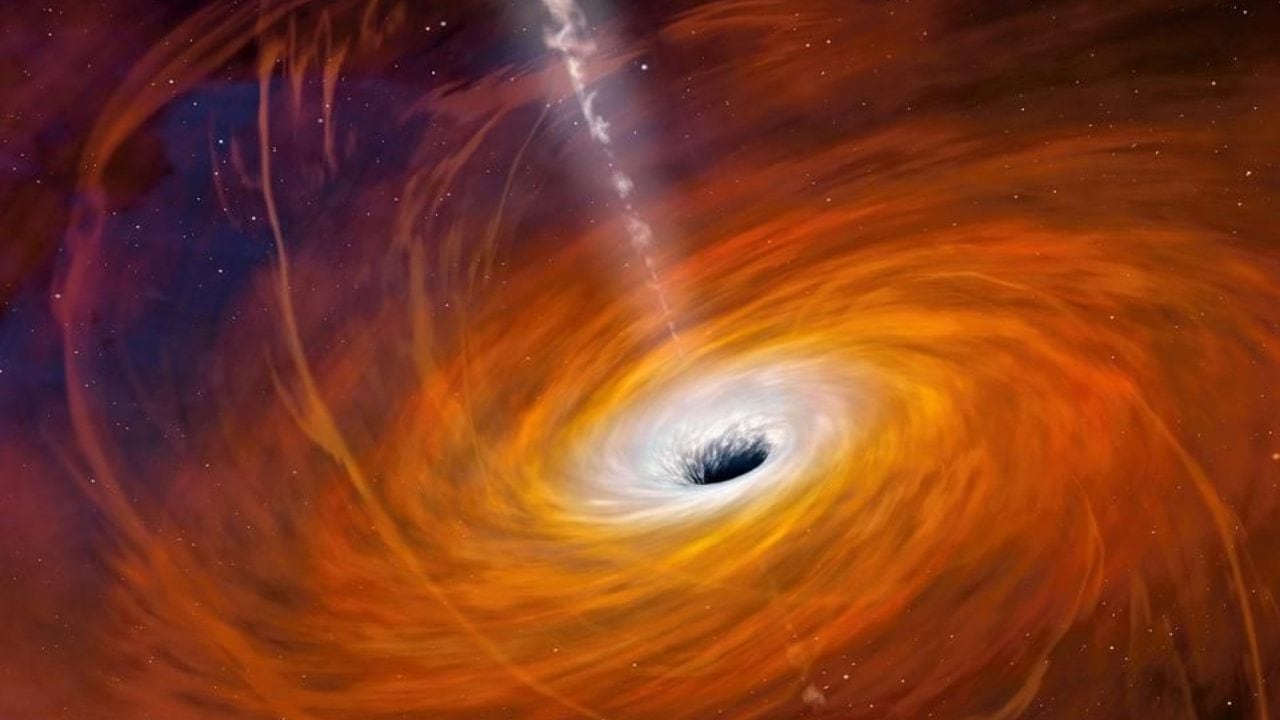
An illustration of an accreting, active supermassive black hole on its way to becoming a quasar. Image: Mark Garlick/Flickr[/caption]This disk casts off an enormous amount of electromagnetic energy, often making the black hole shine brighter than its galaxy once did. Quasars can stretch as far and wide as entire galaxies, where instead of asteroids, planets and dark matter, the matter spreading across the bulk of a quasar is superheated plasma, which is what gives them a glow brighter than some galaxies.Combining observations from all those data sources, the scientists' investigation revealed that about 10 percent of galaxies with accreting supermassive black holes still held onto a supply of cold gas and made new stars."That in itself is surprising," Kirkpatrick said.As quasars form, they clear out the gas and dust from the centres of the star-forming galaxies, pushing them to the growing quasar's outskirts. Soon, there won't be enough dust and gas needed for new stars to form.

Careless Whispers: Scientists discover that plants can 'talk' to each other using smells
Life on Mars? European Space Agency’s Orbiter discovers ice water deposits at equator
Microsoft briefly overtakes Apple as the most valuable company, Apple back on top again
Even NASA is facing a tough time, starts layoffs following major budget cuts
ISRO, NASA's NISAR satellite to get ready by Jan-end, will monitor Earth's snow-covered regions