


ESA's Gaia telescope spots high-velocity stars travelling between galaxies
Of 20 stars, seven stars were moving away from the Galaxy and 13 were racing towards the Milky Way.

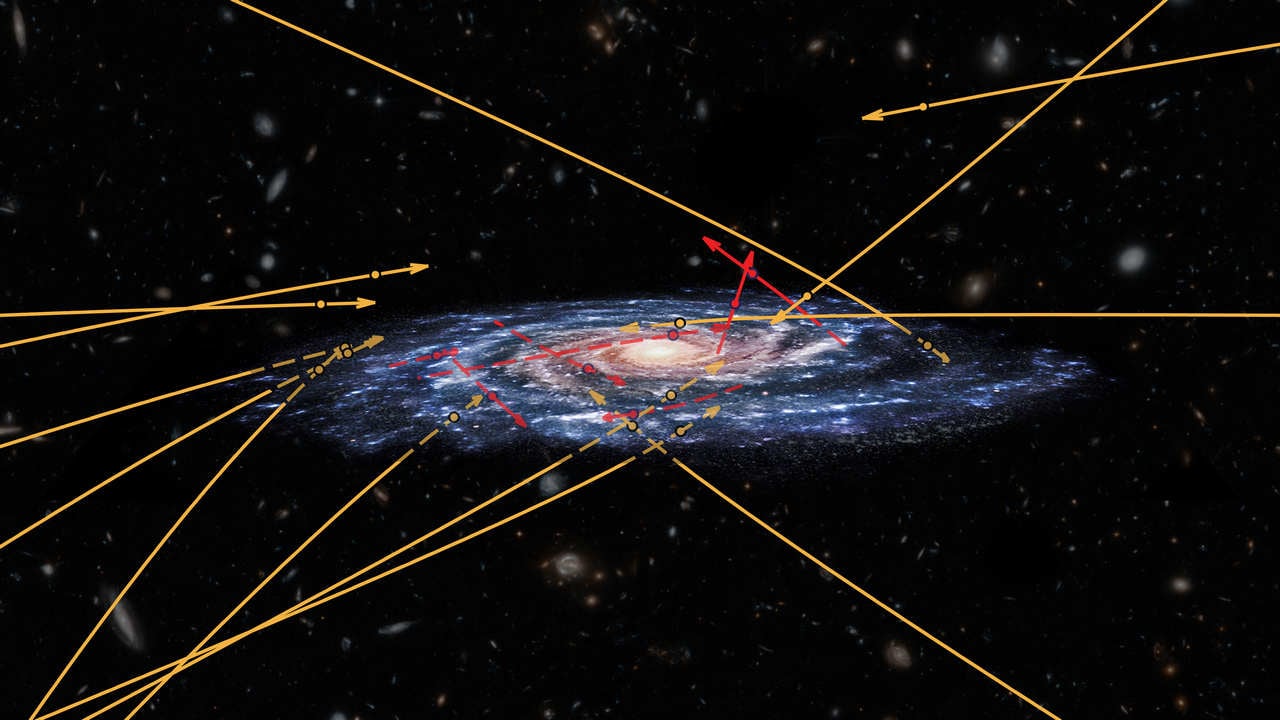
ESA (artist’s impression and composition); Marchetti et al 2018 (star positions and trajectories). Image: ESA[/caption]However, "rather than flying away from the Galactic centre, most of the high-velocity stars we spotted seem to be racing towards it," added co-author Tommaso Marchetti from the varsity."These could be stars from another galaxy, zooming right through the Milky Way," Marchetti said.Stars circle around our galaxy at hundreds of kilometres per second, and their motions contain a wealth of information about the past history of the Galaxy.The fastest class of these stars are called hypervelocity stars, which are thought to start their life near the Galactic centre, later to be flung towards the edge of the Milky Way via interactions with the black hole at its centre.Another explanation could be that the newly identified sprinting stars could be native to our Galaxy's halo, accelerated and pushed inwards through interactions with one of the dwarf galaxies that fell towards the Milky Way during its build-up history, the astronomers explained.The new data, published in the journal Monthly Notices of the Royal Astronomical Society, will help to nail down the nature and origin of these stars with more certainty, and the team will use ground-based telescopes to find out more about them.

Careless Whispers: Scientists discover that plants can 'talk' to each other using smells
Life on Mars? European Space Agency’s Orbiter discovers ice water deposits at equator
Microsoft briefly overtakes Apple as the most valuable company, Apple back on top again
Even NASA is facing a tough time, starts layoffs following major budget cuts
ISRO, NASA's NISAR satellite to get ready by Jan-end, will monitor Earth's snow-covered regions