


ESA's Cheops mission to find habitable exoplanets halted due to error in Soyuz rocket
CHEOPS will focus on 100 extrasolar planets to see if there’s an Earth-like planet capable of sustaining life

European space officials on Tuesday postponed the launch of a three-year mission to study planets in other solar systems shortly before it was due to blast off.
The European Space Agency announced that the launch from Kourou, French Guiana, of the Characterising ExOPlanets Satellite (CHEOPS) mission would be delayed by at least a day. It had been scheduled for 2.24 pm IST.
ESA Director of Science Guenther Hasinger tweeted that “a software error in the Fregat upper stage” of the Soyuz rocket was responsible for the postponement.
“With this complex mission, we will not take any risks,” he added, advising people to “keep fingers crossed for (a launch) tomorrow” at the same time.[caption id="attachment_7796931" align="alignnone" width="1280"]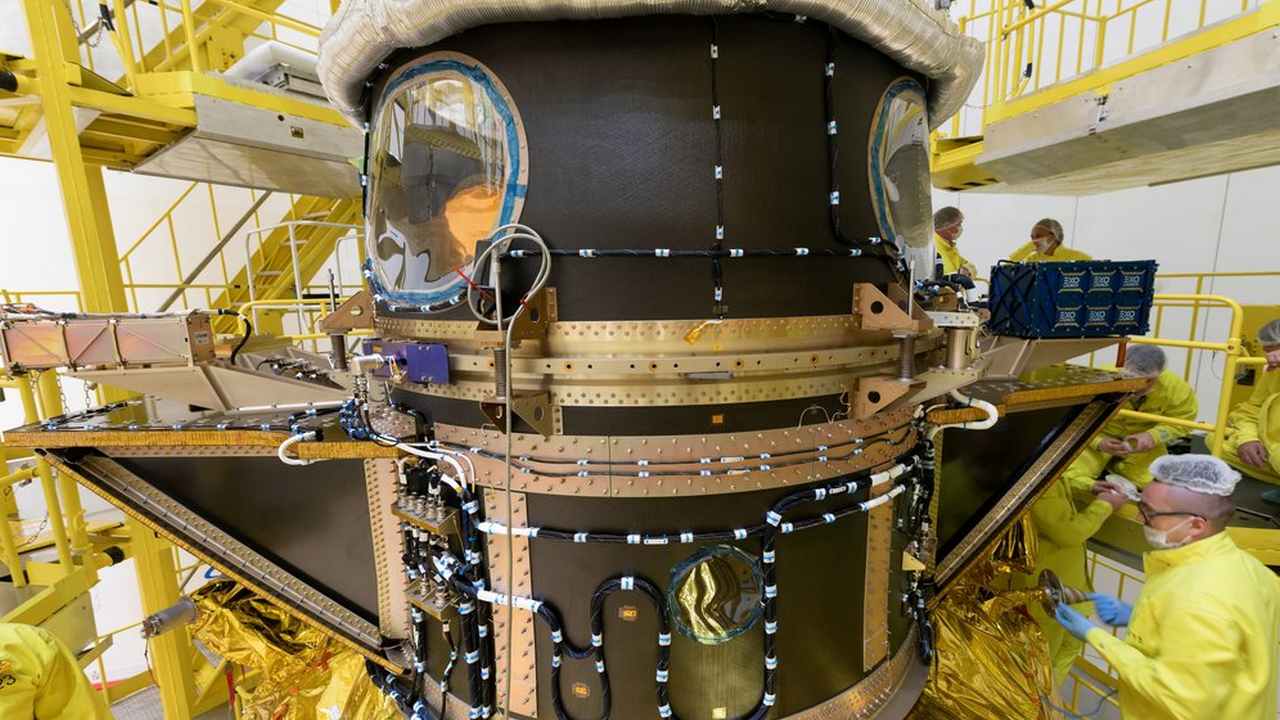
The Characterising ExOPlanets Satellite (CHEOPS) mission will focus on 100 of the more than 4,000 extrasolar planets — ones beyond our own solar system — discovered so far. Image credit: AP[/caption]Europe’s Arianespace, which has been operating Russian Soyuz rockets from Kourou since 2011, said during the countdown that “the Soyuz launcher’s automated sequence was interrupted at 1 hour 25 minutes before liftoff.” The launcher was put into a safe standby mode, it added.
“The new target launch date will be announced as soon as possible,” the agency said in a statement.
A space telescope will analyze the exoplanets’ densities and radii and determine whether they have atmospheres, Queloz said.
 More from Science
“We know nothing, except that they are there,” he said.
Once in place, the telescope will focus on bright stars to determine the size of exoplanets as they pass in front of their host star.

Careless Whispers: Scientists discover that plants can 'talk' to each other using smells
Life on Mars? European Space Agency’s Orbiter discovers ice water deposits at equator
Microsoft briefly overtakes Apple as the most valuable company, Apple back on top again
Even NASA is facing a tough time, starts layoffs following major budget cuts
ISRO, NASA's NISAR satellite to get ready by Jan-end, will monitor Earth's snow-covered regions