
Advertisement


Sections
ESA satellite re-routed in orbit to avoid collision with SpaceX's Starlink constellation
SpaceX cited a bug in its satellite's OS prevented it from seeing the collision risk with ESA's Aeolus satellite.

On 3 September, the European Space Agency announced that it had altered the trajectory of one of its active, orbiting Earth-observation satellites to prevent what could have been a collision with a satellite operated by SpaceX. The satellite was part of SpaceX's newly-launched Starlink constellation, a 12,000-strong planned constellation of internet broadband satellites offering hi-speed internet services globally."@ESA 's #Aeolus Earth observation satellite fired its thrusters, moving it off a collision course with a @SpaceX satellite in their #Starlink constellation," ESA's official Twitter account said. It added that ESA scientists decided the safest plan of action was to boost the altitude of the Aeolus satellite – this is the "first time ever" that a manoeuvre like this has been used to steer clear of another satellite's path."The vast majority of ESA avoidance manoeuvres are the result of dead satellites or fragments from previous collisions, ESA added.[caption id="attachment_7281221" align="alignnone" width="1280"]![The Aelous satellite in orbit. Image: ESA]() The Aelous satellite in orbit. Image: ESA[/caption]A bug in Starlink's on-call operating system prevented SpaceX from seeing the increased risk of a collision with the ESA satellite, a SpaceX spokesperson told AFP. "Had the Starlink operator seen the correspondence, we would have coordinated with ESA to determine the best approach with their continuing with their manoeuvre or our performing a manoeuvre," the spokesperson added.SpaceX, a leading space and launch vehicle company founded by Elon Musk in 2002, launched 60 demo broadband-beaming satellites under its Starlink project.The initial launch prompted astronomers to raise the alarm over the risk of a possible collision and briefly threw up a spate of UFO sightings over the Netherlands.[caption id="attachment_6593081" align="alignnone" width="1280"]
The Aelous satellite in orbit. Image: ESA[/caption]A bug in Starlink's on-call operating system prevented SpaceX from seeing the increased risk of a collision with the ESA satellite, a SpaceX spokesperson told AFP. "Had the Starlink operator seen the correspondence, we would have coordinated with ESA to determine the best approach with their continuing with their manoeuvre or our performing a manoeuvre," the spokesperson added.SpaceX, a leading space and launch vehicle company founded by Elon Musk in 2002, launched 60 demo broadband-beaming satellites under its Starlink project.The initial launch prompted astronomers to raise the alarm over the risk of a possible collision and briefly threw up a spate of UFO sightings over the Netherlands.[caption id="attachment_6593081" align="alignnone" width="1280"]![A prototype Starlink satellite. The first two prototype Starlink satellites were launched by SpaceX in February 2018. Image: SpaceX]() A prototype Starlink satellite. The first two prototype Starlink satellites were launched by SpaceX in February 2018. Image: SpaceX[/caption]SpaceX says the Starlink constellation could eventually reach 12,000 satellites.Faced with an increase of privately run craft, which currently number around 20,000 in Earth's atmosphere, the ESA will hold a meeting in November focussed on space security.(Also read: Star Caravan: SpaceX Starlink satellites spark UFO frenzy among Dutch astronomers)(Also read: First wave of SpaceX's Starlink satellites liftoff in a successful launch on 24 May)
A prototype Starlink satellite. The first two prototype Starlink satellites were launched by SpaceX in February 2018. Image: SpaceX[/caption]SpaceX says the Starlink constellation could eventually reach 12,000 satellites.Faced with an increase of privately run craft, which currently number around 20,000 in Earth's atmosphere, the ESA will hold a meeting in November focussed on space security.(Also read: Star Caravan: SpaceX Starlink satellites spark UFO frenzy among Dutch astronomers)(Also read: First wave of SpaceX's Starlink satellites liftoff in a successful launch on 24 May)
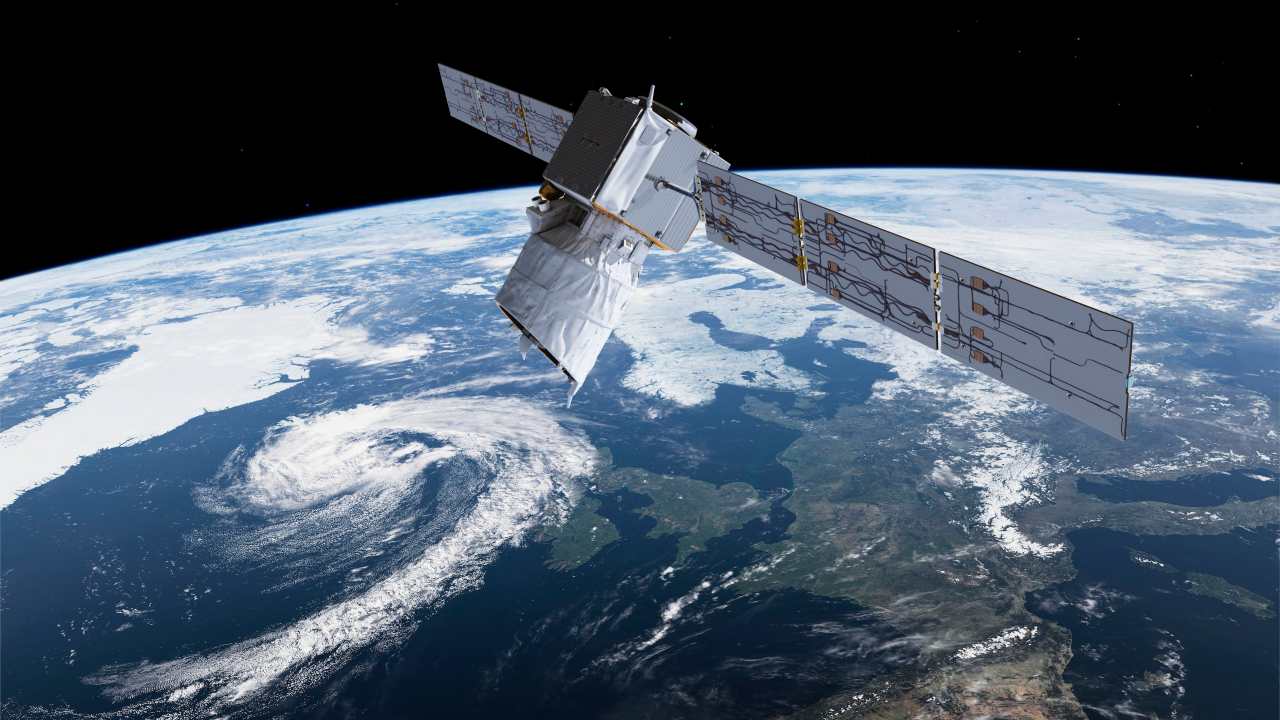 The Aelous satellite in orbit. Image: ESA[/caption]A bug in Starlink's on-call operating system prevented SpaceX from seeing the increased risk of a collision with the ESA satellite, a SpaceX spokesperson told AFP. "Had the Starlink operator seen the correspondence, we would have coordinated with ESA to determine the best approach with their continuing with their manoeuvre or our performing a manoeuvre," the spokesperson added.SpaceX, a leading space and launch vehicle company founded by Elon Musk in 2002, launched 60 demo broadband-beaming satellites under its Starlink project.The initial launch prompted astronomers to raise the alarm over the risk of a possible collision and briefly threw up a spate of UFO sightings over the Netherlands.[caption id="attachment_6593081" align="alignnone" width="1280"]
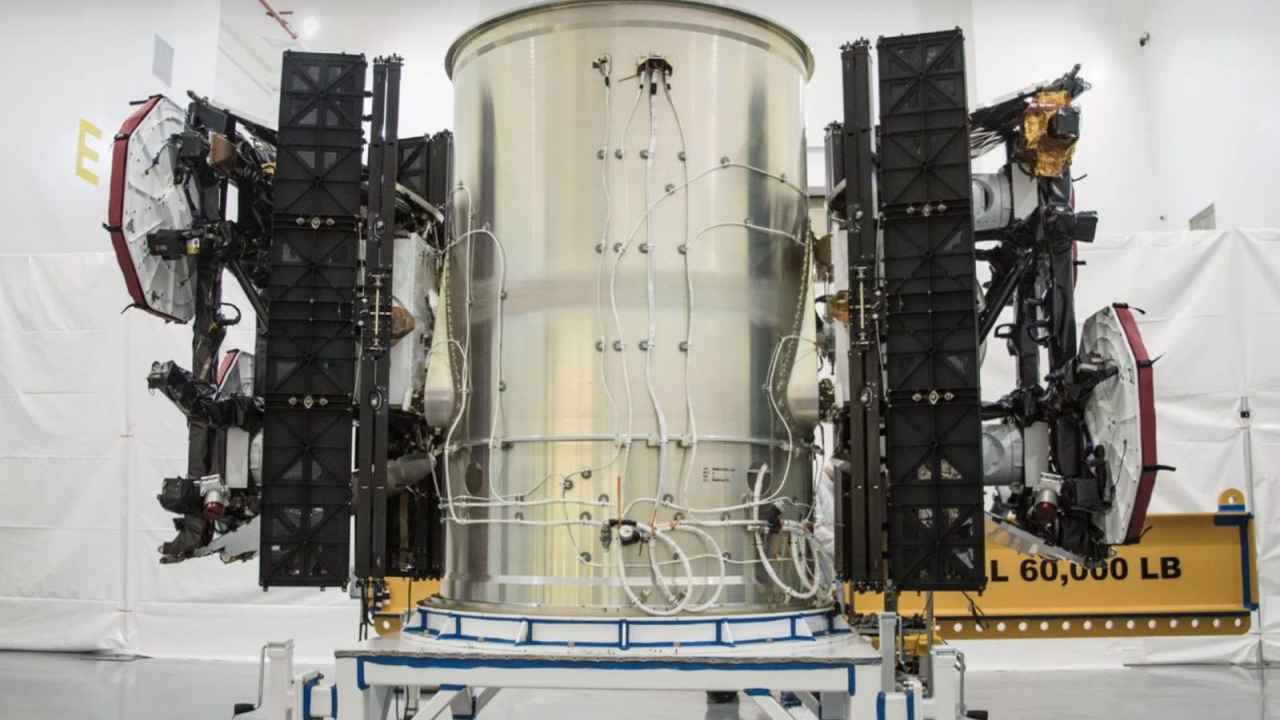 A prototype Starlink satellite. The first two prototype Starlink satellites were launched by SpaceX in February 2018. Image: SpaceX[/caption]SpaceX says the Starlink constellation could eventually reach 12,000 satellites.Faced with an increase of privately run craft, which currently number around 20,000 in Earth's atmosphere, the ESA will hold a meeting in November focussed on space security.(Also read: Star Caravan: SpaceX Starlink satellites spark UFO frenzy among Dutch astronomers)(Also read: First wave of SpaceX's Starlink satellites liftoff in a successful launch on 24 May)
First Published:Sep 04, 2019, 09:25:58 IST
Advertisement
Advertisement

Careless Whispers: Scientists discover that plants can 'talk' to each other using smells
Japanese scientists have recorded a video that shows plants, in certain conditions, communicate with each other using mists that carry smells. The discovery, reveals that plants release a fine mist of airborne compounds, to warn nearby plants of potential dangers
Life on Mars? European Space Agency’s Orbiter discovers ice water deposits at equator
European Space Agency's Mars Express Orbiter has identified massive ice and ice water deposits beneath the surface of Mars. The Mars Express orbiter was also the first to confirmed the presence of ice on Mars in 2004
Microsoft briefly overtakes Apple as the most valuable company, Apple back on top again
At its peak during the session, Microsoft's value reached $2.903 trillion, with a 2% surge. As of writing this article, Apple closed at $2.89 trillion, whereas Microsoft closed at $2.86 trillion
Even NASA is facing a tough time, starts layoffs following major budget cuts
NASA is facing some massive budget cuts, because of which, it has been forced to postpone some upcoming missions. NASA's Jet Propulsion Laboratory has been hit hard by recent federal budget cuts, resulting in the layoff of 100 contractors last week
ISRO, NASA's NISAR satellite to get ready by Jan-end, will monitor Earth's snow-covered regions
The NISAR satellite which has been developed jointly ISRO and NASA, should be ready for launch by the end of January 2024. The collaboration between NASA and ISRO on NISAR is the first time the two agencies have cooperated on hardware development for an Earth-observing mission
Advertisement
Advertisement