
Advertisement


Sections
Eight teams to join NASA's Solar System Exploration to study Moon, Mars and more
Their studies will be funded by NASA for five years at the rate of $10.5 million per year.

NASA has selected eight new research teams that will look in the space science and human exploration of the Moon, asteroids and the solar system.The research will take place under the Solar System Exploration Research Virtual Institute (SSERVI) and will look into basic and applied scientific questions that will help in the better understanding of space and its environments.The studies will be funded $10.5 million per year by NASA’s Science and Human Exploration and Operations Mission Directorates for a period of five years. These eight teams will join four existing teams that are studying the Moon, near-Earth asteroids and Mars’ moons Phobos and Deimos.These teams will collaborate with international partners and domestic universities via virtual technology.[caption id="attachment_6835461" align="alignnone" width="1280"]![Representational image.]() Representational image.[/caption]The eight teams are as follows:
Representational image.[/caption]The eight teams are as follows:![the Solar System Exploration Research Virtual Institute (SSERVI). Image credit: NASA]() the Solar System Exploration Research Virtual Institute (SSERVI). Image credit: NASA[/caption]
the Solar System Exploration Research Virtual Institute (SSERVI). Image credit: NASA[/caption]
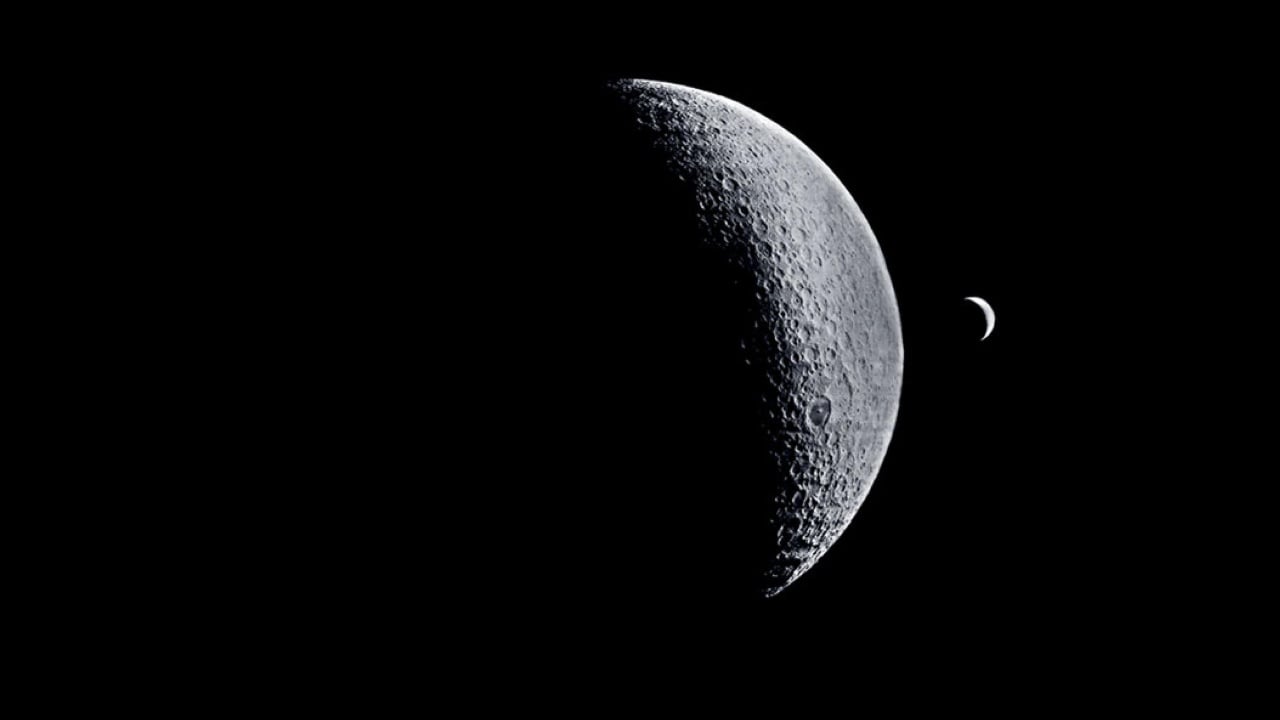 Representational image.[/caption]The eight teams are as follows:
- The Center for Lunar and Asteroid Surface Science (CLASS) team from the University of Central Florida will study the regolith that is the soil like material on the Moon and asteroids.
- Interdisciplinary Consortium for Evaluating Volatile Origins (ICE FIVE-O) from the University of Hawai’i at Honolulu will look into how things weather in space.
- Resource Exploration and Science of OUR Cosmic Environment (RESOURCE) from the Ames research centre in Silicon Valley of California will study the quantity and availability of resources on the Moon, test the technology required to process these resources, and conduct field tests to see what will it take for humans to stay on the Moon.
- Remote, In Situ, and Synchrotron Studies for Science and Exploration 2 (RISE2) from Stony Brook University New York, will look into how the environments on other planets affect human bodies by studying animal tissues and cells with regard to regolith.
- Institute for Modeling Plasmas, Atmospheres and Cosmic Dust (IMPACT) from the University of Colorado Boulder will measure micron-sized dust impacts on the Moon's surface using the world’s fastest “dust impact” facility. It will also carry out experiments to prove/disprove existing theories about Moon dust, a.k.a. regolith
 the Solar System Exploration Research Virtual Institute (SSERVI). Image credit: NASA[/caption]
- Lunar Environment And Dynamics for Exploration Research (LEADER) from NASA’s Goddard Space Flight Centre in Greenbelt, Maryland will look into the effects of the Moon’s environments on robots and humans beings.
- Center for Lunar Science and Exploration (CLSE) from Lunar and Planetary Institute in Houston will track the formation and distribution of volatiles i.e. a group of chemical elements and chemical compounds with low boiling points, from the solar system and the Moon.
- Geophysical Exploration Of the Dynamics and Evolution of the Solar System (GEODES), at the University of Maryland in College Park, will use geophysical modelling and laboratory techniques to characterise the overall evolution, stability, and volatile content of the Moon and asteroid subsurfaces.
First Published:Jul 01, 2019, 14:28:36 IST
Advertisement
Advertisement

Careless Whispers: Scientists discover that plants can 'talk' to each other using smells
Japanese scientists have recorded a video that shows plants, in certain conditions, communicate with each other using mists that carry smells. The discovery, reveals that plants release a fine mist of airborne compounds, to warn nearby plants of potential dangers
Life on Mars? European Space Agency’s Orbiter discovers ice water deposits at equator
European Space Agency's Mars Express Orbiter has identified massive ice and ice water deposits beneath the surface of Mars. The Mars Express orbiter was also the first to confirmed the presence of ice on Mars in 2004
Microsoft briefly overtakes Apple as the most valuable company, Apple back on top again
At its peak during the session, Microsoft's value reached $2.903 trillion, with a 2% surge. As of writing this article, Apple closed at $2.89 trillion, whereas Microsoft closed at $2.86 trillion
Even NASA is facing a tough time, starts layoffs following major budget cuts
NASA is facing some massive budget cuts, because of which, it has been forced to postpone some upcoming missions. NASA's Jet Propulsion Laboratory has been hit hard by recent federal budget cuts, resulting in the layoff of 100 contractors last week
ISRO, NASA's NISAR satellite to get ready by Jan-end, will monitor Earth's snow-covered regions
The NISAR satellite which has been developed jointly ISRO and NASA, should be ready for launch by the end of January 2024. The collaboration between NASA and ISRO on NISAR is the first time the two agencies have cooperated on hardware development for an Earth-observing mission
Advertisement
Advertisement