


Earliest interstellar visitor may have collided with Earth in 2014: Harvard study
Fewer than ten observable asteroid collisions have taken place in the Earth's in the current millennia.

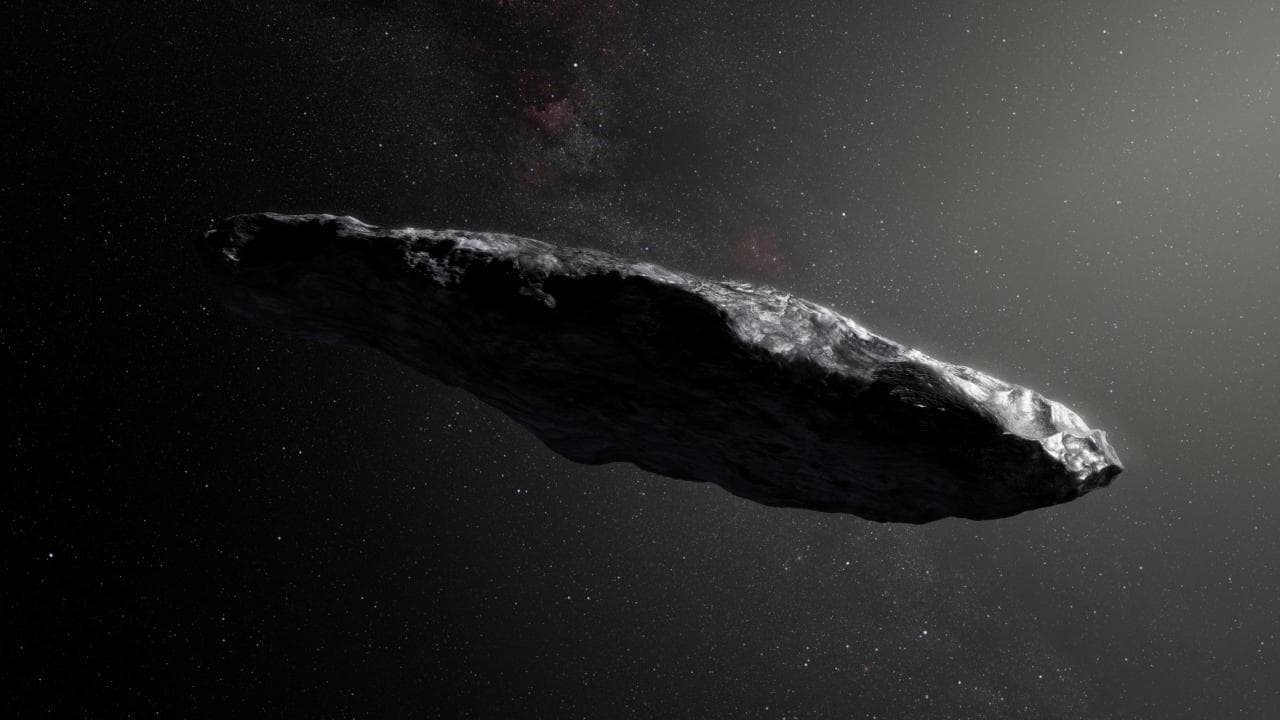
This artist’s impression shows the first interstellar asteroid, `Oumuamua, as it passes through the solar system. Image: ESO[/caption]Be combing through thirty years of data, the team uncovered two meteors that struck the atmosphere with roughly the same speeds. While one of them was gravitationally-bound to the Sun, the other was evidently an interstellar visitor to our planetary neighbourhood.The researchers estimated there are roughly a million such objects in any 150 million km-stretch of our galaxy. Essentially, each star in the galaxy has around 60 billion trillion rocks that are up to 20 times Earth's mass flying around in its solar system.Just so one of these doesn't hit us without fair warning, astronomers are working on an alert system with telescopes trained to zero-in on meteors zipping through the solar system at high speeds. They want to analyze what gases these interstellar rocks are made up of, according to Loeb."From that, we could infer the compositions of interstellar meteors," he said.The findings from the study were pre-published in arXiv on 15 April.

Careless Whispers: Scientists discover that plants can 'talk' to each other using smells
Life on Mars? European Space Agency’s Orbiter discovers ice water deposits at equator
Microsoft briefly overtakes Apple as the most valuable company, Apple back on top again
Even NASA is facing a tough time, starts layoffs following major budget cuts
ISRO, NASA's NISAR satellite to get ready by Jan-end, will monitor Earth's snow-covered regions