


DNA tests of confiscated tusks leads researchers to ivory trade cartels in Africa
By DNA testing confiscated tusks, the team identified 3 major cartels shipping tusks out of Africa.

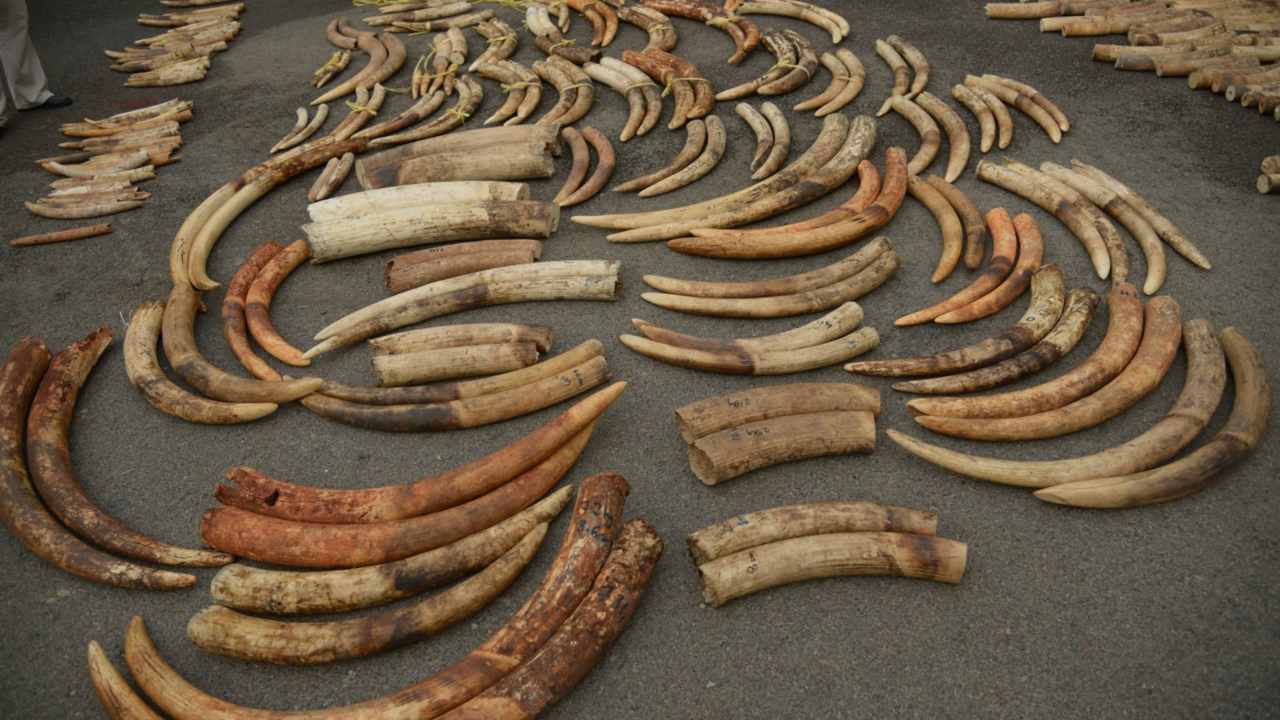
Tusks from a seizure of illegal ivory in 2015 in Singapore after being paired based on a process of sorting devised by Wasser and his team. Image Credit: University of Washington[/caption]They also discovered that two shipments with matching tusks would frequently pass through the same port, usually within 10 months of each other."This suggests the same major cartel was responsible for both shipments," Wasser told reporters on a conference call."We were able to identify what we believe are the three major cartels shipping tusks out of Africa."They operate out of Mombasa, Kenya; Entebbe, Uganda; and Lome, Togo, according to Wasser.Bolstering caseSince most ivory traffickers face prosecution for a single seizure, being able to connect individual traffickers to multiple large seizures can raise the stakes, allowing them to be charged with major transnational crimes and face tougher penalties.Wasser said his team's research has been able to link far more ivory to certain criminals.Chief among them is ivory "kingpin" Feisal Mohamed Ali, a Kenyan national who had his 20-year jail term overturned earlier this year by a judge who cited "gaps" in the evidence against him.Ali was arrested in Tanzania in 2014 in connection with two tons of ivory — 228 whole tusks and 74 pieces — found in a Mombasa warehouse. Authorities put the value of the ivory at $4.2 million.His case has been referred to a lower court, said Wasser."There is a great deal of evidence we have uncovered – as have others — that link him to multiple seizures," Wasser said."Our hope is that the data presented in this paper will help strengthen the case against this cartel."Wasser said DNA analysis from his lab was "instrumental" in the conviction of another ivory smuggler, Emile N'Bouke, nicknamed "The Boss" (Le Patron), allegedly the largest ivory trafficker in west Africa.

Careless Whispers: Scientists discover that plants can 'talk' to each other using smells
Life on Mars? European Space Agency’s Orbiter discovers ice water deposits at equator
Microsoft briefly overtakes Apple as the most valuable company, Apple back on top again
Even NASA is facing a tough time, starts layoffs following major budget cuts
ISRO, NASA's NISAR satellite to get ready by Jan-end, will monitor Earth's snow-covered regions