
Advertisement


Sections
Cyclone Fani from Space: Satellite images show fearsome wrath of the severe storm
Fani's fearsome power was caught in action by a network of weather satellites that kept a keen eye on it.

Cyclone Fani was the strongest tropical cyclone to have hit Odisha since cyclone Phailin in 2013. The storm's fearsome power was caught in action by a network of weather satellites in space that had a keen eye on the storm as it made its landfall on 3 May over the Eastern coast of India.Fani was a Category 4 tropical cyclone (a.k.a a Category 4 hurricane), with wind speeds of over 200 kilometres per hour at its peak.Also check out: Anatomy of Cyclone Fani in maps — climatic factors that caused tropical storm Fani to grow quickly in intensityAs Fani formed and graduated in its intensity, weather satellites like the American National Oceanic and Atmospheric Administration-20 (NOAA-20), the Japenese Himawari 8, NASA's Aqua satellite and the NOAA's Suomi NPP satellites were all pointed to the storm to observe its progression, Space.com reported.[caption id="attachment_6583761" align="aligncenter" width="1024"]![Cyclone Fani as seen by the Japanese Himawari 8 satellite. Image: Twitter/Hiren Jethva]()
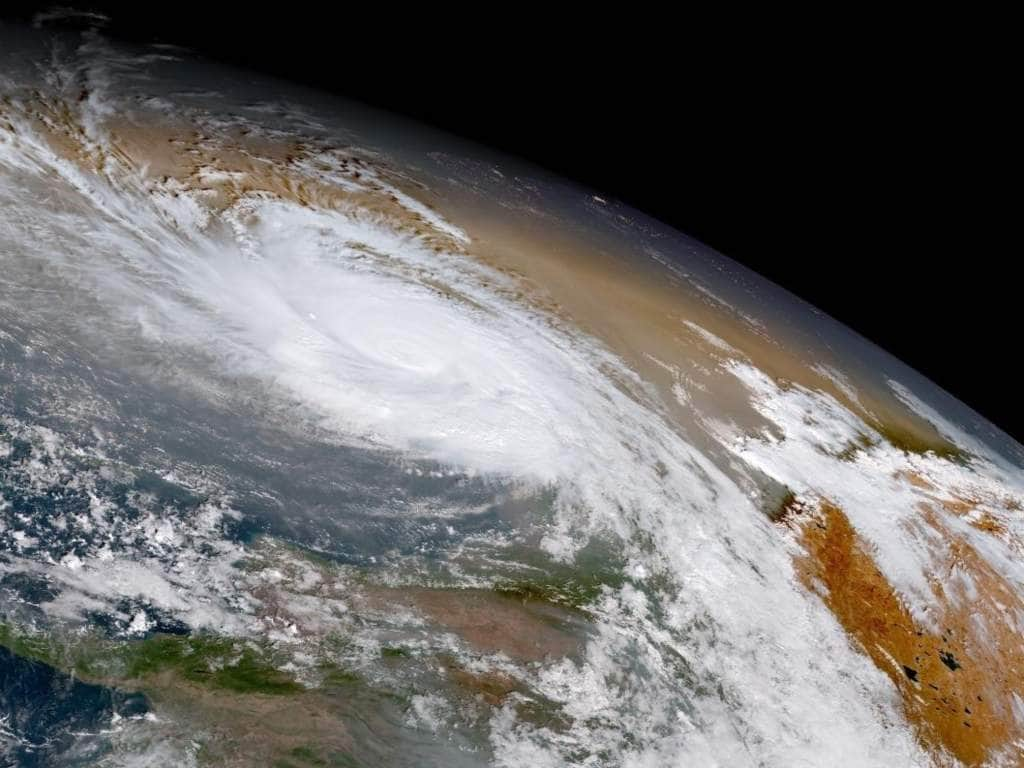
Cyclone Fani as seen by the Japanese Himawari 8 satellite. Image: Twitter/Hiren Jethva[/caption]
Fani developed into a Cat 4 cyclone from a pocket of air that meteorologists have first located roughly a week before it escalated. This was enough time, according to the report, for the government to put together a plan of action, notify residents in Odisha, Andhra Pradesh and other states in the impact zone to evacuate. While there were 34 deaths attributed to cyclone Fani, these were considerably fewer than the 20,000 lives lost in the last catastrophic storm to hit the East coast 20 years ago.Fani has now weakened considerably and will continue to lose intensity as it moves further Northeast and eventually loses momentum inland.First Published:May 07, 2019, 09:51:49 IST
Advertisement
Advertisement

Careless Whispers: Scientists discover that plants can 'talk' to each other using smells
Japanese scientists have recorded a video that shows plants, in certain conditions, communicate with each other using mists that carry smells. The discovery, reveals that plants release a fine mist of airborne compounds, to warn nearby plants of potential dangers
Life on Mars? European Space Agency’s Orbiter discovers ice water deposits at equator
European Space Agency's Mars Express Orbiter has identified massive ice and ice water deposits beneath the surface of Mars. The Mars Express orbiter was also the first to confirmed the presence of ice on Mars in 2004
Microsoft briefly overtakes Apple as the most valuable company, Apple back on top again
At its peak during the session, Microsoft's value reached $2.903 trillion, with a 2% surge. As of writing this article, Apple closed at $2.89 trillion, whereas Microsoft closed at $2.86 trillion
Even NASA is facing a tough time, starts layoffs following major budget cuts
NASA is facing some massive budget cuts, because of which, it has been forced to postpone some upcoming missions. NASA's Jet Propulsion Laboratory has been hit hard by recent federal budget cuts, resulting in the layoff of 100 contractors last week
ISRO, NASA's NISAR satellite to get ready by Jan-end, will monitor Earth's snow-covered regions
The NISAR satellite which has been developed jointly ISRO and NASA, should be ready for launch by the end of January 2024. The collaboration between NASA and ISRO on NISAR is the first time the two agencies have cooperated on hardware development for an Earth-observing mission
Advertisement
Advertisement