
Advertisement


Sections
COVID-19 research roundup: Benefits of steroid for severe COVID-19 confirmed; recovered still susceptible
Low blood levels of a type of interferon could diagnoise COVID-19 patients at high risk for severe pneumonia and ARS.

The following is a brief roundup of some of the latest scientific studies on the novel coronavirus and efforts to find treatments and vaccines for COVID-19, the illness caused by the virus.
Full dexamethasone trial results released
The full results of a large randomized clinical trial in Britain – the gold-standard of tests – looking at the steroid dexamethasone confirm the benefits in its use in COVID-19 patients that were hinted at in early findings issued last month. The results, released on Friday in the New England Journal of Medicine, showed benefits for people with advanced or moderate disease.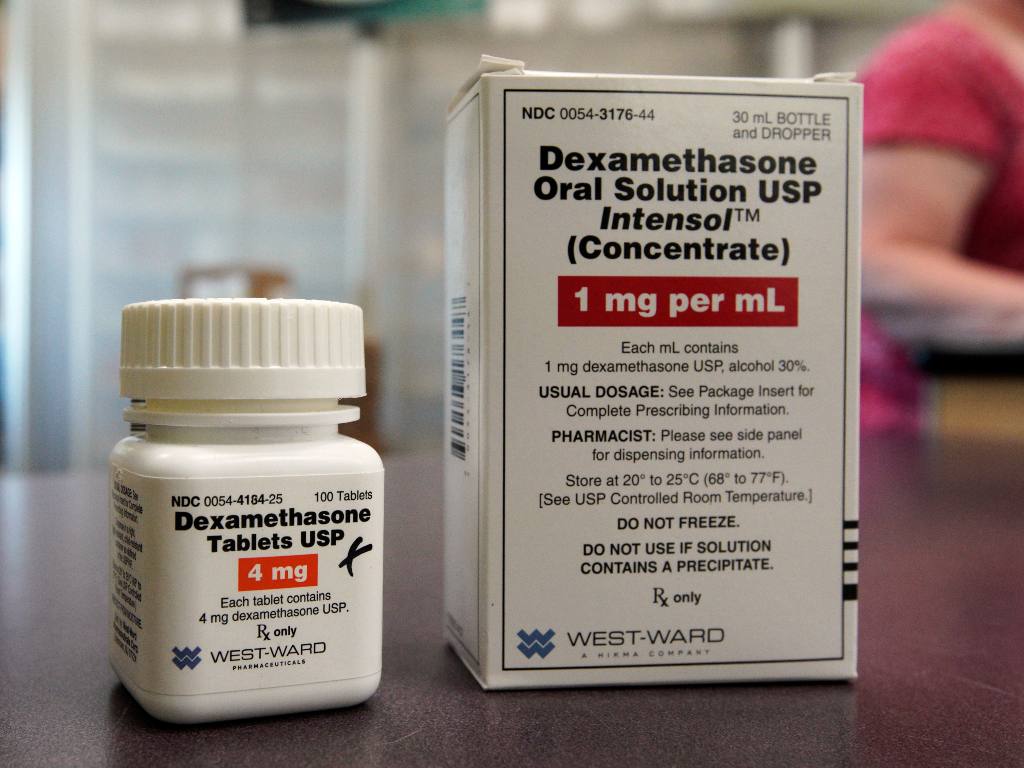
Immune cells may recognize SARS-CoV-2 years later
Researchers in Singapore are not worried that antibodies to the novel coronavirus fade quickly. More important, they said, is that immune system cells called T cells and B cells "remember" the virus and can trigger an immune response. As reported on Wednesday in the journal Nature, the researchers looked for "memory" T cells in 36 COVID-19 survivors, 23 survivors of the 2003 coronavirus that caused SARS, and 37 people who never had either illness.All COVID-19 survivors had T cells that recognized the novel coronavirus. The SARS survivors all had T cells that remembered the 2003 virus – and their T cells also recognized the new coronavirus. Furthermore, more than half of those who were never infected with either coronavirus had protective T cells, suggesting they may have encountered other coronaviruses in the past, and there may be some pre-existing immunity to the new coronavirus in the general population."We find the present discussion about 'antibodies are fading away' a little pointless," three of the researchers told Reuters in a joint email. "What is important is that a level of B and T cell memory remain to be present to quickly start an effective immune response able to stop viral spread," said Anthony Tanoto Tan of Duke-NUS Medical School, along with colleagues Nina Le Bert and Antonio Bertoletti.T cells can kill infected cells to slow the virus down, and they also help instruct B cells to produce antibodies, the researchers said.
Interferon levels low in severe COVID-19
Low blood levels of a type of interferon (IFN) could identify COVID-19 patients at high risk for severe pneumonia and acute respiratory distress syndrome.Interferons are naturally occurring proteins that help the body's immune system fight infection. In a study published on Monday in the journal Science, researchers found that severely and critically ill COVID-19 patients had severely impaired production of IFN type I, persistent virus in the blood and an excessive inflammatory response. They said the findings support the potential value of treating these patients early on with IFN, combined with anti-inflammatory drugs or steroids such as dexamethasone in the most severely ill people.They also found that low plasma levels of type-I IFN were seen before patients began to deteriorate and require intensive care. "Levels of circulating Type 1 IFN could even characterize each stage of disease, with the lowest levels observed in the most severe patients," they said in a news release.Heart disease could explain odd COVID-19 blood reports
Severe COVID-19 predominantly affects the lungs, but elevated blood levels of troponin, a protein released during heart injury, also are common. To learn more, cardiologists in London performed cardiovascular magnetic resonance scans in COVID-19 survivors who had at least mildly elevated troponin levels while hospitalized.Among 29 people with no obvious reason for elevated troponin, such as a heart attack, they found two patterns of myocarditis, or heart muscle inflammation. In patients with one pattern, heart function seemed unaffected. These patients should undergo cardiology follow-up to monitor for any potential long-term consequences, Dr. Dan Knight of the Royal Free Hospital told Reuters.
First Published:Jul 20, 2020, 11:17:39 IST
Advertisement
Advertisement

Careless Whispers: Scientists discover that plants can 'talk' to each other using smells
Japanese scientists have recorded a video that shows plants, in certain conditions, communicate with each other using mists that carry smells. The discovery, reveals that plants release a fine mist of airborne compounds, to warn nearby plants of potential dangers
Life on Mars? European Space Agency’s Orbiter discovers ice water deposits at equator
European Space Agency's Mars Express Orbiter has identified massive ice and ice water deposits beneath the surface of Mars. The Mars Express orbiter was also the first to confirmed the presence of ice on Mars in 2004
Microsoft briefly overtakes Apple as the most valuable company, Apple back on top again
At its peak during the session, Microsoft's value reached $2.903 trillion, with a 2% surge. As of writing this article, Apple closed at $2.89 trillion, whereas Microsoft closed at $2.86 trillion
Even NASA is facing a tough time, starts layoffs following major budget cuts
NASA is facing some massive budget cuts, because of which, it has been forced to postpone some upcoming missions. NASA's Jet Propulsion Laboratory has been hit hard by recent federal budget cuts, resulting in the layoff of 100 contractors last week
ISRO, NASA's NISAR satellite to get ready by Jan-end, will monitor Earth's snow-covered regions
The NISAR satellite which has been developed jointly ISRO and NASA, should be ready for launch by the end of January 2024. The collaboration between NASA and ISRO on NISAR is the first time the two agencies have cooperated on hardware development for an Earth-observing mission
Advertisement
Advertisement