


Colonising the moon: A story of dust, bricks and a printer to build a lunar village
Pink Floyd famously sang of not wanting to be a brick in the wall. Could that change soon?

The Moon was but a chin of golda night or two ago, And now she turns her perfect face Upon the world below.
~ Emily Dickinson, 1863
The moon has moved people for centuries, and the Earth's tides for at least a couple of million millennia. It's the only celestial body we've managed to reach out and walk on.
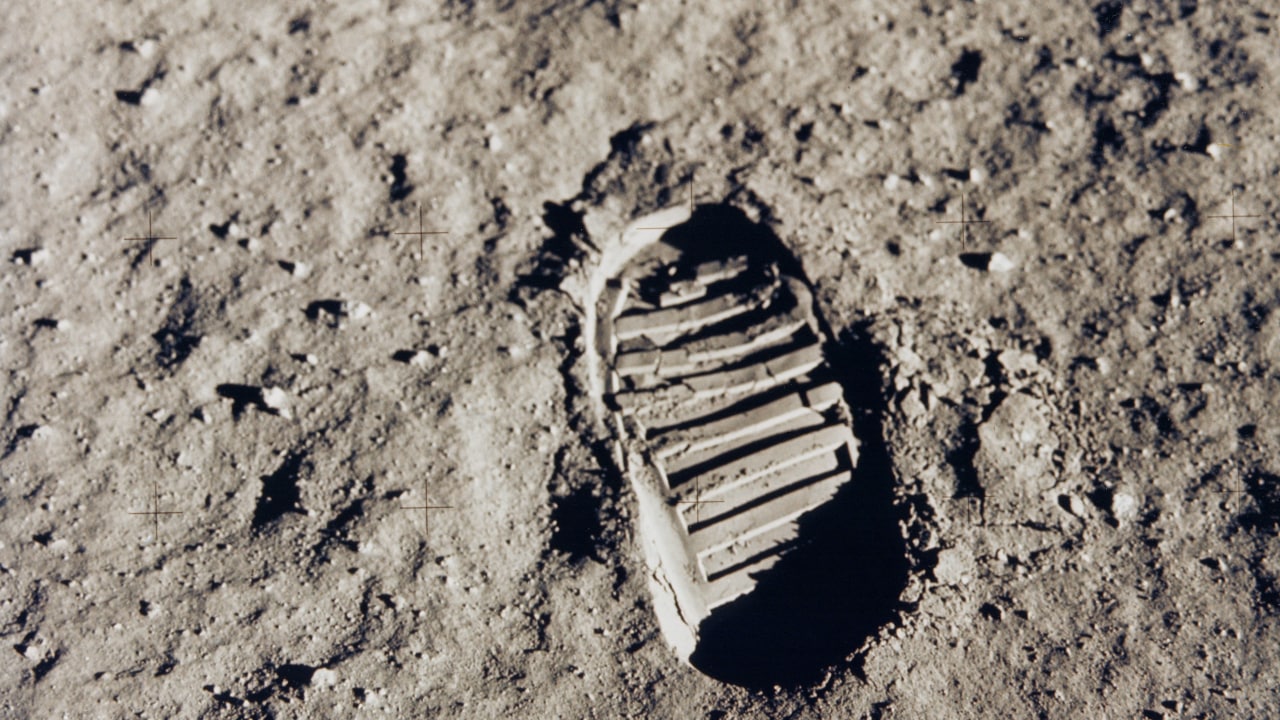
The popular photograph of the bootprint captured by Neil Armstrong during NASA's Apollo 11 in 1969. Image courtesy: NASA[/caption]Since then, a series of 5 other missions carried astronauts to the moon, ending with Apollo 17 (the mission that also put Harrison Schmitt, the first and only scientist on the moon) in 1972.
Apollo 17 wasn't just man's final moon landing, but the last time humans left the low-Earth orbit, where our manmade satellites do their dance.
After all those years, with NASA's proposed launch of the Orion capsule in 2019, we may finally get to walk on and study the moon again.
 More from Science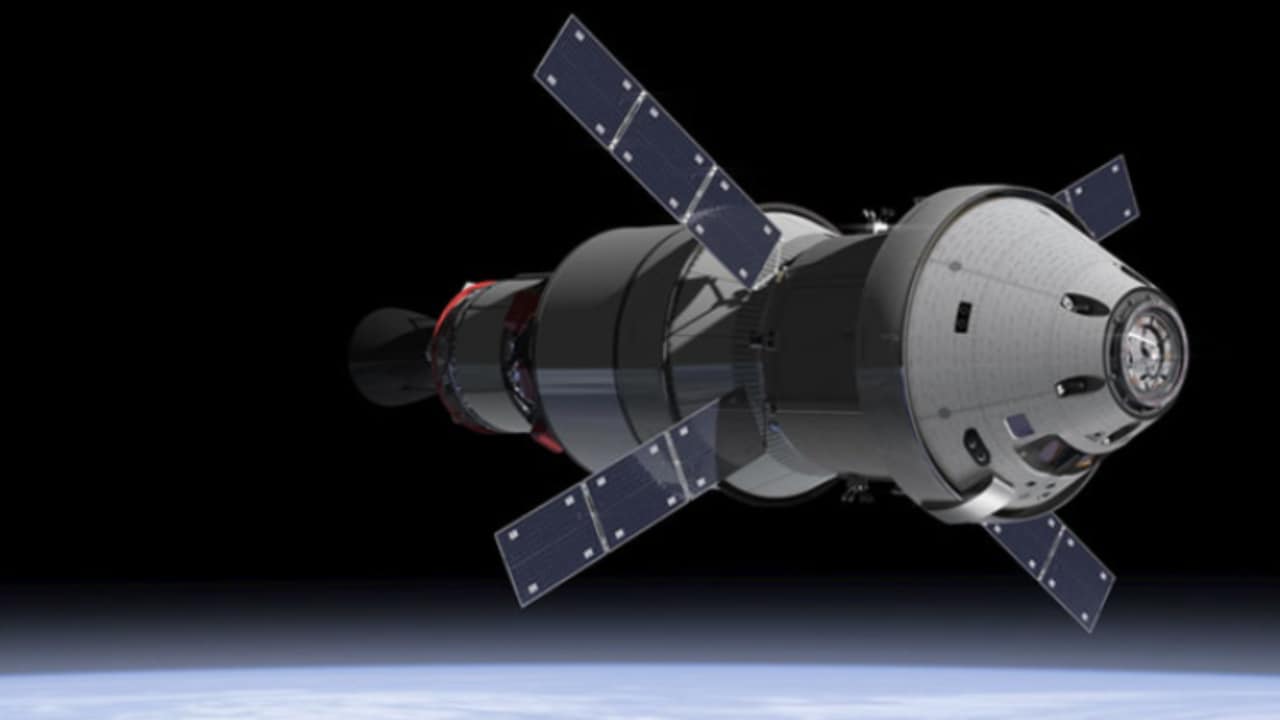
NASA's Orion spacecraft to Mars is due to undergo a test mission to the moon In 2019. Image Courtesy: NASA[/caption]Having humans walk on the moon has yet to lose its magical quality. But after a 46-year-long wait, the playing field has changed dramatically. A simple stroll on the moon's surface is evidently passe. And so, there's not one, but two missions in particular, that trump others in sheer ambition and scale: the Deep-Space Gateway, and the International Lunar Village.
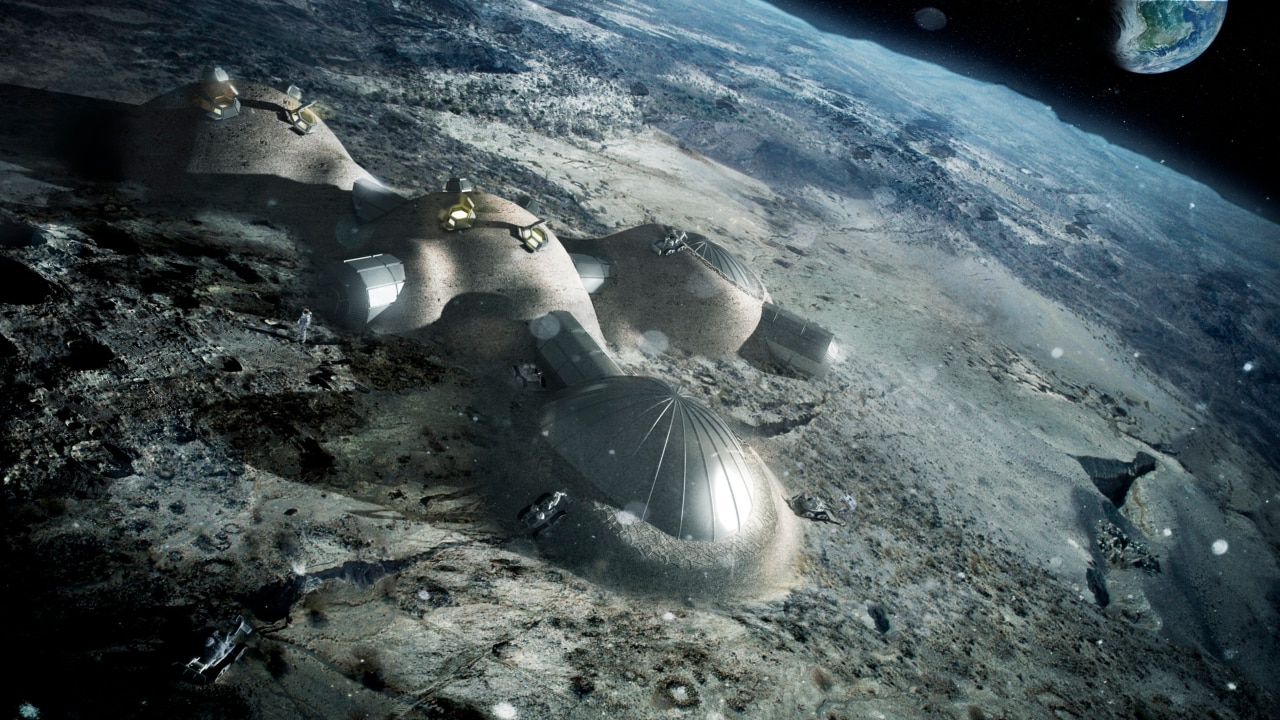 An artistic rendition of the multi-dome lunar village on the moon, a project led by the ESA. Image courtesy: ESA[/caption]There's a lot of research underway towards the moon village. Space nerds from the world-over are studying solutions to the challenges that come with an ambitious project like a village on the moon.
Among the plethora of things that building a village would requires are bricks, concrete, steel and machinery. Also labour, and lots of it. Carrying these from earth is an option, but a very bulky and expensive one.This has been one aspect of ESA's research: finding an answer to the vexing problem of lugging materials from Earth to the moon.Using that which is plentifulThe ESA is thinking of using a material that's abundantly available on the moon – the moon itself.Yes, you read it right. They plan to build igloos on the moon, and use the moon's own soil to do it.Over the course of billions of years, meteorites small and large have time-and-again crashed on the moon, digging up bits of the moon’s mantle (the layer immediately below the moon's surface) in the process.Space radiation and the lack of an atmosphere to absorb said radiation has led these broken pieces of moon-mantle to get pulverised into smaller and smaller bits over time, resulting in a layer of fine dust and small rocks that span the surface of the moon.If you've seen the photograph of Armstrong's bootprint on the moon (the first image in this piece), you've likely noticed how fine this dust really is. That's powdered mantle dust for you, and this loose layer of powder and rock is fancily enough, called "regolith".Regolith? Sure, we've got some historyLunar regolith has been on the radar of space scientists for decades.Back when the Apollo 11 mission was simply a sketch, scientists took into account the "soft and powdery" surface of moon, and how landing on it could be troublesome.[caption id="attachment_5049431" align="alignnone" width="1280"]
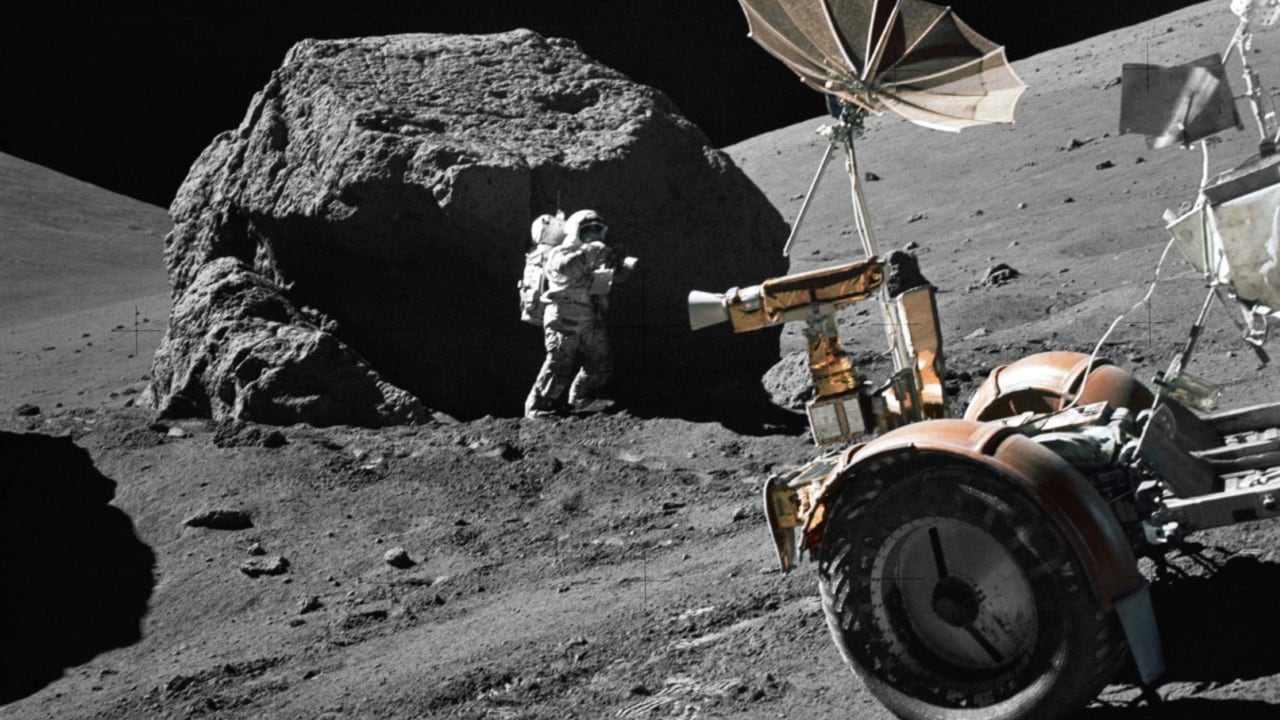 Representational image. Image courtesy: NASA[/caption]When Apollo 11 finally got there, Neil, Buzz and Michael Collins learned that the regolith was firm under the lander, and perfectly suitable to walk, hop around. That was pretty much the only good thing going for them with regard to sand on the moon — the rest was a messy nightmare.Once they stepped out onto the moon's surface, particles got stuck to their spacesuits, the inside of their lunar lander, got into their eyes and lungs causing them to cough – doing enough damage to earn it a bad rep.What makes lunar soil particularly abrasive is the lack of weathering of moon rocks by liquid water and gases in the atmosphere – both of which make the sand on Earth far more pleasant to walk on, roll-around in.Lunar regolith, with its tiny jagged edges, is also known to damage both spacesuits and spacecrafts.The bricky businessWith all of its unpleasant features taken into consideration, ESA's choice of regolith to build lunar bases is still a rational one.To begin with, regolith is abundant; in some highland areas, it is said to reach depths of upto 15 meters, according to NASA reports. It can be compacted into bricks, and baked into a solid blocks with good compressive strength.The bricks are set to undergo thorough mechanical testing to determine how durable they are, since some of the bricks showed signs of warping along its edges, since the cooling process after it is baked isn't simultaneous throughout the brick.“We’re looking [into] how to manage this effect, perhaps by occasionally accelerating the printing speed so that less heat accumulates within the brick,” said ESA materials engineer Advenit Makaya in a statement.“But for now this project is a proof-of-concept, showing that such a lunar construction method is indeed feasible.”With brick walls made over a compact regolith layer at least 2-meters thick, according to an old study, most of the space radiation that an astronaut would be exposed to inside a suitably enclosed space can be warded off, much like a tourist wearing an SPF 100 sunscreen.ESA scientists, however, say the radiation tests would require fresh samples from the moon not long after it is charged from the radiation.
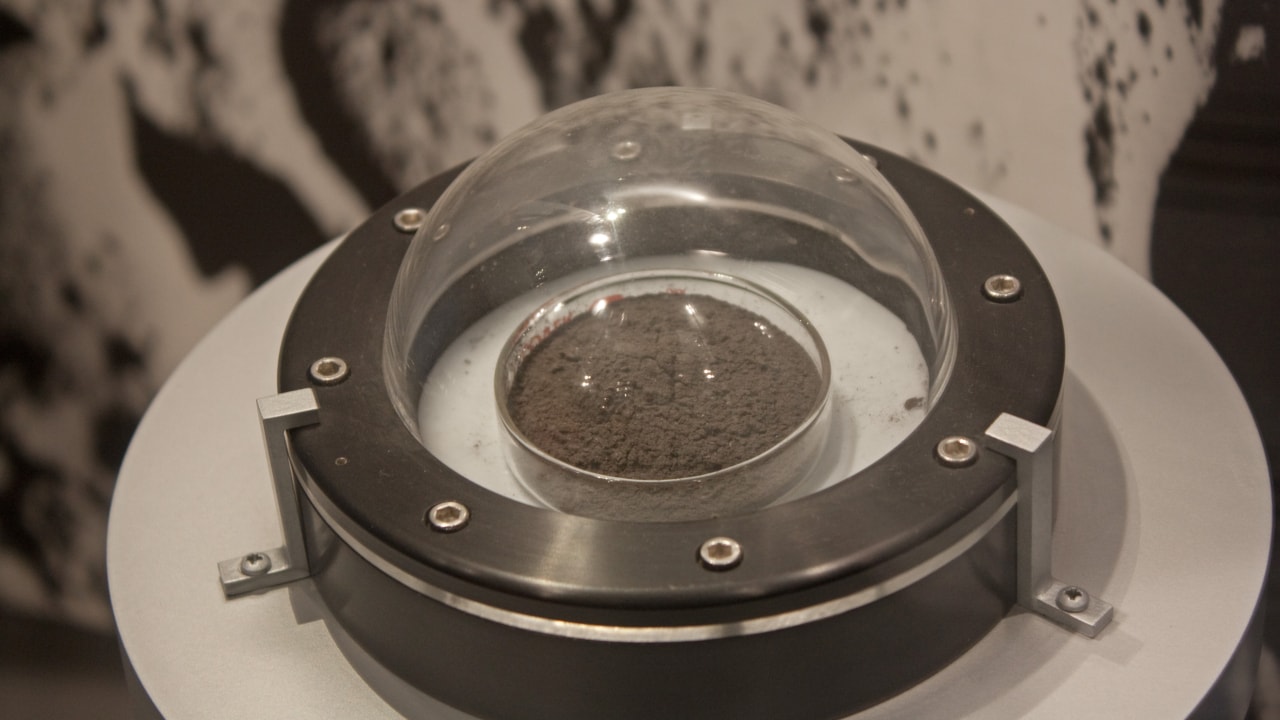 Lunar regolith collected during the Apollo 17 mission on display at the National Museum of Natural History in Washington DC, US. Image credit: Wikimedia Commons[/caption]Grains of lunar regolith are dense with mineral and chemical compounds. Compounds like nitrides and oxides which can be converted into highly useful things breathable oxygen, water and fertilizers. These could open doors towards making long stays on the moon sustainable.But doing experiments on the actual moon is difficult and expensive. That's why NASA has been running simulations with mining and harvesting chemical resource from regolith using a moon rover called SCARAB right here on Earth. There's a region in Hawaii where you find a kind of soil known as 'tephra', which closely resembles regolith or moon sand.NASA's bet is that if their rover, SCARAB, can mine and tweak identical compounds to extract oxygen and other useful substances from tephra on Earth, it can likely do the same thing with regolith on the moon.Will Pink Floyd reconsider?In a matter of years, the ESA and NASA could very well be hiring masons to print bricks, a team of lunar engineers to plan a lunar crater-town, and those with a ticket have Earth-view cabins for some Spaceflix and chill.From the moon, rocks and sand to bricks, 3D printers and villages, it's here – that ever-changing next frontier in space exploration is in our sights.Pink Floyd famously sang that they didn't want to be a brick in the wall. Given the class and sass of a 3D-printed-regolith-brick-wall on the dark side of the moon, maybe Gilmour and Waters ought to be asked if they'd care to reconsider?
Careless Whispers: Scientists discover that plants can 'talk' to each other using smells
Life on Mars? European Space Agency’s Orbiter discovers ice water deposits at equator
Microsoft briefly overtakes Apple as the most valuable company, Apple back on top again
Even NASA is facing a tough time, starts layoffs following major budget cuts
ISRO, NASA's NISAR satellite to get ready by Jan-end, will monitor Earth's snow-covered regions