


Clumpy-looking supernova remnant Tycho captured by NASA's Chandra X-ray Observatory
Did the explosion itself cause this clumpiness, or was it something that happened afterward?

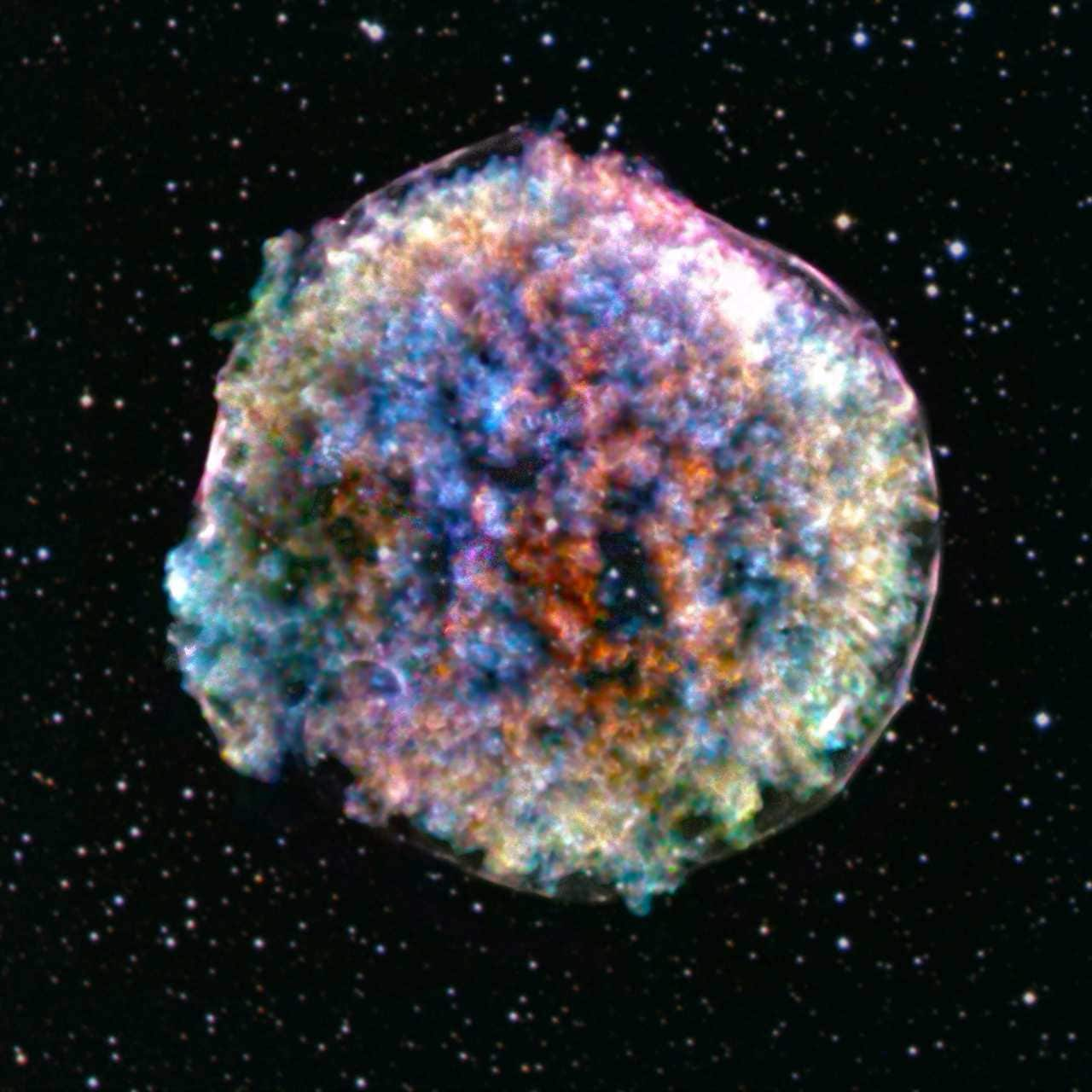
X-ray images of Tycho’s supernova remnant (Tycho’s SNR) show a pattern of bright clumps and fainter holes. Image: NASA/Chandra[/caption]Some four hundred years after Tycho supernova was discovered, astronomers have discovered clumpy-looking dark and white patterns in Tycho's debris. This is evidence to show that the new star isn't new at all. In fact, it signals the death of a star in a fiery supernova — an explosion so bright it can outshine light coming from entire galaxies.In its 2o functional years, the Chandra X-ray Observatory has captured some unparalleled X-ray images of supernova remnants, including Tycho's. Chandra's latest observations show an intriguing pattern of bright clumps and fainter areas in Tycho."What caused this thicket of knots in the aftermath of this explosion?" Dr Toshiki Sato, an astronomer at NASA’s Goddard Space Flight Center, said in a statement."Did the explosion itself cause this clumpiness, or was it something that happened afterwards?"The new images of Tycho captured by Chandra (above) is offering some clues, NASA said.

Careless Whispers: Scientists discover that plants can 'talk' to each other using smells
Life on Mars? European Space Agency’s Orbiter discovers ice water deposits at equator
Microsoft briefly overtakes Apple as the most valuable company, Apple back on top again
Even NASA is facing a tough time, starts layoffs following major budget cuts
ISRO, NASA's NISAR satellite to get ready by Jan-end, will monitor Earth's snow-covered regions