


China's Chang'e 5 successfully enters Earth's surface, lands in Mongolia with moon rocks in tow
When the return capsule was about 10 kilometres above land, a parachute opened and it landed smoothly, after which a search team recovered it.

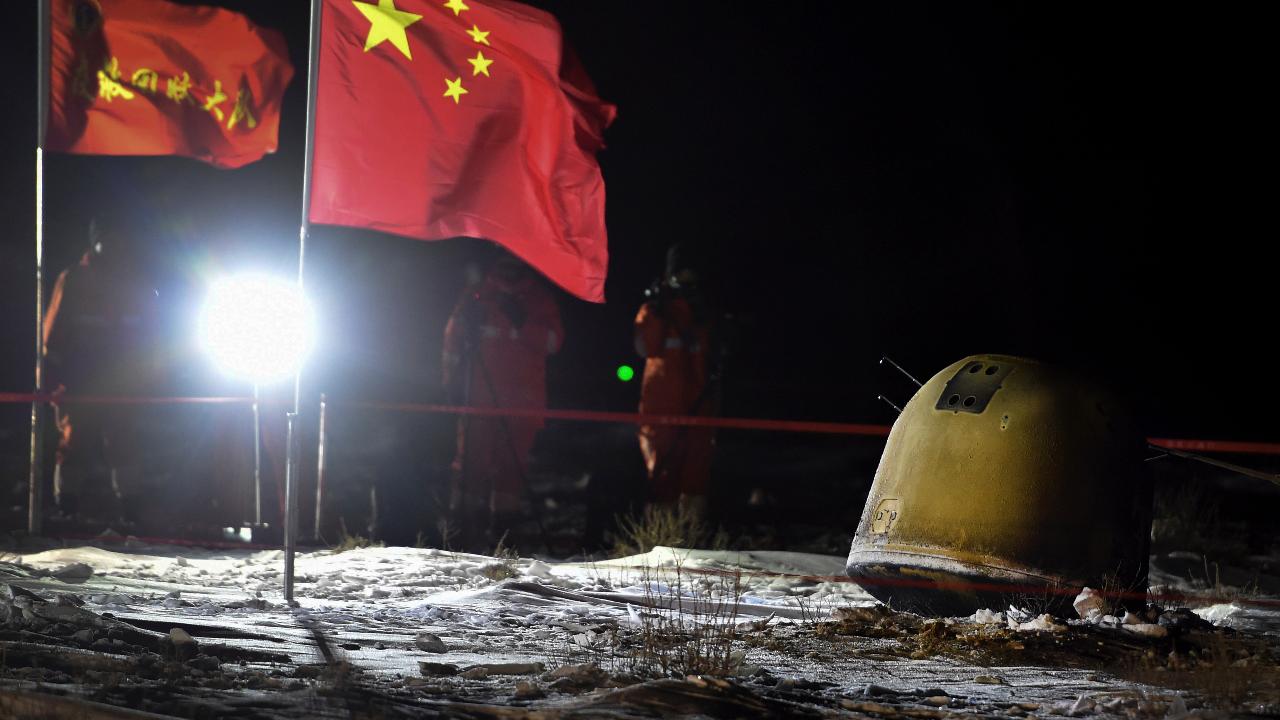
In this photo released by Xinhua News Agency, crew members film the capsule of the Chang’e 5 probe after its successful landed in Siziwang Banner, north China's Inner Mongolia Autonomous Region on Thursday, Dec. 17, 2020. A Chinese lunar capsule returned to Earth on Thursday with the first fresh samples of rock and debris from the moon in more than 40 years. (Ren Junchuan/Xinhua via AP)[/caption]China is now only the third country to have retrieved samples from the Moon, following the United States and the Soviet Union in the 1960s and 1970s.Chang'e-5, named after a mythical Chinese Moon goddess, landed on the Moon on 1 December.While there, it raised the Chinese flag, the country's space agency said.When the probe left the Moon two days later, that marked the first time that China had achieved take-off from an extraterrestrial body, it said.The module then went through the delicate operation of linking up in lunar orbit with the part of the spacecraft that brought the samples back to Earth.The Chang'e-5 mission was to collect two kilograms (4.5 pounds) of material in an area known as Oceanus Procellarum — or "Ocean of Storms" — a vast, previously unexplored lava plain, according to the science journal Nature.Also Read: China's lunar probe — Chang'e 5 — fired up its engines, has begun its three-day journey back to EarthThe capsule will be airlifted to Beijing for opening, and the Moon samples will be delivered to a research team for analysis and study, China's space agency said.
Space dream
China has spent billions of dollars on its military-run space programme in an effort to catch up with the achievements of the United States and Russia.China launched its first satellite in 1970, while human spaceflight took decades longer — with Yang Liwei becoming the country's first "taikonaut" in 2003.A Chinese lunar rover landed on the far side of the Moon in January 2019 in a global first that boosted Beijing's aspirations to become a space superpower.The official Xinhua news agency described the latest mission as one of the most challenging and complicated in China's aerospace history.The probe comprised separate craft to get to the Moon, land on it and collect the samples, get back up and then return the rocks and soil to Earth.[caption id="attachment_9119501" align="alignnone" width="1280"]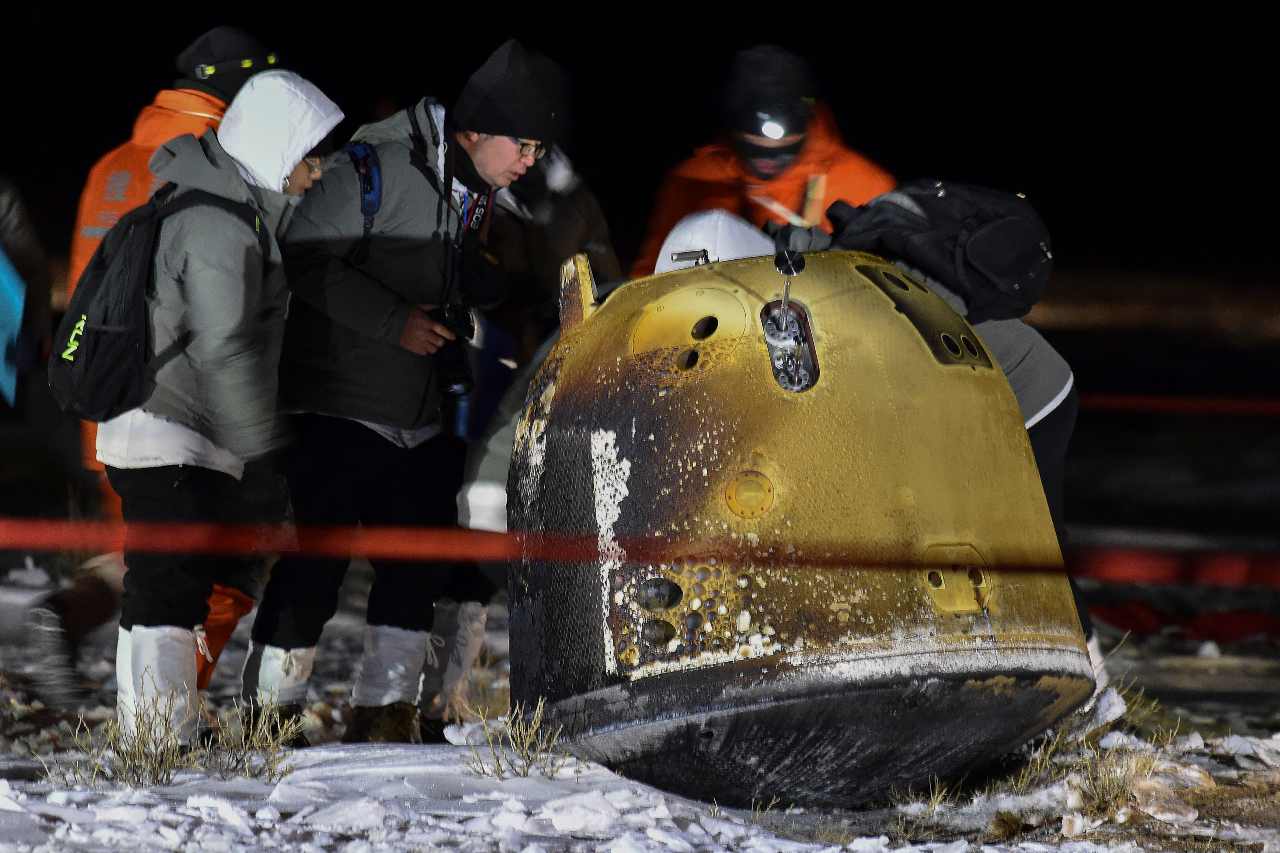
In this photo released by Xinhua News Agency, crew members check on the capsule of the Chang’e 5 probe after its successful landed in Siziwang Banner, north China's Inner Mongolia Autonomous Region on Thursday, Dec. 17, 2020. A Chinese lunar capsule returned to Earth on Thursday with the first fresh samples of rock and debris from the moon in more than 40 years. (Ren Junchuan/Xinhua via AP)[/caption]The return capsule entered the Earth's atmosphere at an altitude of about 120 kilometres (75 miles).When it was about 10 kilometres above land, a parachute opened and it landed smoothly, after which a search team recovered it, the space agency said.Thomas Zurbuchen, a top official at NASA's science mission directorate, congratulated China on the safe return of the capsule."The international science community celebrates your successful Chang’e 5 mission," he tweeted."These samples will help reveal secrets of our Earth-Moon system (and) gain new insights about the history of our solar system."China will make some of the samples available to scientists in other countries, Pei Zhaoyu, deputy director of the Lunar Exploration and Space Program Center of CNSA, had previously said.China's future space goals include creating a powerful rocket capable of delivering payloads heavier than those NASA and private rocket firm SpaceX can handle, a lunar base, a permanently crewed space station, and a Mars rover.

Careless Whispers: Scientists discover that plants can 'talk' to each other using smells
Life on Mars? European Space Agency’s Orbiter discovers ice water deposits at equator
Microsoft briefly overtakes Apple as the most valuable company, Apple back on top again
Even NASA is facing a tough time, starts layoffs following major budget cuts
ISRO, NASA's NISAR satellite to get ready by Jan-end, will monitor Earth's snow-covered regions