
Advertisement


Sections
China's Chang'e-4 probe relays first images after historic touchdown on moon's far side
Chang'e-4's lander and rover make a successful touch down at 10.26 am PT earlier today.

China has done it!It has landed a spacecraft on the moon's far side in a historic first for mankind.The Chang'e-4 spacecraft managed this feat on the 3 January after the China National Space Administration (CNSA) landed the unmanned probe in the unexplored depths of the South Pole-Aitken basin. This is the biggest, oldest and the deepest known crater on the surface of the moon.The news was broken at 8 pm PT (9.30 am IST) on 3 January by China's national broadcaster, CCTV.[caption id="attachment_5830091" align="alignnone" width="1280"]![Images and data from Chang'e-4 have been relayed off a separate satellite since the far side is cut off from direct comms with Earth. Image: CNSA/EA]() Images and data from Chang'e-4 have been relayed off a separate satellite since the far side is cut off from direct comms with Earth. Image: CNSA/EA[/caption]Chang'e-4 is carrying instruments to analyse the geology and biochemical makeup of the previously-unexplored region.Some media outlets appear to have leaked the news of Chang'e-4's successful landing earlier than intended, sparking a wave of confusion when China Daily and CGTN deleted their celebratory tweets."China’s Chang’e 4 landed on the moon’s far side, inaugurating a new chapter in mankind’s lunar exploration history," China Daily had tweeted. The final confirmation of the successful landing was issued by Beijing, which said that the lander and rover had touched down at 10.26 am (7.56 am IST)[caption id="attachment_5827191" align="alignnone" width="1280"]
Images and data from Chang'e-4 have been relayed off a separate satellite since the far side is cut off from direct comms with Earth. Image: CNSA/EA[/caption]Chang'e-4 is carrying instruments to analyse the geology and biochemical makeup of the previously-unexplored region.Some media outlets appear to have leaked the news of Chang'e-4's successful landing earlier than intended, sparking a wave of confusion when China Daily and CGTN deleted their celebratory tweets."China’s Chang’e 4 landed on the moon’s far side, inaugurating a new chapter in mankind’s lunar exploration history," China Daily had tweeted. The final confirmation of the successful landing was issued by Beijing, which said that the lander and rover had touched down at 10.26 am (7.56 am IST)[caption id="attachment_5827191" align="alignnone" width="1280"]![The Von Kármán crater (186 kilometres in diameter), is a treasure house of geologic landforms, and the landing site for the Chang'e-4 lander and rover. Image courtesy: NASA/GSFC/Arizona State University.]() The Von Kármán crater (186 kilometres in diameter), is a treasure house of geologic landforms, and the landing site for the Chang'e-4 lander and rover. Image courtesy: NASA/GSFC/Arizona State University.[/caption]The Chang'e-4 lunar probe mission – named after the 'moon goddess' in Chinese mythology – was launched on a Long March 3B rocket from the southwestern Xichang Launch Centre at 2.23 am ET (23.34 pm IST) on 12 December, Xinhua reports.[caption id="attachment_5827221" align="alignnone" width="1280"]
The Von Kármán crater (186 kilometres in diameter), is a treasure house of geologic landforms, and the landing site for the Chang'e-4 lander and rover. Image courtesy: NASA/GSFC/Arizona State University.[/caption]The Chang'e-4 lunar probe mission – named after the 'moon goddess' in Chinese mythology – was launched on a Long March 3B rocket from the southwestern Xichang Launch Centre at 2.23 am ET (23.34 pm IST) on 12 December, Xinhua reports.[caption id="attachment_5827221" align="alignnone" width="1280"]![An artistic representational of the Change-4 probe. Image: CNSA]() An artistic representational of the Change-4 probe. Image: CNSA[/caption]Chang'e-4 has been send to explore a crater on the moon called Von Kármán, located within the much larger South Pole-Aitken (SPA) Basin. The SPA basin was thought to have been formed by a giant impact early in the Moon's history.With this historic success, the Chinese Space program has propelled the country to occupy a top spot among space-faring nations in lunar missions – one of the most important areas of space exploration.The soft landing is also symbolic of China's ambition for future lunar missions. It has catapulted the country into history books for being the first country to even attempt to touch the far side of the moon. What will the mission study? How will it communicate with ground control? Find out more about the Chang'e-4 mission here.
An artistic representational of the Change-4 probe. Image: CNSA[/caption]Chang'e-4 has been send to explore a crater on the moon called Von Kármán, located within the much larger South Pole-Aitken (SPA) Basin. The SPA basin was thought to have been formed by a giant impact early in the Moon's history.With this historic success, the Chinese Space program has propelled the country to occupy a top spot among space-faring nations in lunar missions – one of the most important areas of space exploration.The soft landing is also symbolic of China's ambition for future lunar missions. It has catapulted the country into history books for being the first country to even attempt to touch the far side of the moon. What will the mission study? How will it communicate with ground control? Find out more about the Chang'e-4 mission here.
 Images and data from Chang'e-4 have been relayed off a separate satellite since the far side is cut off from direct comms with Earth. Image: CNSA/EA[/caption]Chang'e-4 is carrying instruments to analyse the geology and biochemical makeup of the previously-unexplored region.Some media outlets appear to have leaked the news of Chang'e-4's successful landing earlier than intended, sparking a wave of confusion when China Daily and CGTN deleted their celebratory tweets."China’s Chang’e 4 landed on the moon’s far side, inaugurating a new chapter in mankind’s lunar exploration history," China Daily had tweeted. The final confirmation of the successful landing was issued by Beijing, which said that the lander and rover had touched down at 10.26 am (7.56 am IST)[caption id="attachment_5827191" align="alignnone" width="1280"]
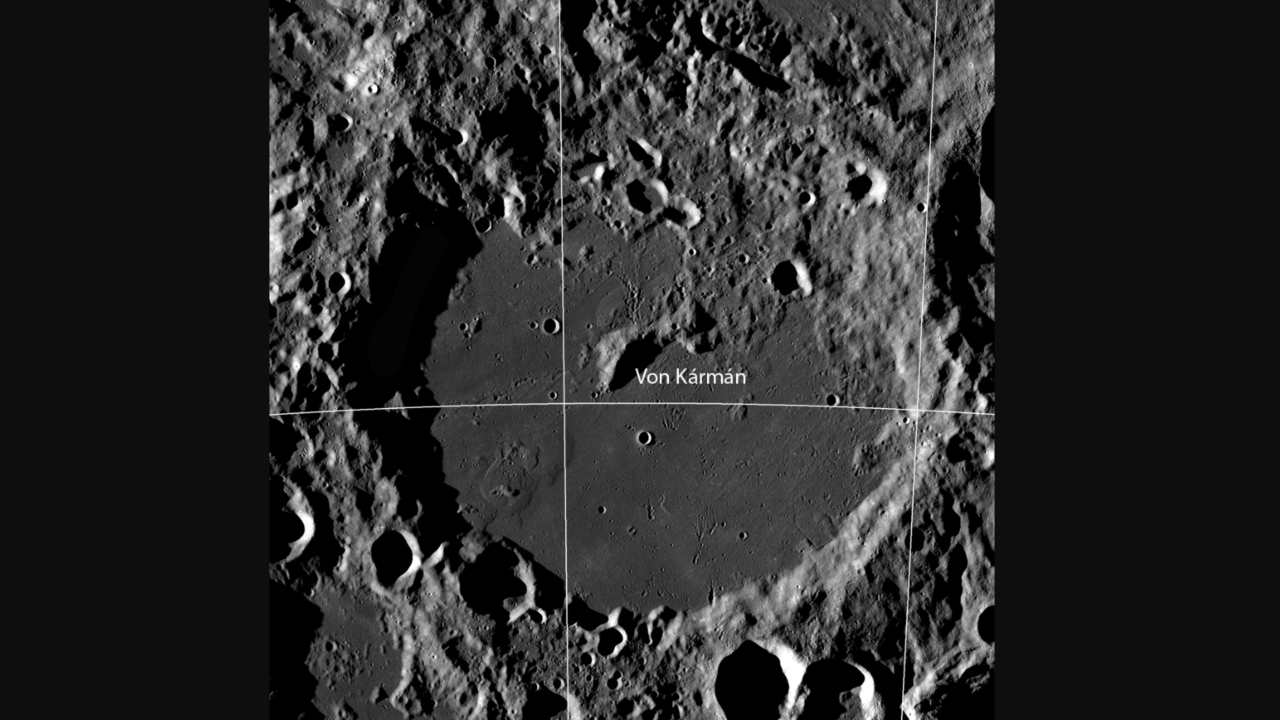 The Von Kármán crater (186 kilometres in diameter), is a treasure house of geologic landforms, and the landing site for the Chang'e-4 lander and rover. Image courtesy: NASA/GSFC/Arizona State University.[/caption]The Chang'e-4 lunar probe mission – named after the 'moon goddess' in Chinese mythology – was launched on a Long March 3B rocket from the southwestern Xichang Launch Centre at 2.23 am ET (23.34 pm IST) on 12 December, Xinhua reports.[caption id="attachment_5827221" align="alignnone" width="1280"]
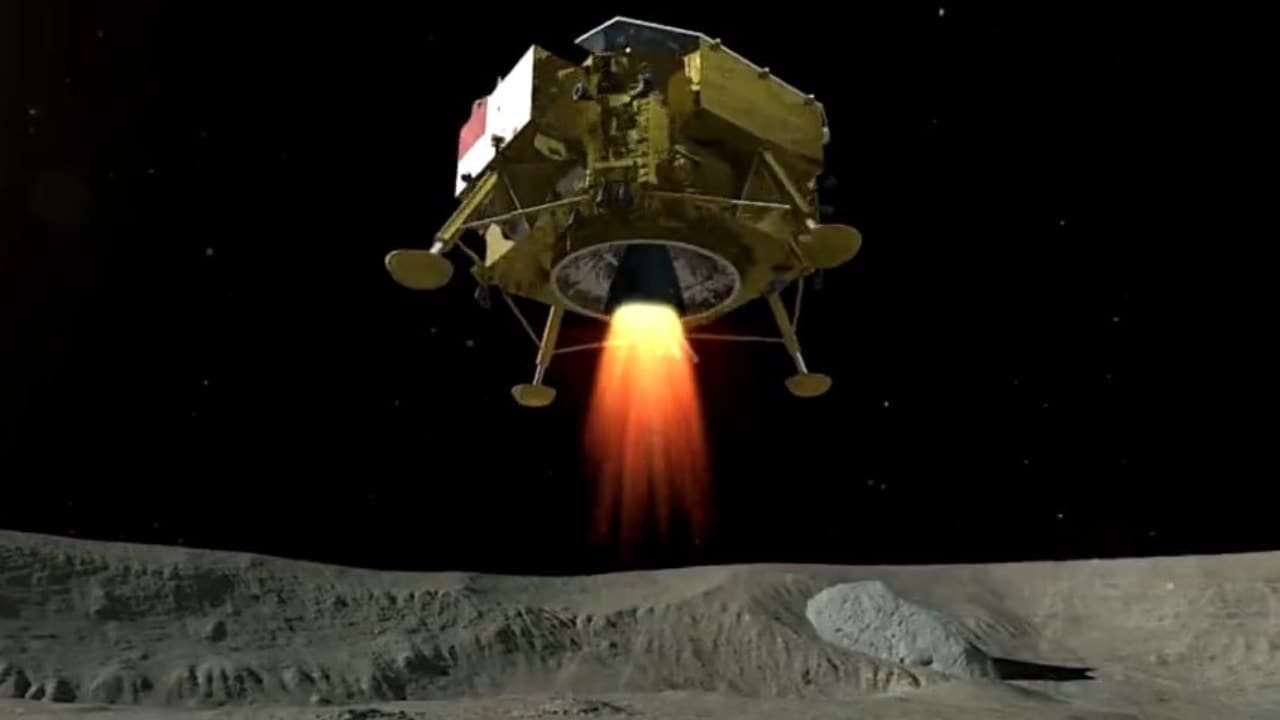 An artistic representational of the Change-4 probe. Image: CNSA[/caption]Chang'e-4 has been send to explore a crater on the moon called Von Kármán, located within the much larger South Pole-Aitken (SPA) Basin. The SPA basin was thought to have been formed by a giant impact early in the Moon's history.With this historic success, the Chinese Space program has propelled the country to occupy a top spot among space-faring nations in lunar missions – one of the most important areas of space exploration.The soft landing is also symbolic of China's ambition for future lunar missions. It has catapulted the country into history books for being the first country to even attempt to touch the far side of the moon. What will the mission study? How will it communicate with ground control? Find out more about the Chang'e-4 mission here.
First Published:Jan 03, 2019, 10:58:19 IST
Advertisement
Advertisement

Careless Whispers: Scientists discover that plants can 'talk' to each other using smells
Japanese scientists have recorded a video that shows plants, in certain conditions, communicate with each other using mists that carry smells. The discovery, reveals that plants release a fine mist of airborne compounds, to warn nearby plants of potential dangers
Life on Mars? European Space Agency’s Orbiter discovers ice water deposits at equator
European Space Agency's Mars Express Orbiter has identified massive ice and ice water deposits beneath the surface of Mars. The Mars Express orbiter was also the first to confirmed the presence of ice on Mars in 2004
Microsoft briefly overtakes Apple as the most valuable company, Apple back on top again
At its peak during the session, Microsoft's value reached $2.903 trillion, with a 2% surge. As of writing this article, Apple closed at $2.89 trillion, whereas Microsoft closed at $2.86 trillion
Even NASA is facing a tough time, starts layoffs following major budget cuts
NASA is facing some massive budget cuts, because of which, it has been forced to postpone some upcoming missions. NASA's Jet Propulsion Laboratory has been hit hard by recent federal budget cuts, resulting in the layoff of 100 contractors last week
ISRO, NASA's NISAR satellite to get ready by Jan-end, will monitor Earth's snow-covered regions
The NISAR satellite which has been developed jointly ISRO and NASA, should be ready for launch by the end of January 2024. The collaboration between NASA and ISRO on NISAR is the first time the two agencies have cooperated on hardware development for an Earth-observing mission
Advertisement
Advertisement