
Advertisement


Sections
Chandrayaan 2: Commending ISRO, NASA expresses interest in teaming up in future solar system exploration missions
The UAE Space Agency also came forward to lend ISRO support after news that contact with the spacecraft has been lost.

A day after India's Chandrayaan 2 moon mission faced a critical snag while attempting a historic landing on the uncharted South Pole of the Moon, the American space agency NASA commended the Indian Space Research Organistion for its efforts, adding that "space is hard". The agency also expressed interest in working with ISRO in future missions to explore the solar system."We commend ISRO’s attempt to land their Chandrayaan 2 mission on the Moon’s South Pole. You have inspired us with your journey and look forward to future opportunities to explore our solar system together," NASA said in a tweet.ISRO intended to soft-land the Chandrayaan-2's Vikram lander on the lunar surface, which didn't go as scripted. The lander, in the final 2.1-km leg of its 34 km descent, lost communication with ground stations.[caption id="attachment_7298251" align="alignnone" width="1280"]![Illustration of Vikram lander. Image: ISRO.]() Illustration of Vikram lander. Image: ISRO.[/caption]A senior Trump administration official also praised India's Chandrayan-2, describing ISRO's efforts as "incredible"."We congratulate ISRO on their incredible efforts on Chandrayaan 2. The mission is a huge step forward for India and will continue to produce valuable data to fuel scientific advancements. We have no doubt that India will achieve its space aspirations," Acting Assistant Secretary for South and Central Asia, Alice G Wells, tweeted.Lessons learnt from India's "bold attempt" to soft-land the Vikram lander on the moon's surface will help many countries, the US included, in future missions, former NASA astronaut Jerry Linenger told PTI."We should not be too discouraged. India was trying to do something very, very difficult. In fact, everything was going as planned as the lander came down," Linenger said.[caption id="attachment_7273721" align="alignnone" width="1280"]
Illustration of Vikram lander. Image: ISRO.[/caption]A senior Trump administration official also praised India's Chandrayan-2, describing ISRO's efforts as "incredible"."We congratulate ISRO on their incredible efforts on Chandrayaan 2. The mission is a huge step forward for India and will continue to produce valuable data to fuel scientific advancements. We have no doubt that India will achieve its space aspirations," Acting Assistant Secretary for South and Central Asia, Alice G Wells, tweeted.Lessons learnt from India's "bold attempt" to soft-land the Vikram lander on the moon's surface will help many countries, the US included, in future missions, former NASA astronaut Jerry Linenger told PTI."We should not be too discouraged. India was trying to do something very, very difficult. In fact, everything was going as planned as the lander came down," Linenger said.[caption id="attachment_7273721" align="alignnone" width="1280"]![Glimpse inside ISRO's control room during landing module's first in-orbit manoeuvre on 3 September. Image: ISRO]() Glimpse inside ISRO's control room during landing module's first in-orbit manoeuvre on 3 September. Image: ISRO[/caption]The UAE Space Agency also lent ISRO support after news that it had lost contact with their spacecraft, tweeting, "The UAE Space Agency assure their full support to the ISRO following the loss of contact with their spacecraft, Chandrayaan-2 which had to land on the moon. India proved to be a strategic player in the space sector and a partner in its development & achievements.”In a 7 September statement, ISRO stressed that the Chandrayaan 2 mission was largely a success, with a lot more science expected to come by means of the orbiter. Despite the setback with the Vikram lander, the orbiter will last 7 times longer than planned, the ISRo Chief confirmed.
Glimpse inside ISRO's control room during landing module's first in-orbit manoeuvre on 3 September. Image: ISRO[/caption]The UAE Space Agency also lent ISRO support after news that it had lost contact with their spacecraft, tweeting, "The UAE Space Agency assure their full support to the ISRO following the loss of contact with their spacecraft, Chandrayaan-2 which had to land on the moon. India proved to be a strategic player in the space sector and a partner in its development & achievements.”In a 7 September statement, ISRO stressed that the Chandrayaan 2 mission was largely a success, with a lot more science expected to come by means of the orbiter. Despite the setback with the Vikram lander, the orbiter will last 7 times longer than planned, the ISRo Chief confirmed.
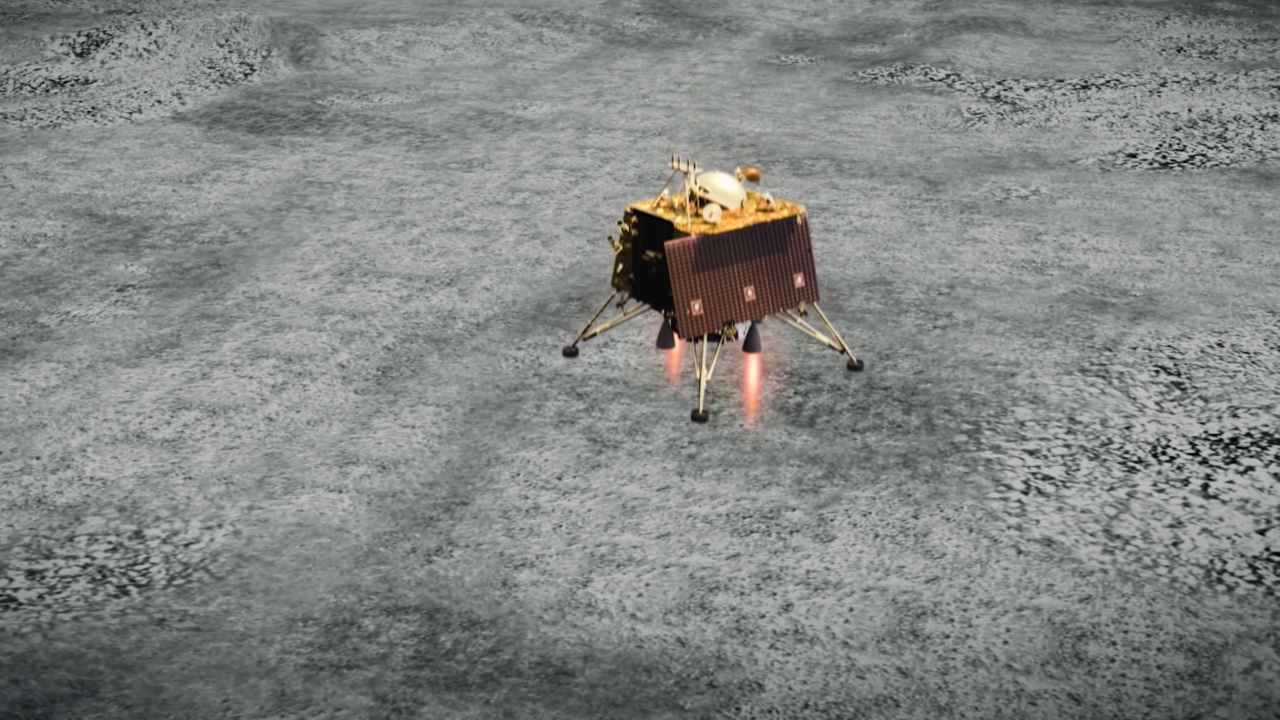 Illustration of Vikram lander. Image: ISRO.[/caption]A senior Trump administration official also praised India's Chandrayan-2, describing ISRO's efforts as "incredible"."We congratulate ISRO on their incredible efforts on Chandrayaan 2. The mission is a huge step forward for India and will continue to produce valuable data to fuel scientific advancements. We have no doubt that India will achieve its space aspirations," Acting Assistant Secretary for South and Central Asia, Alice G Wells, tweeted.Lessons learnt from India's "bold attempt" to soft-land the Vikram lander on the moon's surface will help many countries, the US included, in future missions, former NASA astronaut Jerry Linenger told PTI."We should not be too discouraged. India was trying to do something very, very difficult. In fact, everything was going as planned as the lander came down," Linenger said.[caption id="attachment_7273721" align="alignnone" width="1280"]
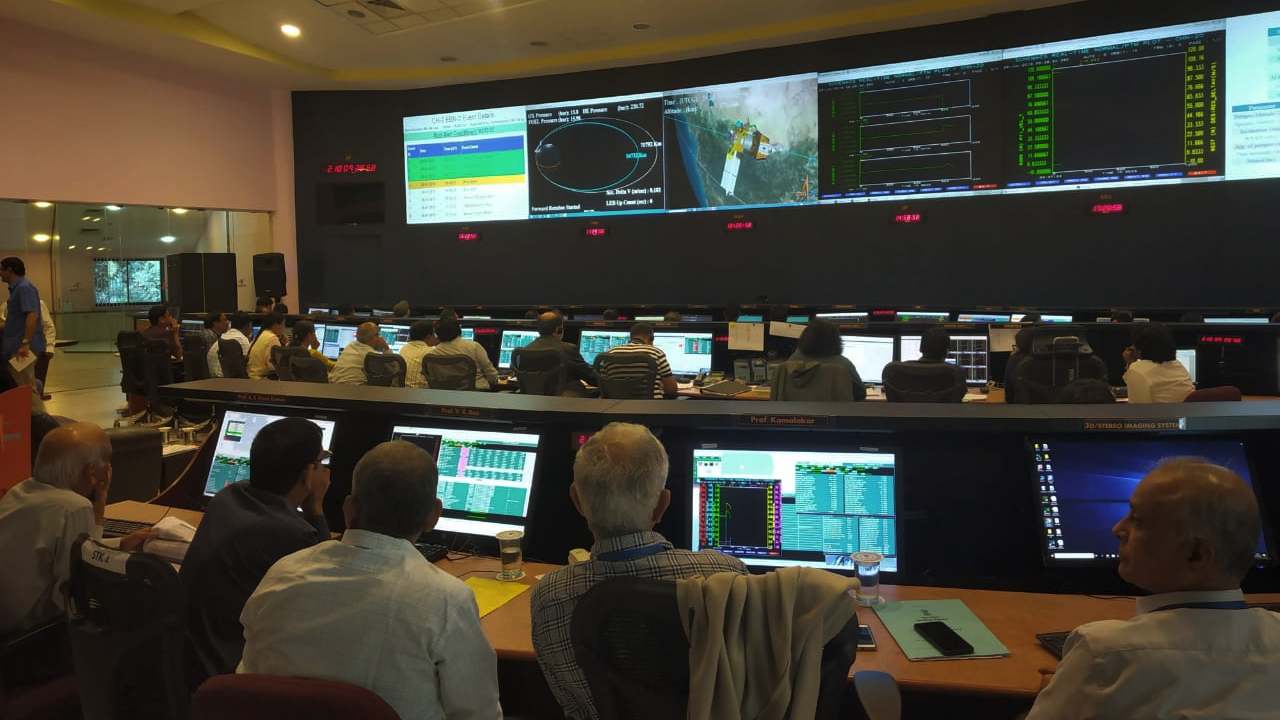 Glimpse inside ISRO's control room during landing module's first in-orbit manoeuvre on 3 September. Image: ISRO[/caption]The UAE Space Agency also lent ISRO support after news that it had lost contact with their spacecraft, tweeting, "The UAE Space Agency assure their full support to the ISRO following the loss of contact with their spacecraft, Chandrayaan-2 which had to land on the moon. India proved to be a strategic player in the space sector and a partner in its development & achievements.”In a 7 September statement, ISRO stressed that the Chandrayaan 2 mission was largely a success, with a lot more science expected to come by means of the orbiter. Despite the setback with the Vikram lander, the orbiter will last 7 times longer than planned, the ISRo Chief confirmed.
First Published:Sep 08, 2019, 14:50:35 IST
Advertisement
Advertisement

Careless Whispers: Scientists discover that plants can 'talk' to each other using smells
Japanese scientists have recorded a video that shows plants, in certain conditions, communicate with each other using mists that carry smells. The discovery, reveals that plants release a fine mist of airborne compounds, to warn nearby plants of potential dangers
Life on Mars? European Space Agency’s Orbiter discovers ice water deposits at equator
European Space Agency's Mars Express Orbiter has identified massive ice and ice water deposits beneath the surface of Mars. The Mars Express orbiter was also the first to confirmed the presence of ice on Mars in 2004
Microsoft briefly overtakes Apple as the most valuable company, Apple back on top again
At its peak during the session, Microsoft's value reached $2.903 trillion, with a 2% surge. As of writing this article, Apple closed at $2.89 trillion, whereas Microsoft closed at $2.86 trillion
Even NASA is facing a tough time, starts layoffs following major budget cuts
NASA is facing some massive budget cuts, because of which, it has been forced to postpone some upcoming missions. NASA's Jet Propulsion Laboratory has been hit hard by recent federal budget cuts, resulting in the layoff of 100 contractors last week
ISRO, NASA's NISAR satellite to get ready by Jan-end, will monitor Earth's snow-covered regions
The NISAR satellite which has been developed jointly ISRO and NASA, should be ready for launch by the end of January 2024. The collaboration between NASA and ISRO on NISAR is the first time the two agencies have cooperated on hardware development for an Earth-observing mission
Advertisement
Advertisement