


Captivating image of NEOWISE comet as seen by NASA's Parker Solar Probe released
NEOWISE was observed to have two ion tails, which intrigued researchers as it was unusual for a comet.

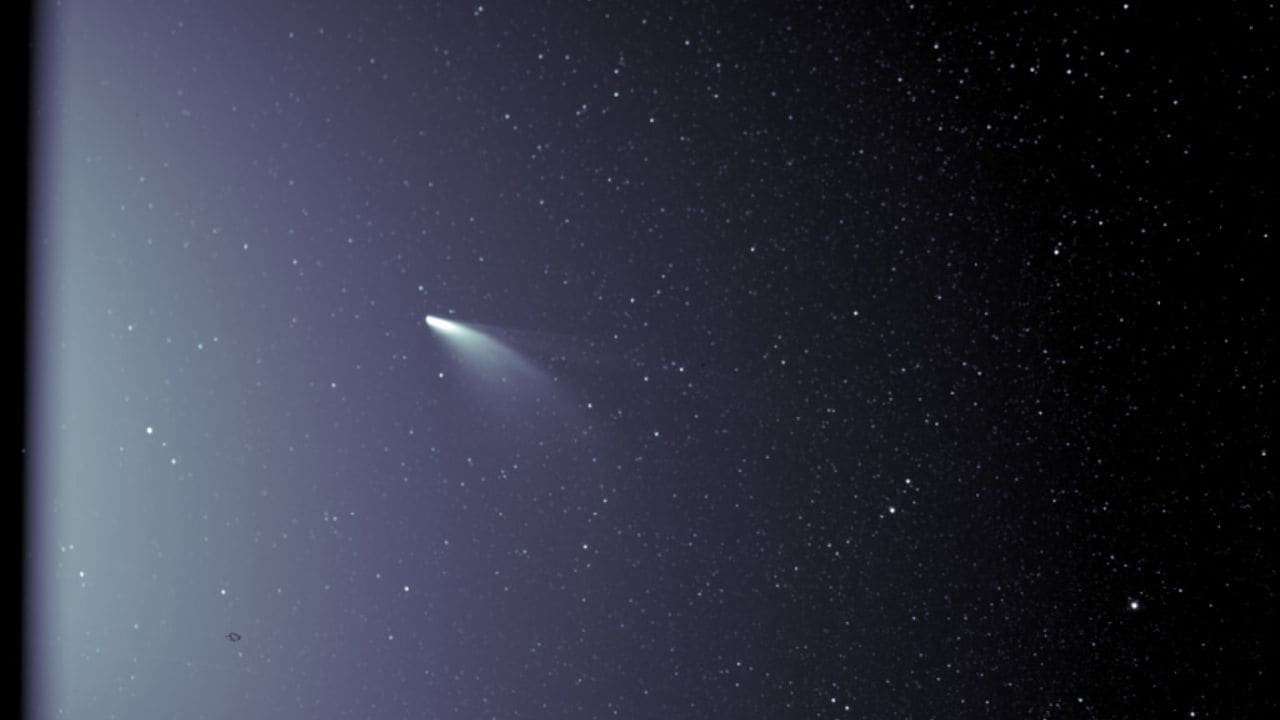
An unprocessed image from the WISPR instrument on NASA’s Parker Solar Probe shows the comet NEOWISE as of 5 July 2020, soon after its closest approach to the Sun. Image: NASA Goddard[/caption]These ionised gases are battered repeatedly by the solar wind. As a result of this, the ion tail is created that extends directly away from the Sun. Scientists speculate that NEOWISE has two ion tails, in addition to its dust tail, but they need more data and analysis to confirm this.Last month, NASA came up with some simulations showing how the sunset would look on other planets of the solar system. It was created by Geronimo Villanueva, a planetary scientist from NASA's Goddard Space Flight Center in Greenbelt, Maryland.The simulations showed at the time of sunset on Uranus a bright blue colour in the sky fades into royal blue with hints of turquoise. The blue green colour appeared due to the interaction of sunlight with the atmosphere of the planet.A bright yellow sky turns into orange, brown, and finally black during the sunset on Venus. Mars’ sky becomes a mix of muddy brown and bright yellow as the Sun disappears.

Careless Whispers: Scientists discover that plants can 'talk' to each other using smells
Life on Mars? European Space Agency’s Orbiter discovers ice water deposits at equator
Microsoft briefly overtakes Apple as the most valuable company, Apple back on top again
Even NASA is facing a tough time, starts layoffs following major budget cuts
ISRO, NASA's NISAR satellite to get ready by Jan-end, will monitor Earth's snow-covered regions