


Blue Origin launches its New Shepherd rocket to test NASA's lunar landing tech
Delayed three weeks by technical issues, this was the 13th New Shepard flight for Blue Origin. The first was in 2015.

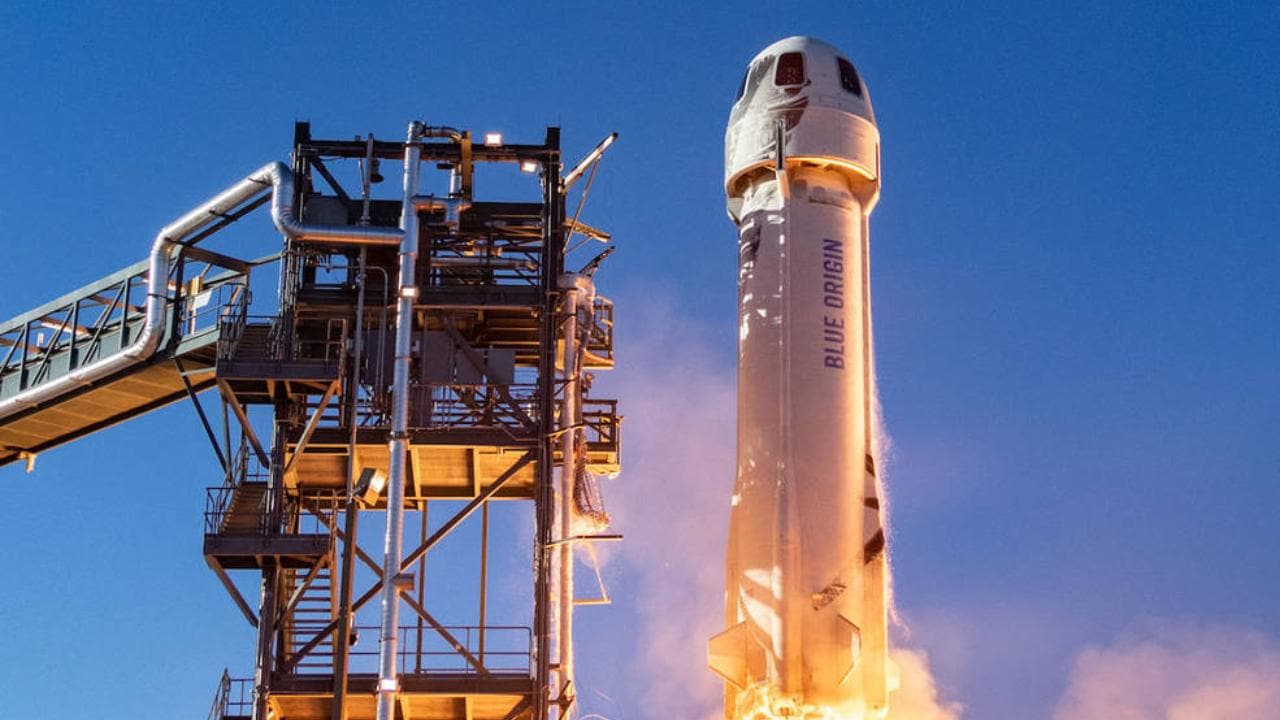
NASA-supported payloads will undergo testing from launch to landing aboard Blue Origin's NewShepard flight. Image credit: NASA/Twitter[/caption]NASA’s navigation equipment for future moon landings was located on the booster. The sensors and computer — tested during the booster’s descent and touchdown — will hitch another suborbital ride with Blue Origin. It’s all part of NASA’s Artemis program, which aims to put the first woman and next man on the moon by 2024, a deadline imposed by the White House.“Using New Shepard to simulate landing on the Moon is an exciting precursor to what the Artemis program will bring to America,” Blue Origin’s chief executive Bob Smith said in a statement.Texas-based Southwest Research Institute had a magnetic asteroid-sampling experiment onboard, as well as a mini rocket-fueling test.
Led by Amazon founder Bezos, Washington state-based Blue Origin is leading a team of companies to develop a lunar lander for astronauts. Elon Musk’s SpaceX is also working on a lander, as is Alabama-based Dynetics. NASA chose three teams in this early phase of the Artemis moon-landing program to increase the chances of getting astronauts to the lunar surface by the end of 2024.Delayed three weeks by technical issues, this was the 13th New Shepard flight for Blue Origin. The first was in 2015. The rocket is named for the first American in space, Alan Shepard.Tuesday’s launch was the first in nearly a year for Blue Origin: The pandemic stalled operations. Blue Origin said its staff is maintaining social distancing and taking other safety measures.Blue Origin said it needs a couple more flights before launching people — tourists, scientists and professional astronauts — on short hops. The capsule has six seats and six windows, the biggest to fly in space.
Careless Whispers: Scientists discover that plants can 'talk' to each other using smells
Life on Mars? European Space Agency’s Orbiter discovers ice water deposits at equator
Microsoft briefly overtakes Apple as the most valuable company, Apple back on top again
Even NASA is facing a tough time, starts layoffs following major budget cuts
ISRO, NASA's NISAR satellite to get ready by Jan-end, will monitor Earth's snow-covered regions