


Back to Venus: Rocket Lab looks to beat NASA in search for life on Venus, other worlds
Rocket Lab will need help from leading scientists, and has already recruited MIT astronomer and planetary scientist Sara Seager.

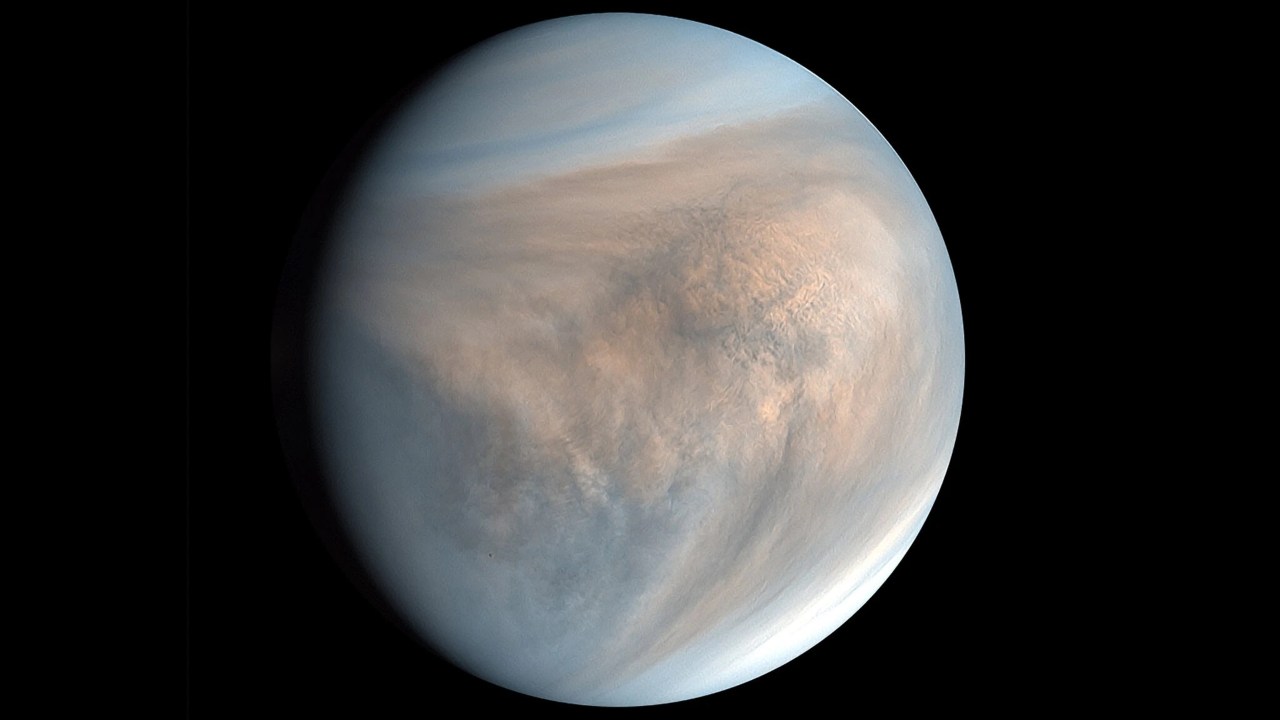
Venus. Image Credit: PLANET-C/JAXA[/caption]Phosphine is not definitive proof of life. But it is possible that its presence is linked to living organisms, as it is on our planet. The finding led NASA to declare it was time to once more prioritize Venus. Beck has always been in the pro-Venus camp, and for two years has been contemplating sending an entirely privately funded probe there, he said. He calculated that a small satellite called "Photon" that Rocket Lab developed in-house could be adapted into a spacecraft for an interplanetary voyage. Such bids have historically been the domain of national space agencies, given the enormous costs involved – but Beck thinks he has developed a budget solution."I would expect a mission to Venus to be sort of $30 million," he told AFP by video from Auckland, New Zealand."When you can measure interplanetary missions in tens of millions of dollars instead of billions, and months instead of decades, the opportunity for discovery is just incredible," he said.Rocket Lab's speciality is sending small satellites into Earth orbit with its small 18-meter-high rocket - a highly lucrative market in recent years as demand for microsatellites has exploded.The company's Venus probe will be very small, weighing around 37 kilograms and just 30 centimetres in diameter.The trip from Earth will take 160 days, then Photon will launch the probe into Venus' clouds, where it will take readings as it falls, without a parachute, at almost 11 kilometres per second. The probe will have between just 270 and 300 seconds to analyse an atmosphere that is almost a hundred times denser than Earth's before it disintegrates or crashes on the planet's fiery surface, where temperatures are hot enough to melt lead 480 C.The hardest part is deciding on the scientific instrument: What molecules should it look for?Miniaturization is another problem. The probe will need to weigh three kilograms, which some experts doubt is possible, but Beck disagrees. Rocket Lab will need help from leading scientists, and has already recruited MIT astronomer and planetary scientist Sara Seager.The adventure is the latest chapter in a new era of space exploration.

Careless Whispers: Scientists discover that plants can 'talk' to each other using smells
Life on Mars? European Space Agency’s Orbiter discovers ice water deposits at equator
Microsoft briefly overtakes Apple as the most valuable company, Apple back on top again
Even NASA is facing a tough time, starts layoffs following major budget cuts
ISRO, NASA's NISAR satellite to get ready by Jan-end, will monitor Earth's snow-covered regions