


Astronomers find a star-planet pair that mimics the relationship between our Sun and Earth
Scientists have been trying to find Earth-like planets with the hope that these exoplanets might contain life and this is the first time they have found it.

Life exists on Earth because of the planet’s optimal distance from the Sun that enables liquid surface water to be present here. If our orbit was slightly more different from the present situation, life, as we know it, would not have been possible.
Scientists have been trying to find Earth-like planets with the hope that these exoplanets might contain life. Now a study has found a planet that revolves around a sun-like star in an Earth-like orbit and hence has a great chance of being habitable. The research shows a star and planet relationship that closely mirrors the Eun and Earth’s relation.[caption id="attachment_8468181" align="alignnone" width="1280"]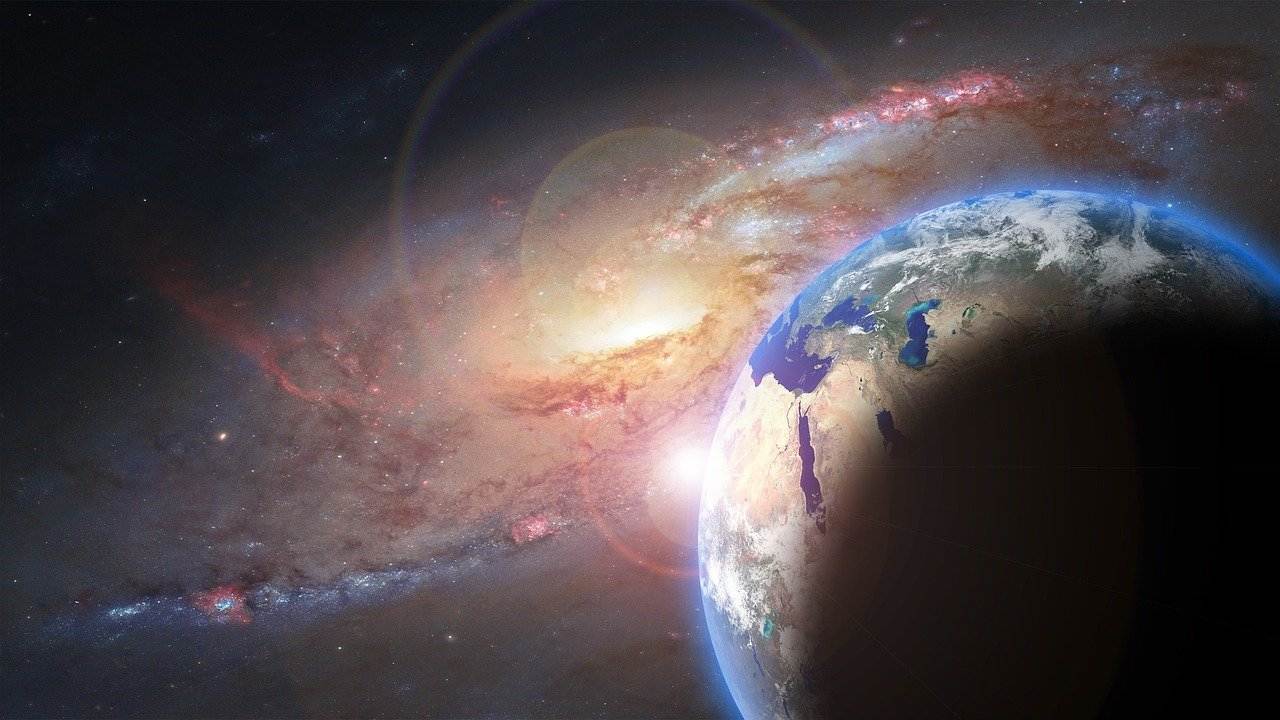
Life exists on Earth because of the planet’s optimal distance from the Sun that enables liquid surface water to be present here.[/caption]A press release put out by scientists from Max Planck Institute for Solar System Research (MPS) in Göttingen said that this is the first time that such similar systems have been found. While space telescopes like CoRoT, Kepler, and TESS have helped scientists discover around 4000 extrasolar planets in the last 14 years, most of these planets are gas giants that bear resemblance with Neptune and have closer orbits around their respective stars. Some smaller, rocky planets have also been found but their stars were mostly red dwarfs.
Although red dwarfs are known to have “extremely long lifetimes”, they emit infrared radiations instead of visible light that the sun emits. “Many red dwarfs are also notorious for emitting high-energy flares and for frying their planets,” the statement read.
MPS scientist and lead author of the new study Dr René Heller thus explained the need of finding a correct star. “The full picture of habitability, however, involves a look at the qualities of the star too”.
In their recent study, Heller and her team have found an earth-like world that has a radius of 1.9 earth radii, which means it is huge in comparison. But it orbits around a sun-like star Kepler-160 located only 3000 light-years away from the solar system. The KOI - 456.04 has an orbital period of 378 days, which is very similar to our planet.
 More from Science
Scientists already knew about Kepler -160 but had discovered only two planets revolving around it. Both the exoplanets were too close to the star and would not have sustained life. But scientists from MPS, Sonneberg Observatory, University of Göttingen, University of California, and from NASA found two more exoplanets around Kepler -160.
One among these is KOI - 456.04, which “sits in a region of the stellar habitable zone”. However, there is only an 85% chance at this moment for KOI - 456.04 to be a planet. It can be a systematic measurement error or fluke. “Obtaining a formal planetary status requires 99 percent”.

Careless Whispers: Scientists discover that plants can 'talk' to each other using smells
Life on Mars? European Space Agency’s Orbiter discovers ice water deposits at equator
Microsoft briefly overtakes Apple as the most valuable company, Apple back on top again
Even NASA is facing a tough time, starts layoffs following major budget cuts
ISRO, NASA's NISAR satellite to get ready by Jan-end, will monitor Earth's snow-covered regions